Archiv der Kategorie: 2010

***** -THE OFFICIAL EURO CYCLIST CODE OF CONDUCT- *****


1. Image and style shall be the primary concerns of the Euro Cyclist. When suffering, one must focus first on maintaining a cool, even composure and second on performance. Winning races is an added talent, and only counts if said Euro Cyclist wins with appropriate style.

2. Training shall be based solely on feel, while racing shall be guided by sensations and instinct: that is to say, “soul.” The Euro Cyclist will never accept tried or tested scientific training methods.

3. The Euro Cyclist shall NEVER, under any circumstances, wear plain black spandex bibs (shorts, regardless of colour are BANNED) or ANY team kit
containing non-prominent logos. Shorts will extend approximately 2/3rds of the way down the upper leg and will contain a compression band at the bottom (distinct in colour). In NO CONDITION shall they extend any further!

4. Legs shall be SHAVED year-round. ABSOLUTELY NO EXCEPTIONS. Certain hair removal creams are endorsed only on a case-by-case basis. One shall never show up to a race (be it large or small) with ANY amount of stubble visible on one’s legs.

5. A prominent line where one’s kit ends and where one’s deep tan begins is essential to one’s image. Artificial tanning is BANNED. The tan shall reflect the level of training commitment.

6. The socks of the Euro Cyclist shall extend to within two (2) cm. of the main bulge of the calf muscle, and shall never extend further than one (1) cm. past said primary calf muscle bulge. All socks SHALL BE WHITE in colour with prominent logo placement.

7. Cycling shoes shall contain at least 80% white!
The following exceptions apply:
i) Colour combinations such as world cup stripes or Olympic gold for which the title has been EARNED.
ii) Shoes which are custom-made for specific riders by companies endorsed by this group. These shoes shall be accessible to the particular cyclist only, and shall follow the preceding rules.

8. If white cycling shoes are not available where the Euro Cyclist resides, white booties (or “shoe covers”) with prominent logos shall ALWAYS be worn. When booties are worn, socks shall protrude approximately seven (7) cm. above the ankle, and shall always protrude at a minimum one (1) cm. from any booties worn.

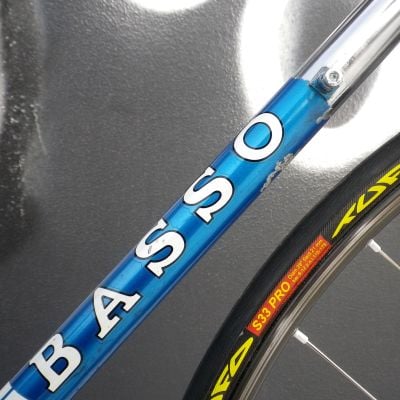
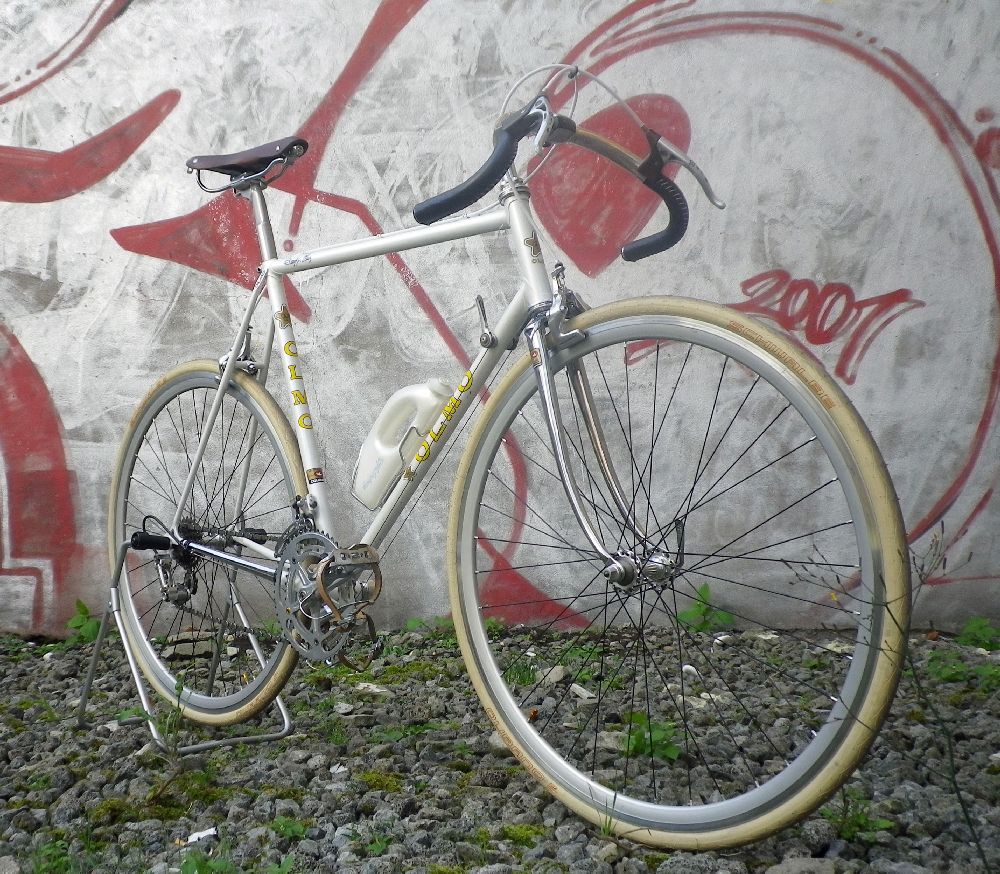
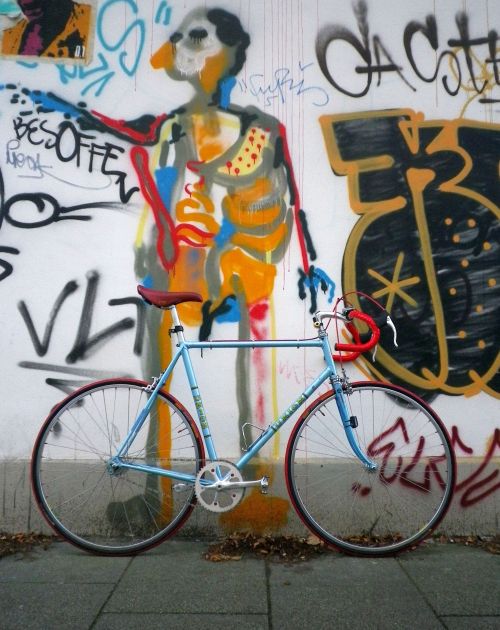
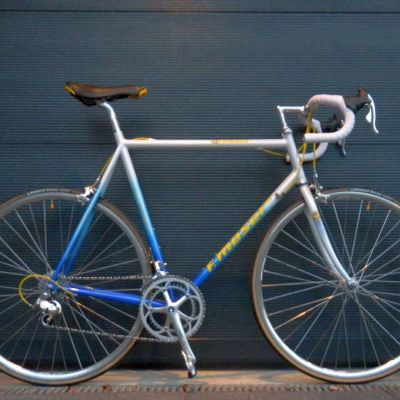
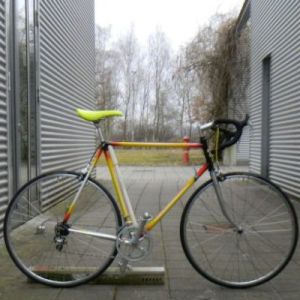
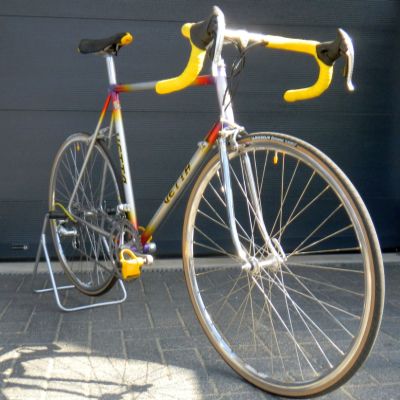
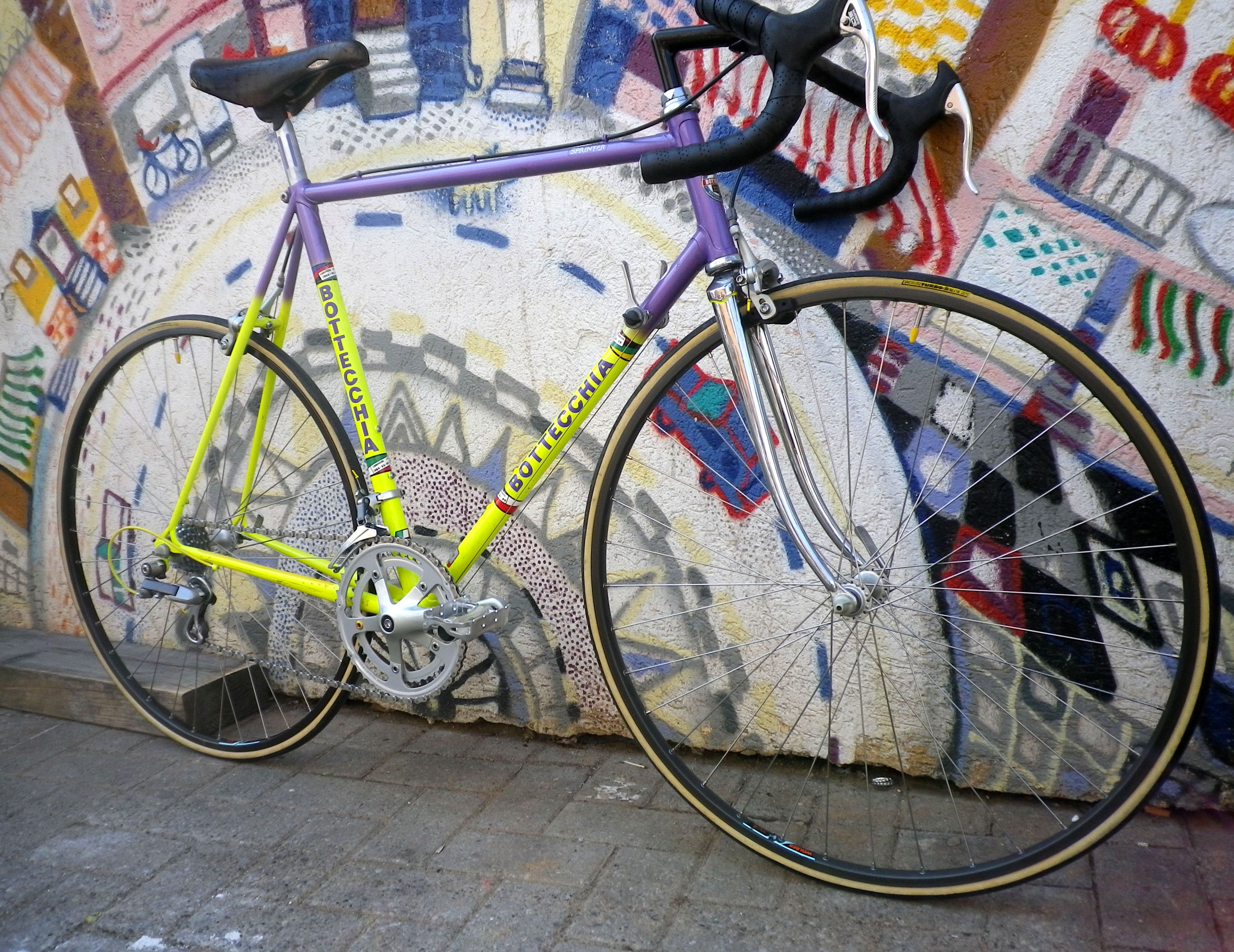
9. One’s bike frame shall contain between two (2) and four (4) colours IN ADDITION TO WHITE. All colours are acceptable as long as they combine tastefully and elegantly. In addition, wheel selection must also match frame and fork.

10. One shall race only on Campagnolo Boras or Lightweights. Fulcrum Racing One, Corima Aero+ or Zipp (404 or 202) wheelsets are considered stylish enough to be used as training wheels ONLY. Irregardless, ceramic bearings shall be used at ALL TIMES on both training and race bikes.

11. ALL wheels shall be equipped with tubulars, regardless of one’s ability in gluing them.

12. Ridiculously stylish eyewear (see endorsed products list) is to be worn AT ALL TIMES without exception. Glasses are to be worn over helmet straps at all times.

13. Hair shall be kept neatly short, and matching helmet shall be worn (again with prominent logo placement). The helmet shall be predominantly white. Under NO CIRCUMSTANCES shall a clashing helmet colour be worn with one’s euro kit. Helmets are not to be worn when venturing indoors AT ANY TIME. It is, however, acceptable to wear one’s helmet while outdoors on a patio (see rule 34).

14. In certain RARE cases, it shall be deemed acceptable to have long hair. In this event, hair shall be neatly slicked back in a severely euro style, and helmet SHALL NOT be worn. It is IMPERATIVE that rule 12 is followed in these special instances.

15. When riding, sans helmet (with short hair), a team issue cycling cap (white in colour), shall be worn. The bill shall remain in the downward position at all times. The cycling cap may be worn forwards or backwards to coincide with the specifics of one’s current hairstyle. During spring training, cycling toques shall be worn at all times in place of caps.

16. Kits must always be freshly washed, and one shall ALWAYS have applied a subtle quantity of eau de toilette (or “cologne”). It is, AT ALL TIMES FORBIDDEN to ride in an unwashed kit. This is severely detrimental to one’s image.

17. Saddles shall be white in colour ONLY and shall be manufactured in Italy or France. Exceptions may be made in the following cases:
i) Saddles containing World Cup Stripes or Olympic Gold when it is EARNED
ii) Italian flag colour combo when rider is ITALIAN (born in Italy)

18. Handlebar tape is required to be cork as well as WHITE IN COLOUR. Bar tape shall be kept in pristine white condition. This state shall be achieved either through daily cleansing or through frequent replacement. These jobs must NEVER be performed by the cyclist as one must maintain one’s image.

19. All stems must be a minimum of 120mm long and of a rise no higher than -10 degrees. Stems shall be positioned no more than 0.5cm above the top of the headtube. ALL stems shall ALWAYS be oversized, made out of ALUMINUM, and airbrushed in kit/frame colours. In certain cases (Mario Cipollini) it is advised that one airbrush a buxom young woman onto the top of one’s stem.

20. The Euro Cyclist shall ALWAYS have liniment applied to his legs before appearing in public.

21. Facial hair shall be restricted to (at a maximum) a goatee, and even this is discouraged. Moustaches, beards, and any combination thereof are EXPRESSLY PROHIBITED in all instances. Stubble is, however, advisable in virtually ALL euro-situations. It is important to note that this DOES NOT apply to the legs.

22. Campagnolo shall be THE ONLY acceptable component and it is hereby deemed superior to ANY Shimano product in ALL circumstances and situations. The Euro Cyclist is expected to have nothing less than an ENTIRE campy grouppo. Crank substitutions are NOT permitted. There is, however, a case by case exception for SRAM Red.

23. One shall NEVER, under any circumstances, acknowledge the presence of a cyclist riding a bike costing less than 2000€ in ANY public place. This may be severely detrimental to one’s image. If such a situation cannot be helped, it is CRITICAL that the Euro Cyclist regard his “acquaintance” with a patrician mixture of disdain and SEVERE condescension.

24. One shall NEVER, UNDER ANY CIRCUMSTANCE, associate with triathletes. This cannot be overemphasized! It is FORBIDDEN to have any number inked onto one’s body before a race.

25. Any physical activity other than cycling is STRONGLY FROWNED UPON. This includes any form of running or swimming and their derivatives (this includes walking). The ONLY TWO other sports with a recognized degree of euro are: cross-country skiing and long track speed skating.

26. Mountain bike gloves are FORBIDDEN in all instances. Cycling gloves shall be slick, white (in accordance with kit), and have minimal padding. Padding will be beige or white in colour. Wearing NO GLOVES is entirely acceptable and encouraged. In the case of a Euro Cyclist wearing a leader’s jersey special gloves shall be made to match the colour of the jersey while simultaneously blending the colours of the team kit.

27. In a circumstance where any cyclist (or TRIATHLETE) ever displays aggression or disrespect towards a Euro Cyclist, he is required to ride up uncomfortably close to his foe and slap them in the face with his team issue gloves.

28. In the event a motorist disturbs one’s ride: one shall proceed to ride up beside the car, form a clenched fist and bang the boot of the car while doing one’s best to sound irritated in Italian. Wild arm and head gesticulations are strongly encouraged to help enhance the apparent rage. It is permitted to throw a bottle, if the perpetrator was a commissaire on a motorbike.

29. One shall NEVER rearrange one’s package while riding. Adjustments regarding seating/hanging comfort are to be done in private in order to preserve image.

30. ABSOLUTELY NO FORM of seatbag, frame pump, mud guard or mirror shall come within two (2) metres of one’s bike.

31. Gearing shall be restricted to a titanium Campy Record 11-23 cassette with a ABSOLUTE MINIMUM of 42-53 up front. One must never be seen pedaling at a cadence greater than 90 rpm in order not to detract from one’s calm/smooth factor, or “Suplesse.” The use of 25-toothed cog is acceptable for severely mountainous training situations.

32. ALL BIKES shall feature personalized nameplates next to one’s home country’s flag, located on the top-tube within ten (10) cm. of the seat-tube ON THE DRIVE SIDE ONLY.

33. Pedals MUST be either Look or Time. No other pedals are to be considered. As always, ANY form of Shimano product is STRICTLY FORBIDDEN.

34. Espresso is a NECESSITY and as such it must be consumed normale or ristretto on a patio (preferably in Italy) in full kit; All other coffee shall be brewed strong and taken BLACK. The only milk permitted may appear frothed on top (if at all). The euro cyclist shall, if possible, develop a fondness for the triple ristretto. For extra Euro, consider ordering inconvenient multiples (e.g. a triple or more). The irony of increasing the number of shots pulled while simultaneously decreasing the volume per shot will enhance the experience for all parties involved. Sugar is FROWNED UPON, and in all cases SWEETENERS ARE BANNED.

35. All podium shots (“pictures”) shall be taken while wearing one’s team kit and appropriately matching casual euro shoes (such as Pumas). Socks shall remain within the guidelines above. One is expected to display an appropriate degree of bulge while receiving kisses/trophies. The bulge may vary according to the outlandishness/impracticality of the victory prize (e.g. livestock and/or enormous cheese wheels).

36. All pre- and post-race activity SHALL be conducted under a gazebo (this includes massages, interviews, seductions, and looking fantastic) leaving one in reasonable distance of the Euro-sun to top up one’s enviable tanlines and pose for photos.

37. Post-race, one shall be tied to one’s mobile phone, receiving endless calls from:
i. One’s attractive girlfriend, or
ii. Important ad executives concerning modeling contracts. This shall be done under the protection of the post race gazebo.

38. Team bikes will be built up so that they violate the UCI weight limit in order that weights might be attached to the frame to demonstrate its superiority and lightness.

39. Motivational music during training shall consist of late 90s trance or progressive house, hereby known as ‚euro beats.‘ NO EXCEPTIONS.

40. Water Bottles shall be referred to solely as „Bidons“ and shall have a volume NOT EXCEEDING 500ml. Bidons shall always match team/kit colours. It is NOT ACCEPTABLE in ANY CIRCUMSTANCE to leave one’s bidons on the bike for more than ten (10) minutes post-ride OR while transporting bikes via bike rack.

41. Naked black ALL CARBON water bottle cages (manufactured by ELITE CAGES) shall be used on ALL BIKES. Exceptions include:
i) Special edition 24k gold cages, acceptable in certain cases such as photo shoots, prologues or where colour coordination dictates (e.g. gold cage with Olympic gold/white team kit).

42. A gold pendant on a very long, thin chain bearing some form of religious icon is STRONGLY recommended for mountain races.

43. While soloing in for a victory, one shall ensure that one’s jersey is FULLY ZIPPED and ALIGNED so that all title sponsors are clearly visible. One shall then smile and flex one’s arms while pointing sky-wards. The projection of one’s fatigue is EXPLICITLY FORBIDDEN IN ALL CIRCUMSTANCES.

44. When appearing in a photo spread for a sponsor’s products, the Euro Cyclist has the option of appearing fully nude, in team kit, or in a full Brioni three-piece suit (nothing else). Smiling is PROHIBITED in these instances.

45. When appearing in documentaries, one must be seen walking around the hotel in one’s kit at all times. It is also recommended that one constantly be eating something in front of the cameras.

46. When asked „how are you?“ while riding one must proceed with one of the following…
i. Complain about coming off a sickness
ii. Explain that one is peaking for bigger races later in the season
iii. Mention that this is a „recovery ride“
iv. Explain that one is at the tail end of one’s daily six (6) hour training ride

47. If one feels the urge to relieve oneself during a race, one shall gracefully meander to the back of the pack, seat oneself sideways on the saddle, and pee into the sunflowers. It is the DUTY of the Euro Cyclist to ensure that no camera crew catches the act, for it could be severely detrimental to one’s image. Under no circumstances shall one dismount from his bike in order to urinate.

48. When climbing anything with a gradient above twenty (20) percent OR lasting greater than four (4) kilometers, the Euro Cyclist shall fully unzip his jersey and let it flutter freely in the wind.

49. When dropping out of a race, one shall avoid the embarrassment of entering the official broomwagon and shall instead wait for the team vehicle. When asked the reason for dropping out, one shall cite mechanical problems or oncoming sickness in order to avoid any negative speculation in regards to one’s fitness.

50. If in doubt, the euro cyclist shall mention in an interview that his pollen allergies are acting up, and that he’s not sure that he’ll win the Giro this year. In this situation he must note that the sensations are otherwise good, and that he will eventually win a beautiful stage.

51. Team-building motivational camps shall be held annually in the off-season. These are to place team members in as ridiculous a setting as possible. Photos shall be widely reproduced to demonstrate team cohesion.

52. During the pre-race medical checks, star riders of each team are strongly advised to play doctor with each other while shirtless. Photos taken must strive to be as HOMO-EROTIC AS POSSIBLE.

53. In order to avoid the harsh European winter, one shall:
i. Flee to the warmer climates of Mallorca/South Africa/Canary Islands/etc.
ii. “Train the mind, body and soul” with Kreitler-brand rollers

54. In the event of a crash, regardless of the gravity of an injury the Euro Cyclist shall mummify himself in fishnet gauze. The act of gauzing oneself (in order to continue racing while injured) is looked upon with respect by other Euro Cyclists as a statement of commitment and of strength of character. One shall use white gauze to bandage injuries; however, world cup striped gauze and/or national colors may be used in addition to white in select circumstances.

55. No form of large or obtrusive tattoo shall be printed onto the skin anywhere on the body. Small, discreet tattoos of the Virgin Mary or Olympic rings (assuming one has participated in Olympic games) no larger than three (3) cm. by three cm. shall be considered tasteful if AND ONLY IF located out of sight while one wears regular kit.

56. If a rider’s sponsors do not make quality parts, then the rider shall buy better parts and superimpose his sponsor’s stickers over them (e.g. Quickstep’s past rebranding of Time products as Specialized).

57. No rider shall wear any shorts with any type of hole showing skin below unless said hole and or opening was from a recent crash DURING that training session and/or race. Wearing ripped shorts is allowed ONLY while one is struggling to the finish and/or to the correct place to wait for the team car to take one out of the race.

58. When cresting the summit of a climb the Euro Cyclist will sit up, zip his jersey, and reach into his pocket for a snack while simultaneously looking back to see who will be accompanying him on the descent. Note that while coasting to allow another rider to catch up (in order to work together on the way down) is allowed, coasting in order to rest is FORBIDDEN.

59. The Euro Cyclist shall own a sizeable parrot and will ensure that he is seen walking around photo shoots with it perched either upon his casually outstretched index finger or upon his shoulder. Hair should be slicked back for maximal effect. The parrot should either be white or it should contain three (3) or more colors found within the World cup stripes. One must always smile when pictured with the parrot. The parrot should speak fluent Italian. In certain cases it is deemed advisable that the Euro Cyclist possess, in place of a parrot, SEVERAL young pumas.

60. The Euro Cyclist shall never ride deep carbon wheels with aluminum braking surfaces, with the exceptions of Mavic wheels and the Ghibli disc. Aluminum braking surfaces detract from the seamless transition of black carbon to black tire that makes the Euro cyclist look so devilish upon his race wheels. Deep carbon wheels shall have prominent decals upon them UNLESS they originate from Carbonsports in Germany.

61. When the Euro Cyclist wins a race or a grand tour he shall stylishly uncork the bottle of champagne and spray it around the podium. If the rider is ravenous, slightly overweight and German he shall place the opening of the champagne bottle close to his mouth and drink (heavily) with puffed out cheeks and a smile. If the rider is truly Euro he will take the ENTIRE bottle of champagne in his arms and parade about the finish area with it. Champagne bottles must be COMICALLY OVERSIZED. One should spray the podium girls. Especially if they are dressed in white.

62. At the finish of a Grand Tour the Euro cyclist shall celebrate by cycling around the finish area decked out in team kit and proper Euro casual footwear. If married, the Euro cyclist shall have his child in his arms. The toddler may rest upon his handlebars, or in the event that the Euro cyclist achieves a podium spot, accompany the rider onto the podium. The child should have its own victory salute that will be used in conjunction with that of his/her father. In some cases the child is permitted to wear an entirely-too-large team jersey. This rule shall be upheld by ALL riders save for Mario Cipollini, who would be unable to comply due to the sheer number of offspring he has fathered courting supermodels over the past two decades.

63. It is highly recommended that the Euro cyclist utilize any opportunity to humorously don equipment that failed during the demonstration of superior physical strength. This serves the dual purpose of mocking one’s sponsor and, in addition, providing a public display of why said rider did not finish the race on the podium. Breaking equipment due to power output is generally the best way to finish a race outside of winning it. If no spectators are present, the Euro cyclist shall prominently wear the broken equipment during all post race interviews. If the Euro cyclist suffers more then two mechanical failures of similar nature in rapid succession, throwing a petulant tantrum is strongly suggested.
2 Kommentare

Eingeordnet unter 2010, Mob

Exploring the frontier of snowland

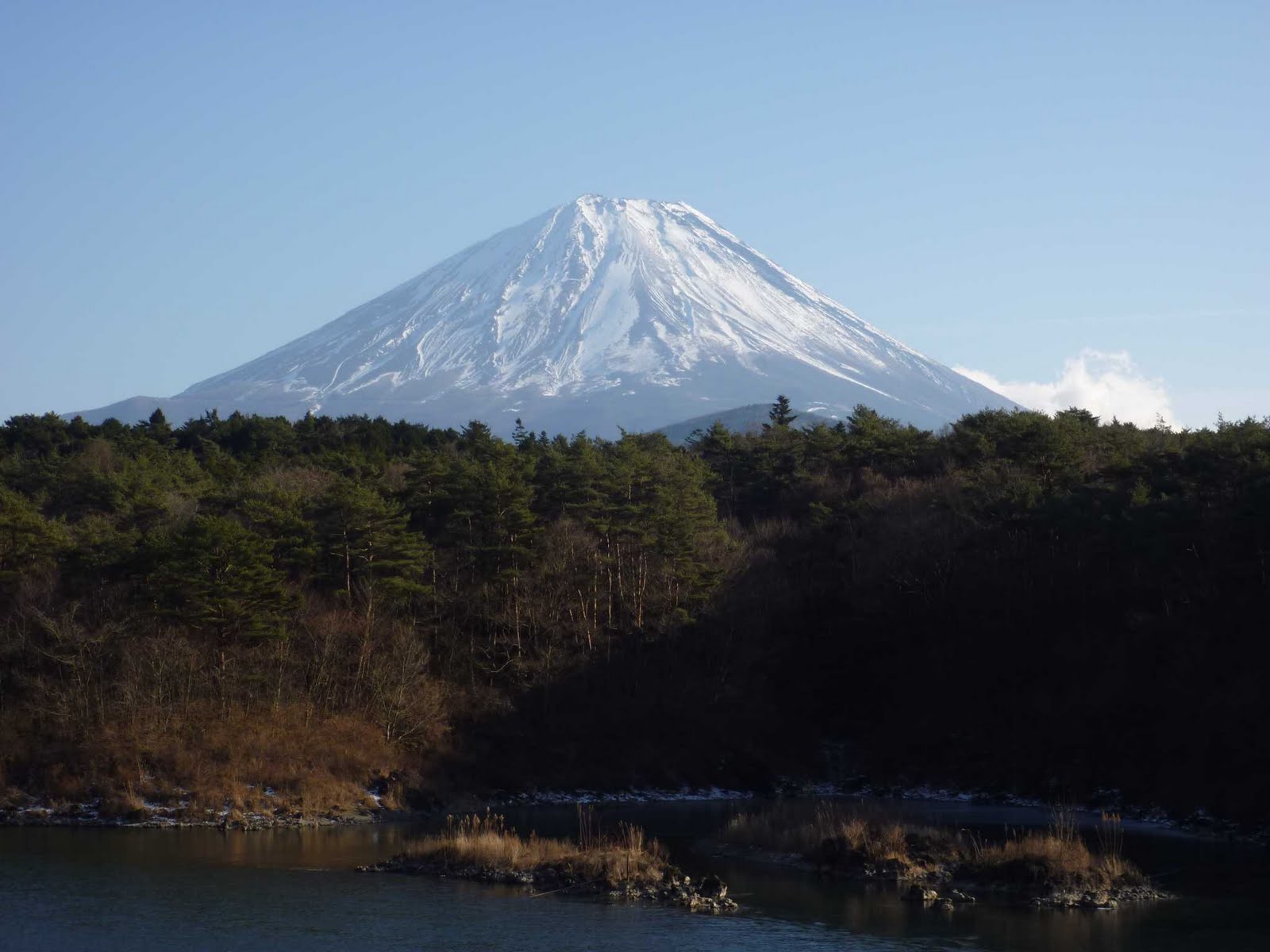
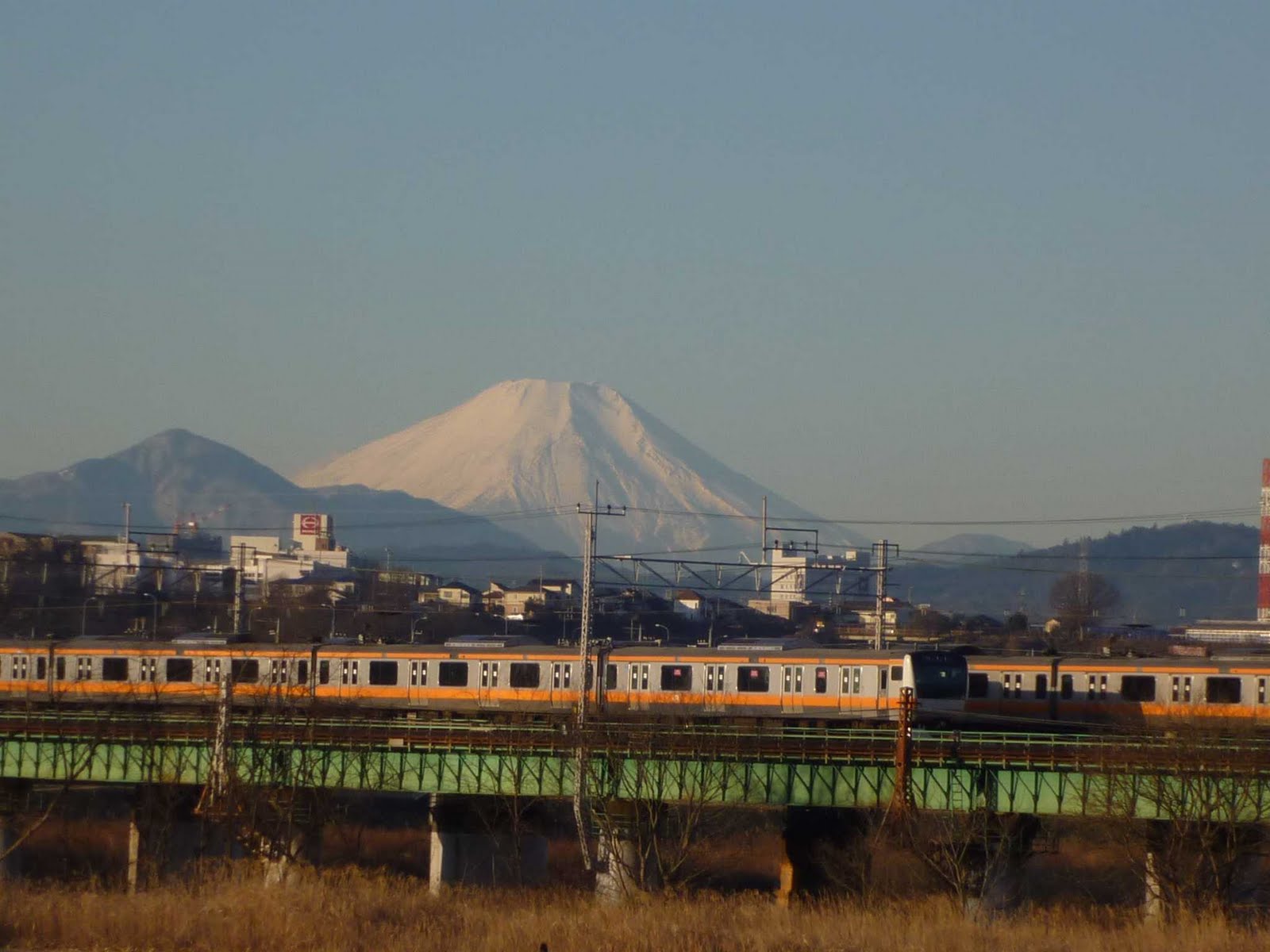
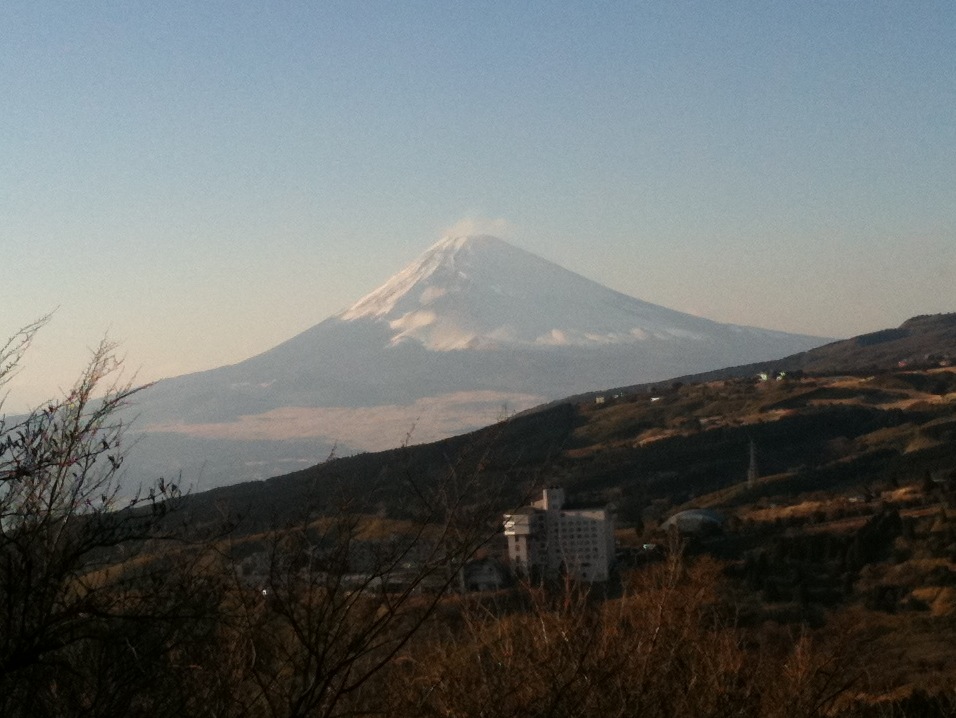
It was only 1 degree when I left my house today at 6:30am, just before sunrise. The air was very crisp, and the views of Fuji stunning.

When the views are so great, and people out and about on a cold winter morning relatively few, it is actually fun cycling on the Tamasai.
If only the wind wasn’t blowing so strongly exactly against me!
I found it hard to push myself beyond a heart rate of 150, and not only because of the demotivating head wind. The cold air is taking its toll.
Ome Kaido was almost free of traffic, from the junction with Yoshino Kaido somewhat less so – dumb (dump) trucks were as busy as always. (I have stopped using Yoshino Kaido because of the trucks – Ome Kaido is much more pleasant and truck-free until that junction.) And road works every now and then, all along Ome Kaido. They never stop.
By the way, have others also noticed that these days traffic lights have become in almost complete disuse at road works – there are always two people managing the traffic, no matter how tiny the road.
From Okutama onwards, there was almost no traffic at all, and not a single motorbikes – what a difference to the other three seasons.
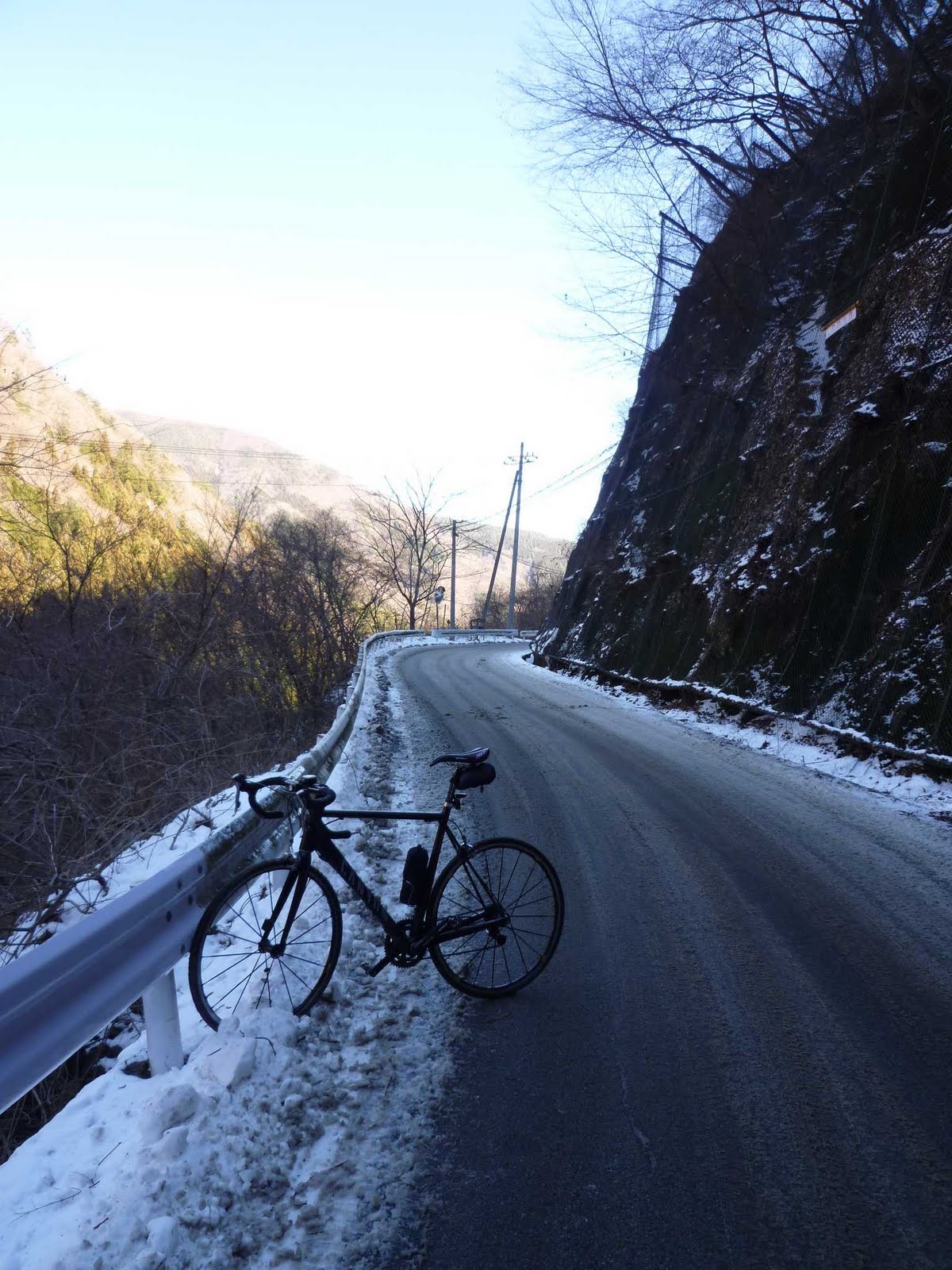
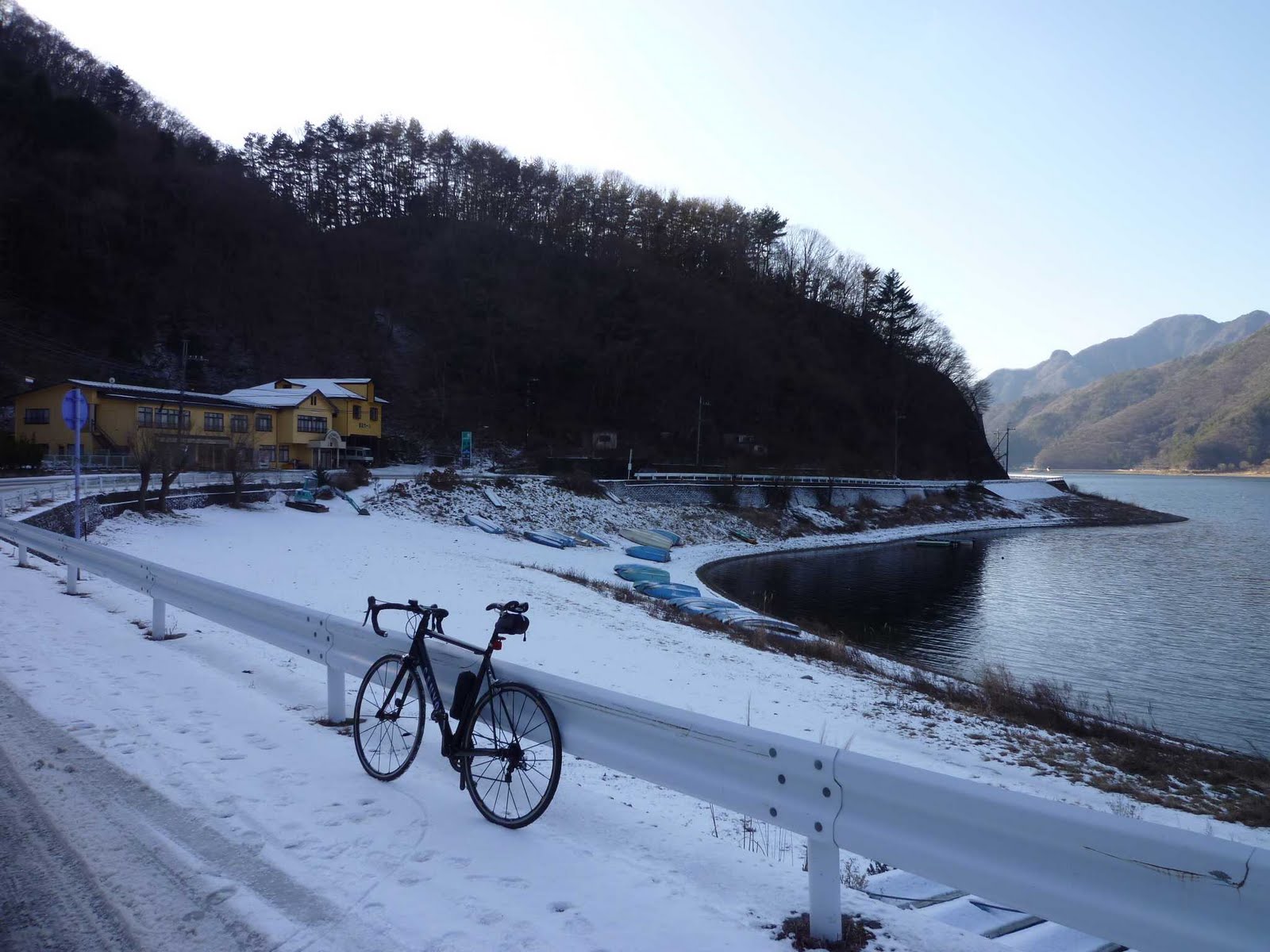
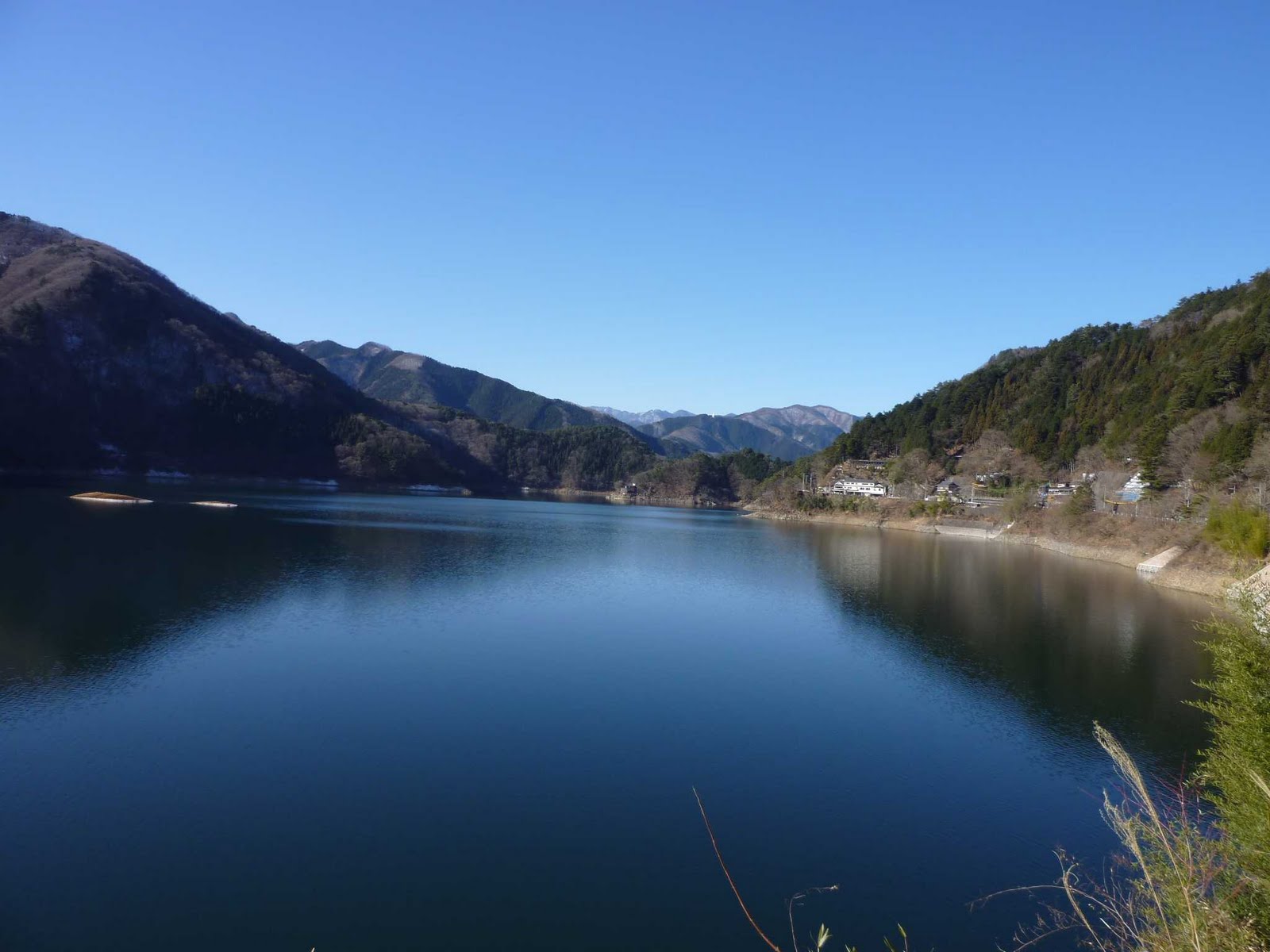
Okutamako looked pretty and peaceful. The surrounding mountains were snow covered on their northern slopes, free of snow on their south. The road was free of snow and ice thanks to all the sun it was getting, except for some icy patches on the side which the sun was unable to reach.
I was hoping that Imagawa Toge which connects Tabayama and Kosuge would be passable and headed towards it. Route 411 to Tabayama was passable, but as I got closer to Tabayama, some short icy parts appeared, now in the middle of the road.
The fields around Tabayama and parts of the village were covered by snow. The first steep ascent out of the village towards Imagawa Toge was covered in part with snow and ice, but I managed to cycle around the worst parts. Another kilometer later, the road started being completely covered by salted snow and ice. I was able to ride on it, but the bike quickly collected lots of snow and it was clear I could not continue like this another 250m upward.
This was the time when I wished I was riding a cyclocross. Well, one day!
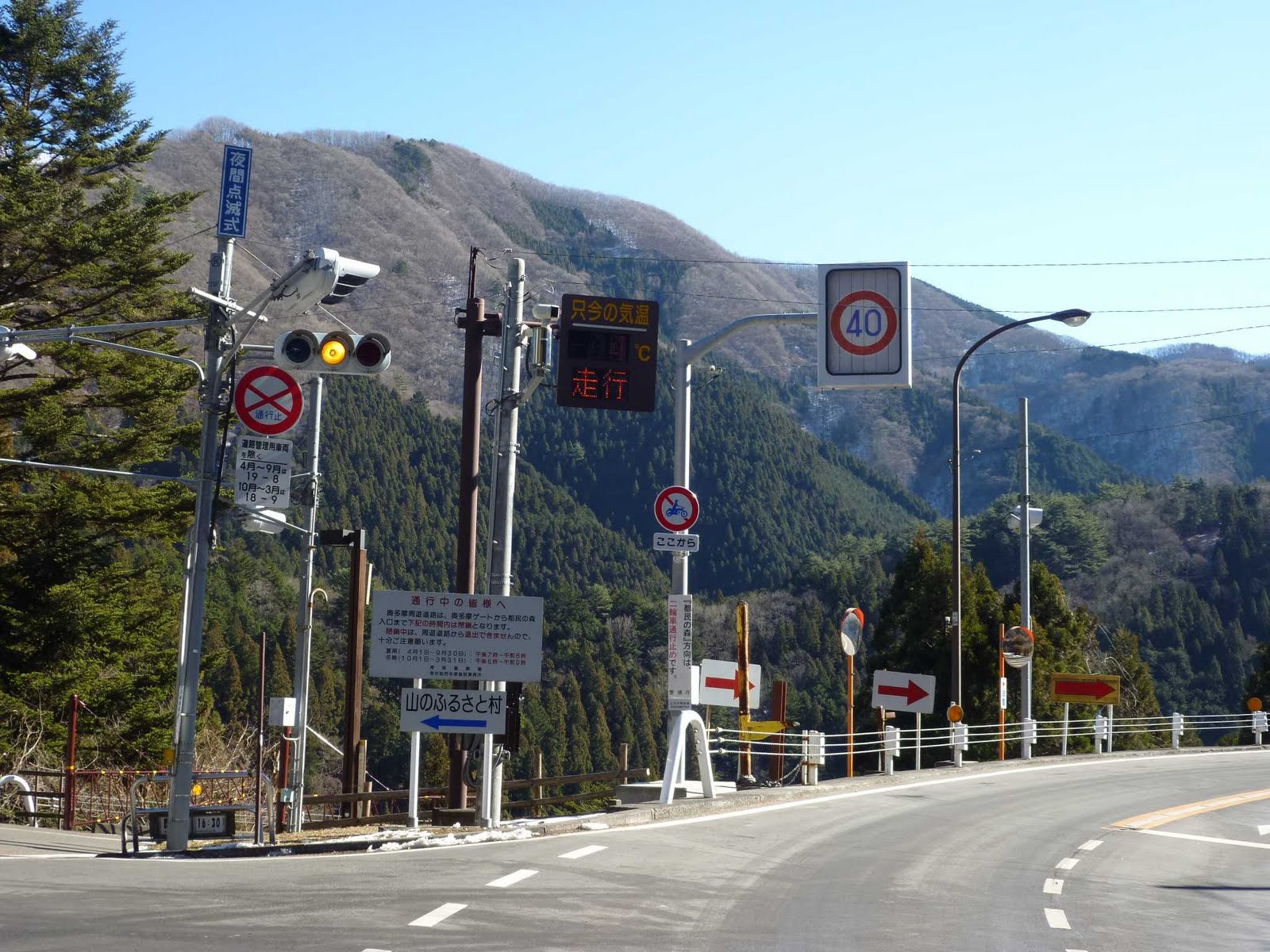
I turned around and headed back to the Okutama Lake. It was clear climbing up to Kazahari would be equally impossible. But I wanted to see at least what the new traffic restrictions for motorbikes looked like. Would there be someone making sure motorbikes would not enter? Would there be a camera? Would it say that bicycles are not allowed either? I cycled the 3.5km from the entrance of the road to the point from which motorbikes are banned.
Nobody patrolling the road. One camera, but unclear whether this was good enough to actually catch number plates etc. – probably not, and just a camera that had been in place even earlier. A sign that shows that motorbikes are banned – but nothing about bicycles! We should be fine riding up – and what a pleasure this will be when all the motorbikes are gone!
I turned around and headed towards Kosuge, hoping that I could perhaps cross Tsuru Toge or the new Matsuhime tunnel. But Tsuru Toge is at 870m, even higher than the 750m at which I had turned around earlier. And the tunnel must be at least at 750m, and on the Otsuki side, there would be a long descent on a road that was most certainly not always blessed with sun.
Half way to Kosuge, I started hitting ice patches covering the full road whereever the sun was not able to reach to road. I chatted with two ladies working in front of their house after one of these patches, and after confirming the road would not get better, decided to turn around once more. No escaping from Okutama valley!
I returned as I had come, only to find that by now the wind had turned – and was once again blowing quite heavily against me! Cycling down towards Ome sometimes felt like cycling up another hill, so strong was the wind.
To build some variation in the ride, I decided to cross Umegaya Toge (aka Jerome’s Hill) which at 310m was entirely free of snow or ice.
The Tamasai was now much more crowded than in the morning, and there were lots of road racers who quite obviously had only gone out in the afternoon. I stuck to one of them, a tall foreigner riding what looked like a converted cyclocross, for a while. He was rather fast, and my back was once again in high pain, so I eventually gave up pursuing him and took a rest for my back.
I was home well before sunset (for a change!) and cleaned my bike, which was solidly covered by a thick crust of salt (so where my shoe covers – they were basically completely white!). I had a hard time getting the stuff off – it was literally baked to the bike and in no comparison to normal road dirt or mud.
210km with 1,400m of climbing

3 Kommentare

Eingeordnet unter 2010

Plenty of new discoveries on the way to Kofu

Work during the first week of the New Year kept me busier than hoped, including a three-day business trip to Singapore. At least I was able to travel in the new business class of Singapore Airlines, their new Airbus 380, which features real flat beds. If only the return trip over night had been a bit longer and less bumpy… Not sure how fit I would be after this exhausting week, I decided it was safer to venture out on my own yesterday.

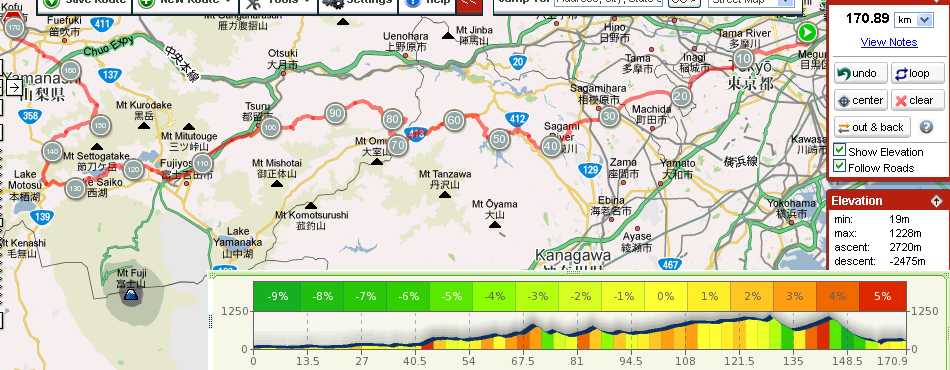
The goal was to discover as many new roads as possible, starting from home. And I got plenty of that.

I continued on Setagaya Dori beyond where I usually get onto the Tamasai, continuing basically always straight towards Machida, eventually ending up in Aikawa, the first rural town, lying at the foot of Miyagase Lake. We always approach Miyagase Lake from the north, passing it on its western side to climb up to Yabitsu – or vice versa. This time, I wanted to see what it looked like from the east.
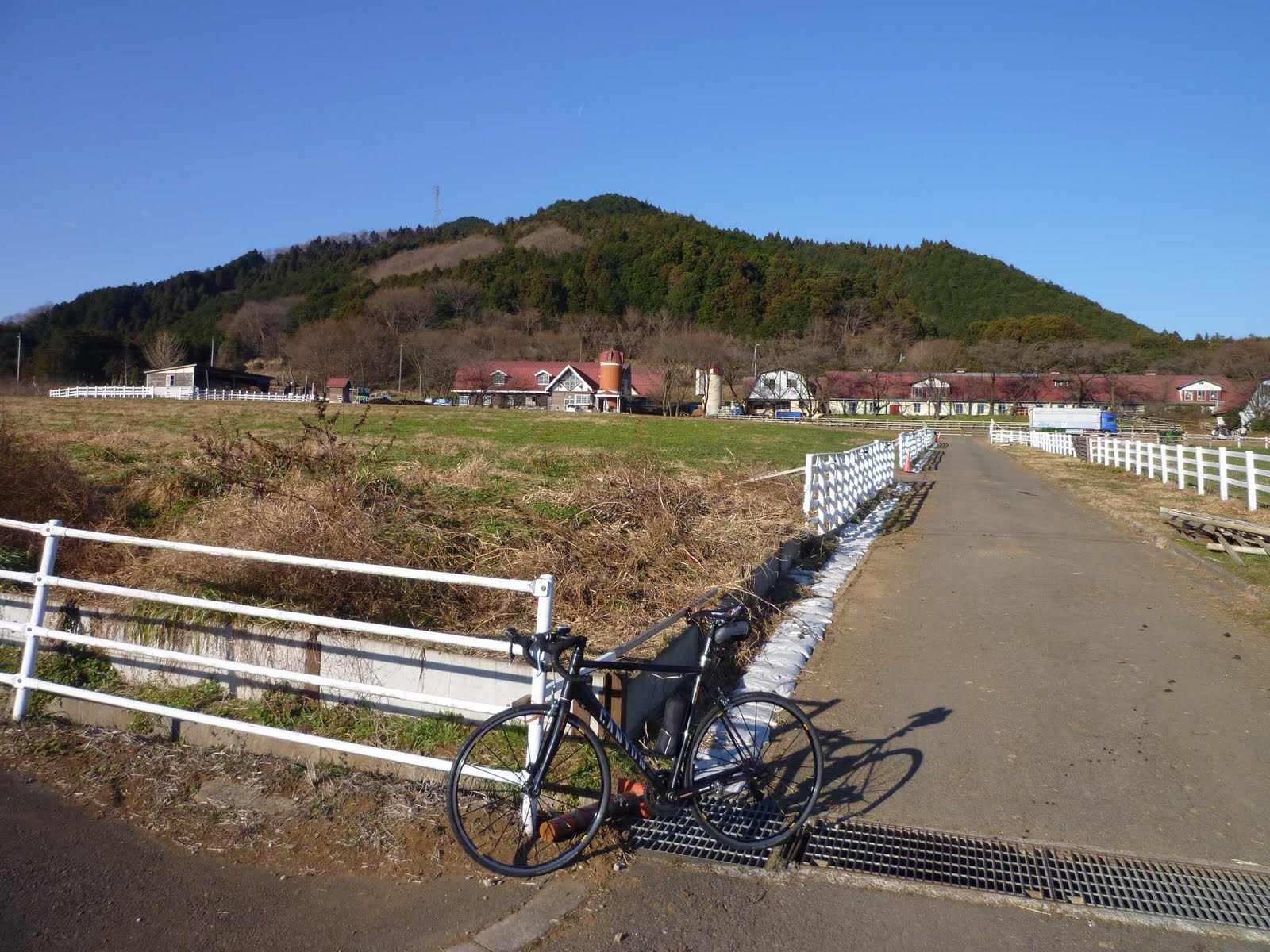
On the way up to the dam, I passed a nice farm.
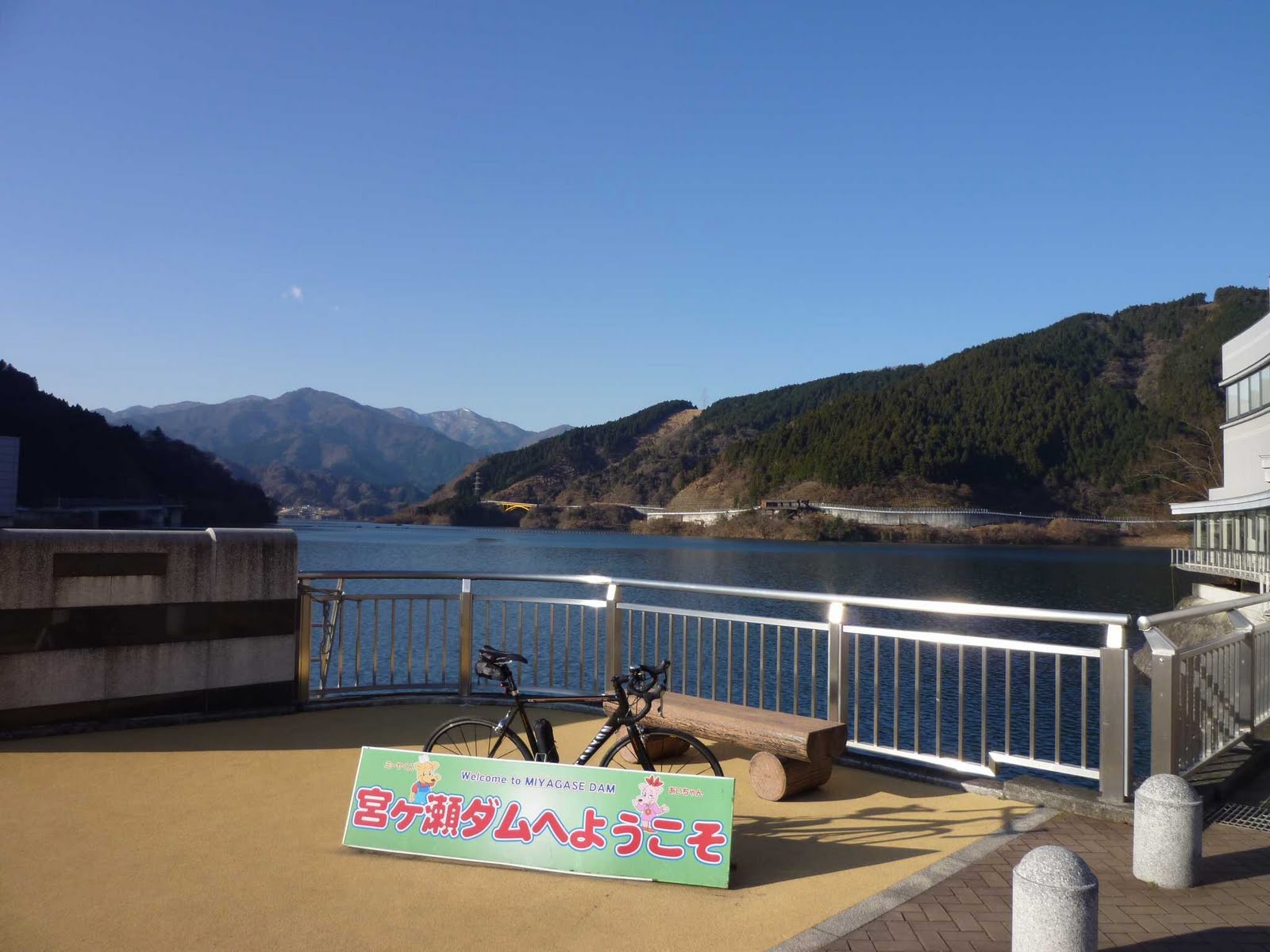
There were nice views from the dam, including of the rest area where we normally stop on the western shore, and of the Tanzawa range behind it. The mountains were lighly covered with snow above 1,000 meters.
I left for Doshimichi, but instead of going up the new road that we always take, I cycled through the old road leading through the surprisingly large village of Aonehara, and ending just beyond the new Seven-Eleven, which became my first pit stop.
I continued on Doshimichi until Nohara, where I turned onto the Nohara Rindo leading up to Gando Toge, which Tom had mentioned recently on his blog. It was a nice climb in the warming sun from 450m to 800m, with great views of the Doshi valley below and Fuji-san.
At Gando Toge, I encountered a group of mountain bikers who had just reached the top from the other side and sounded completely exhausted. There was another, obviously much slower, group a few hundred altitude meters below. (These were the only cyclists I saw all day outside urban areas!) If I’m not mistaken, this was the same group of people I had seen earlier in the morning putting their MTBs into vans in front of the Bex Isoya bike shop on Setagaya Dori. If only they knew how I had got to the same spot!
The rindo down was as steep as it had been going up on the other end. No wonder the MTB riders had suffered – probably not the „little bit of up and down“ that their shop had promised to them…
I could have continued straight all the way down this valley until reaching the kendo running through Akiyama valley. Instead, I decided to explore another rindo branching off to the west, about two thirds down the descent. This Kanami Rindo led me another 150m up to a Kanami Tunnel at 620m, just below Kanami Toge. It offered nice views of the Akiyama valley.
I continued the same rindo for another few kilometers until it led to the kendo going up the Akiyama valley. From there I was again on familiar territory, going up to Hinazuru tunnel and down the other side.
Instead of continuing straight to route 139 (or going through Suzugane), I branched off to the south, up another hill of 100m or so to take a short-cut to route 139 running south. After my second pit-stop at a Seven-Eleven just before hitting route 139, I braved the strong wind blowing against me and the endless chain of cars passing me to battle my way up to Kawaguchiko. I passed by the lake on its western end and climbed up to Saiko, where I wanted to circumvent the lake against clock-wise direction, on its northern shore – i.e. against the direction of the races (and all training) there.
This turned out to be not such a wise desire as there was quite some snow left on all those stretches of the road which the winter sun did not easily reach. Being used to cycle on snow from my childhood days, I rode through all the snow and ice patches, but with such thin tyres without any kind of profile, it stopped being fun after doing this every few hundred meters for another few hundred meters, and basically continuously once in the forest and heading up to route 139.
Back on route 139, the road was clear and I reached Shojiko with its great views of Fuji-san quite quickly.
I then passed through the Shojiko Tunnel from where it was a fast downhill from 950m to 500m. Instead of continuing along the same kokudo straight to Kofu, I branched off into the Ashigawa valley, which basically runs parallel to the lakes I had just passed. It was completely free of traffic, and I had a large road all by myself leading up to the Torizaka Tunnel at 1,020m, just below a pass of the same name.
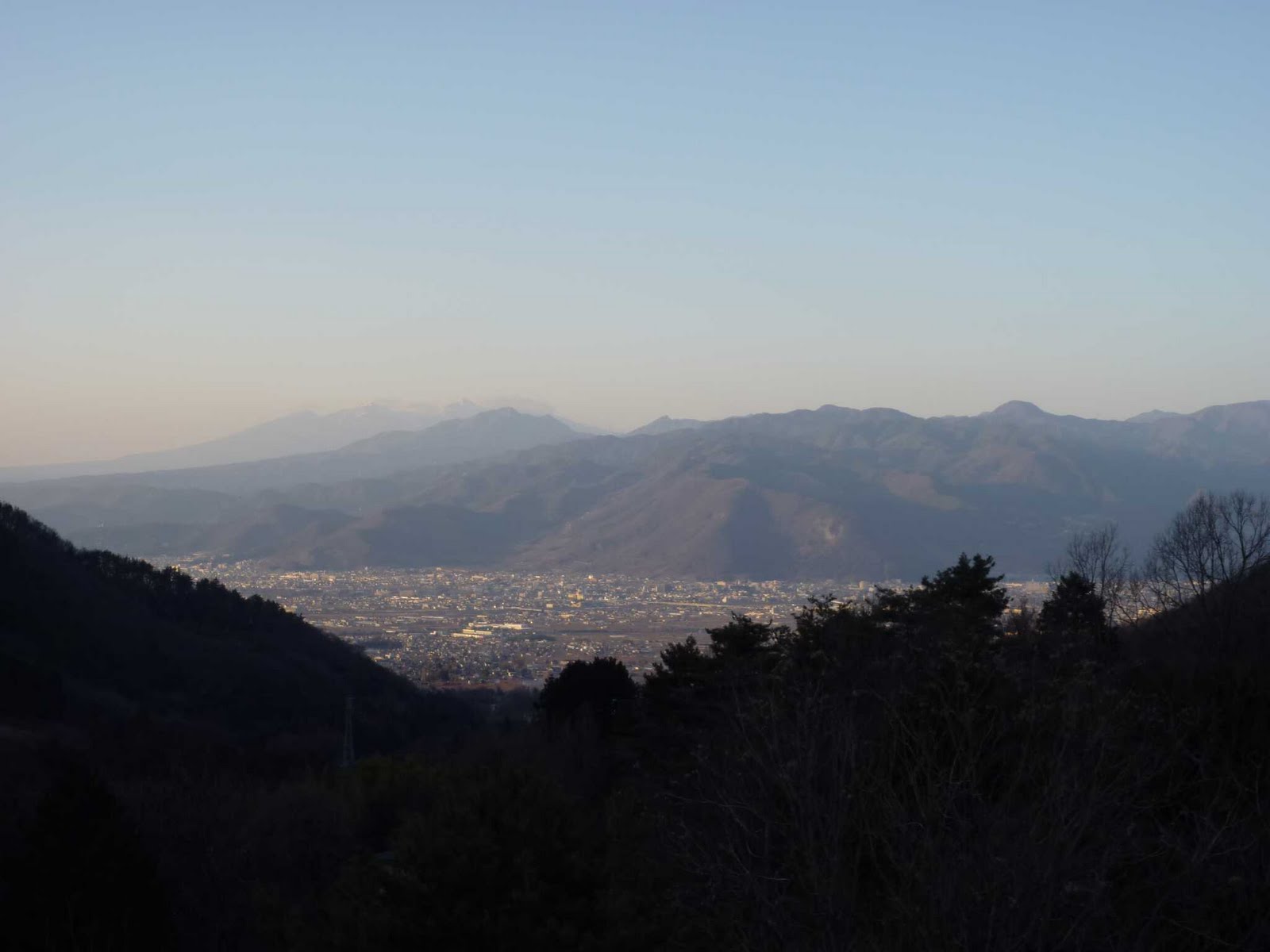
On the other side, I had stunning views of Kofu and the Yatsudake range behind it. From there, it was a very fast downhill into Kofu. At some point, I hit 70km/h, but could have gone even faster had it not been for a fear of hitting snowy and icy patches which existed here and there.
181km with 2,300m of climbing, and plenty of new discoveries, at freezing temperatures (mostly 2 to 7 degrees).

4 Kommentare

Eingeordnet unter 2010

2 1/2 hours Freezing in Motegi

After the Ekiden ride on January 2nd, I enjoyed another another 100 km bicycle race at Motegi with some of the TCC guys two days later.

In preparation for this race I did two things: First, I rode up to Hakone on the Ekiden ride which made my legs feel like pudding and would gave me ample excuses for any bad performances on the track. Second, I spend the afternoon before the race at the house of my in-laws in Saitama which is extremely cold (it feels comparatively warm outside of the house) and which should prepare me for the winter hardships of the Japanese countryside.

As I have stayed there also in winter some years ago, I can assure that standing naked in the bathroom and waiting for hot water to come out of the tap can be the coldest experience you might ever have in your life time. The only thing that saved me then was the distraction provided by the set of false teeth of my mother in law in a glass of water (the teeth, not the mother) strategically placed on a cupboard at eye height.

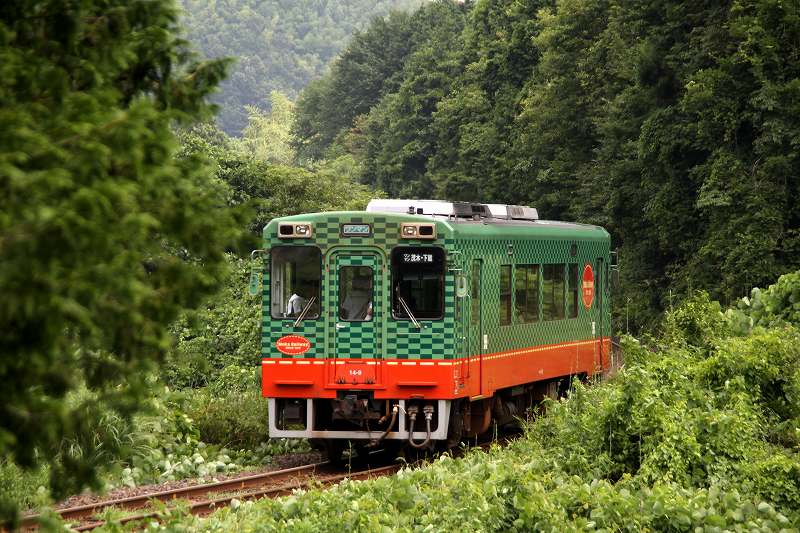
I went straight to Omiya, then by Shinkansen to Oyama and the by Mito line to Shimodate within no time. From there I had to take the Mokaline to Motegi. Oh, you haven’t heard of the Moka Line (真岡鉄道) ? Well it a one-car train, powered by a diesel engine as the tracks are not electrified yet (and they will probably never will) which leave about once an hour from Shimodate station.So I had to wait almost an hour at the station there (amusement provided by a big pachinko parlour in front of it), nothing much else. Oh right, I went shopping for 45 minutes at a 7-Eleven.

Before I could take the train which took another hour to Motegi. The last 15 minutes I was alone in the train, even all country pumpkins have left some stations before.

Phil and Clay picked me up at the station, train stop would be more appropriate and after a quick stop at another 7-Eleven we drove to Hotel Pomodoro where also the other TCC guys had already checked in.

I shared a room with Keith and while watching „Die Hard 4.0“ we all planned our race strategy., I didn’t listened too carefully as I was constantly amazed by all the wonderful things Bruce Willis can do and how is able to survive in a movie. Although I could help to notice that the shape of his head resembles very much the head of the water turtle we have some bought some months ago.

But I heard constantly the words „try to survive“ and „wheelsucking“ repeated all over again.

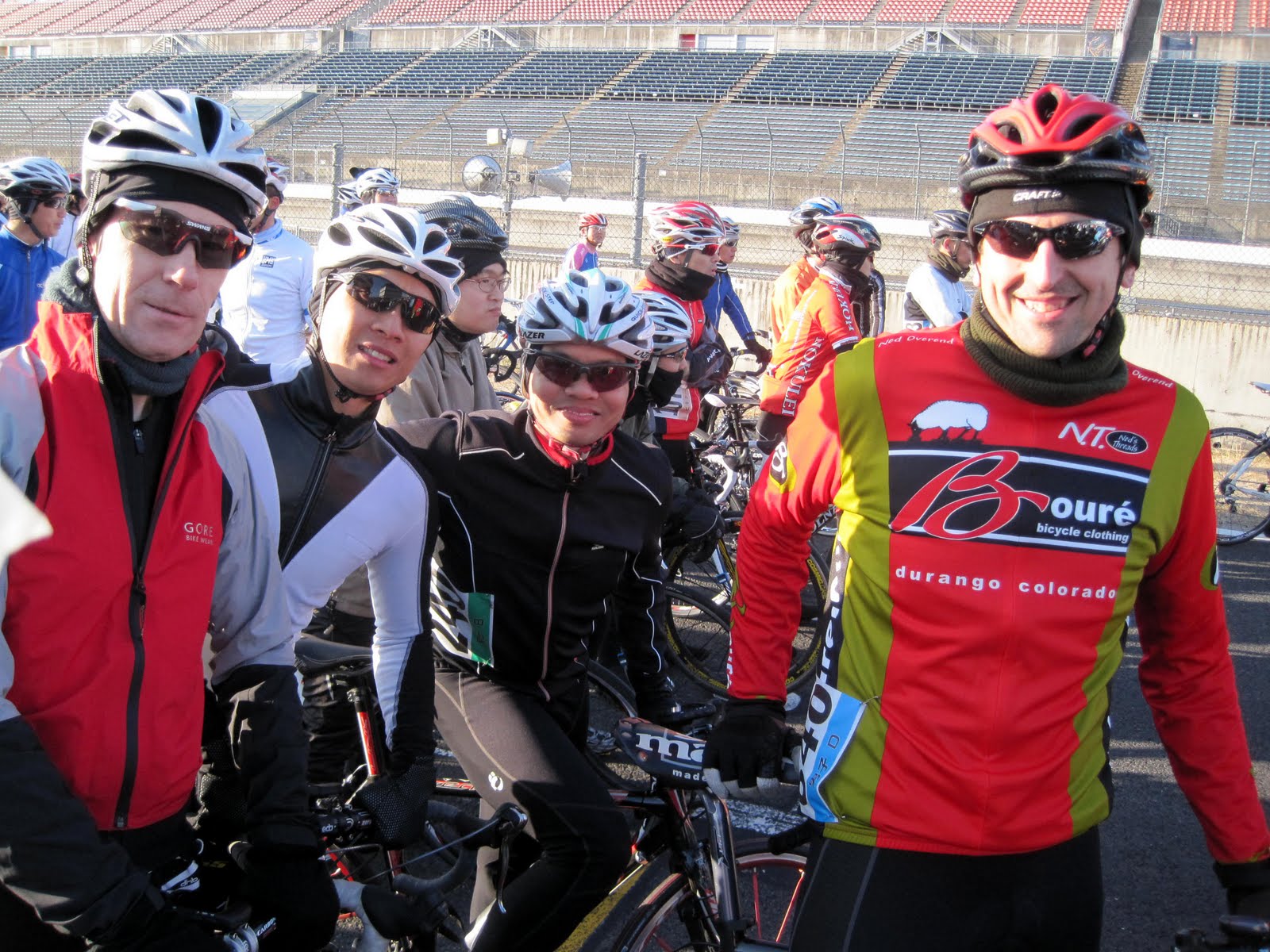
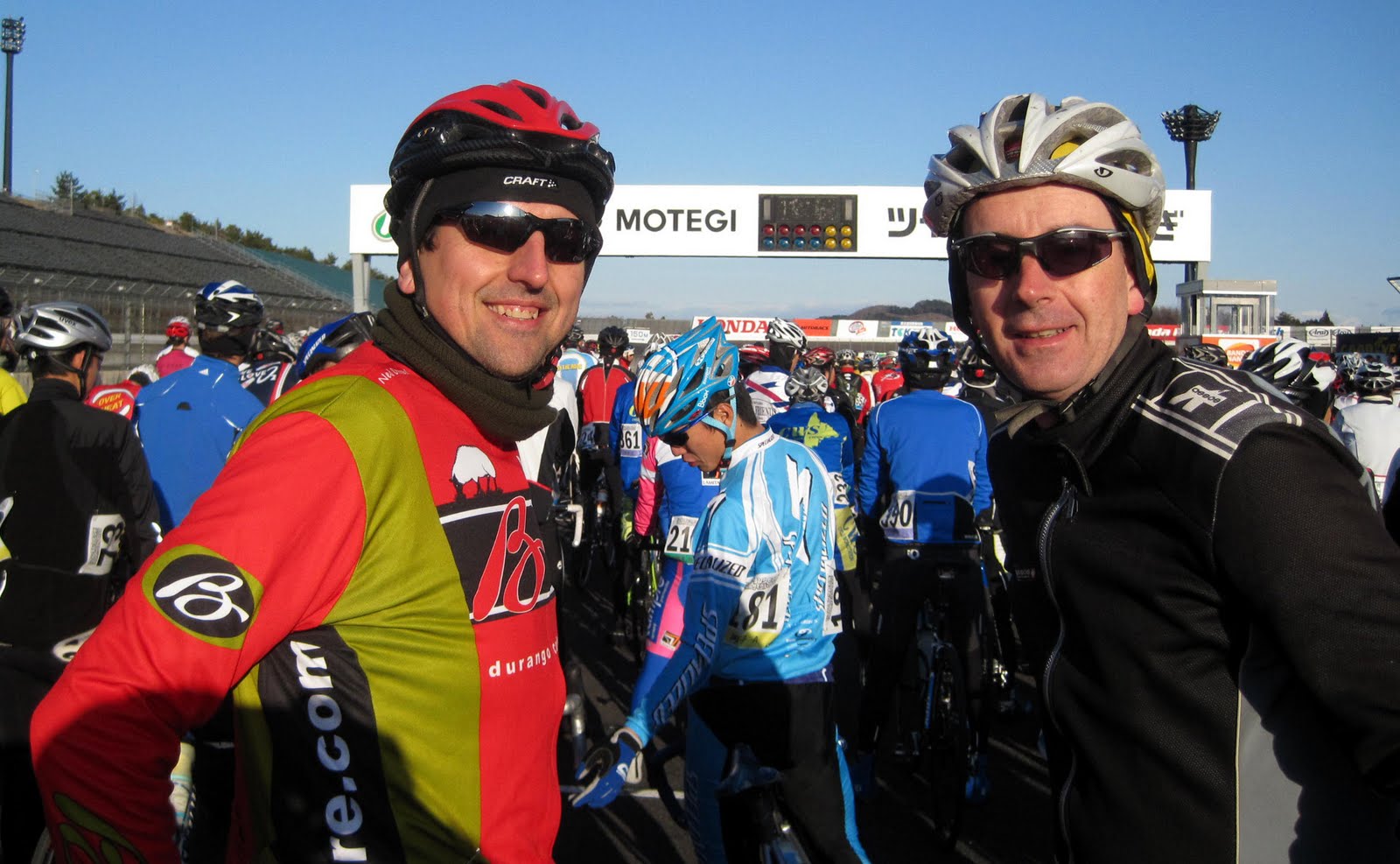
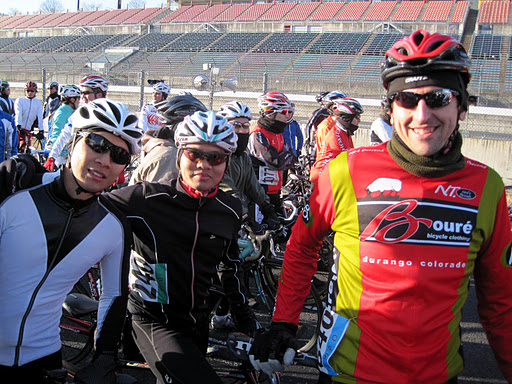
When I woke up the next morning at 6.00 AM it was cold. Outside it was even colder, definitely less than zero degrees. We rode up to Motegi and assembled our gear. And in no time we were lined up at the start line. Phil, Keith, Jessie and Yeap were all there and we took some photos of us shivering. Clay was already leading the race by this time.
Then the race started and I never felt cold again for the reminder of the day. We were not in the front line, but at last within the first 200 riders I guess. And the first two laps were behind a pacmaker and that was crazy as everybody was trying to get to the front and there were a lot of dangerous situations. For the first time I didn’t noticed exactly when the pace making car pulled away as the field was still packed and it took time to accelerate and get faster.

Opposed to the seven hour enduro race, one lap is only about 5 km long as the speed oval is not integrated (so no 180 degree hairpins luckily) and in addition the direction is the other way round. So one doesn’t have to ride up this steep hill (although the track is basically flat). In the opposite direction the climb is much longer and more gradual. It consists of a (relatively) steep first part, a flatter part in a S curve and a very gradual part until a wide 180 degree hairpin curve.
Now with the speed picking up I stayed within the first group of about 100+ riders for the next 4 laps. I also saw Phil again, first I overtook him, that he overtook me again on a downhill portion of the track. Then we were running up that hill and of course the thing happens that happens every time on hills, which is that a group of about 100 riders went ahead, a gap was created and I found myself in the second fastest group. And of course I felt miserable and I thought to myself, why I am doing this, getting up early in the morning, visiting my in-laws, freezing in the cold, exhausting myself for the rest of the week and and and. So in short, the typical thoughts that run to my head before more endomorhine kicks in, erase the pain, make logical thinking impossible.

So I was in a group with about 20 other riders and after some more laps I recognized the jerseys and we stayed together for the next 5-6 laps when we were overtaken on our lap 11 or 12 by the fast group. That group was still very big.
The speed of my group was not that fast, I could easily keep up and here I made the mistake not to jump on the fast group again. So perhaps I wouldn’t have been able to keep their speed but I should have tried at least.

So I continued with my 20 rider group, sometimes taking turns in the front. Amazingly I was faster up the hill then the other guys. I had more momentum on the bottom part, then I was slow at the S surve but had more power on the gradual climb up to the hair needle. So I always lost some places downhill but I made them up on the hill – quite extraordinary given the fact that I have to carry more than 100 kgs up the hill (heavy bike, lead frame with steel wheels) while the average Japanese competitor weights about half of that with his bike.

Then we were overtaken by another fast group which I thought in the beginning was the second fastest group (so we were only the third fastest) but this group couldn’t get away from us. So then I realized that they were actually the third fastest group and we were only too slow so that they have caught up with us.

And in this group we stayed until the end. I was feeling much better know and the last six laps I was taking it rather easy on the flat and downhills parts, going no risk while making places good on the hills. Also I saw Keith and Jessie again.

At the final hill I made up some places again, the went fast on the straight and down and sprinted up to the finishing straight. But I have somehow missed the info that the last part was divided into two lanes, the left one for the riders which were still continuing while the right one was for the finishers. So I ended up on the left lane and had to cross over to the right one. Later, when reading the results I realized that I have lost some time there and I came in about 30th in a group of 50 riders. At least I was able to catch the 2nd placed MTB rider shortly before the finish.

Well it could be expected that the competition would be hard as riding out in Motegi in the cold on January 4th is not exactly what people do if they are not really desperate for bike racing.

Interesting enough, Jessie, Yeap, Keith and me came in all more or less at 2:45 hr despite not staying together as group during the race. The complete race results are here.

It is interesting to note that there was a fast group with about 80 riders, all finishing in the 2:29 to 2:31 hr bracket (including Clay), followed by smaller groups of about 40 riders, all together and then another big group of 50 riders finishing at 2:45 very close to each other again.

As usual, you have to stay in a good group matching your speed, otherwise there will not be a good result.

I rode back to the pit where I saw Phil fully dressed, assuming that he had finished in the 2:30 hr group and now wanted to impress us with his fast change- clothing abilities. But in fast he had punctured and was forced to abandon the race which I guess is the maximum penalty life has to offer on a cold day in Motegi.

It was a nice race and I enjoyed the nice company on Keith and the others. Also I would ike to thank Phil for organizing everything and taking me back to a huge train station wher Clay and me rode the train home to Nippori and further.

I was pretty tired and very hungry as the contrast between the usual holiday meal and the scare food on the racing day was too much. So I visited a McD on the ay home – that shows how desperate I was.
Anyway, only four days in the year and already 250 km of riding done.
And good rides they were.

3 Kommentare

Eingeordnet unter 2010, Cervelo Soloist, Mob, tcc

Ekiden in Pictures

Rather than to add further writings about the Ekiden event, I post some of the pictures Ludwig and me took along the ride.Ok, I can not restrain myself and will add some comments nevertheless. This also should serve as a reminder when I plan the event next year again.

It took me about 45 minutes from my house to the meeting point at Route 15 at the Tamagawa. The meeting point is easy to miss if you come from Tokyo as one has to leave the main road and ride down from the flyover.

James and Dominic came shortly thereafter and as the Tokyo group was not in sight we started at 8:25. The first part is not so pleasant, I found. There is still a lot of traffic, many police on the streets and many red traffic lights. One is probably as fast as the runners on this stretch.

We kept our group together, had some talks with the police here and there and then one of the spokes of my rear wheel decided to break. As I was organizing and perhaps a little bit more nervous than usual, one spoke missing made me even more nervous. The wheel was still true but I limited myself to about 40 km/hr on the downhills.

We were late for the meeting point in Fujisawa but Kori has hold out there, so I was happy that this went well, after we have missed the Tokyo group or vice versa.After Fujisawa is there is a fast stretch on the coast road where we gained alot of time and where riding was fun with Fuji-san clearly visible right in front of us. Also Ludwig and David A caught up with us there.

Then we all had together a last break an a Combini in Odawara before the serious portion of the ride started. Now Ludwig was also pushing to start, so I could relax a little bit from my organizing role. It was clear that we wouldn’t stay together as a group on the climb from the beginning.

I don’t know why, but the road between Odawara and Moto-Hakone is not a very pleasant one. There is only a slightly incline, but it feels like 10%. And we almost got stopped by a policeman again, but Ludwig and me could ignore him and continue. We could also see another pair of pinchers from hell on the rights ide of the road, but they refrained from grabing us.

At the beginning of the official Togebaka climb at Asahikawa Bridge, Ludwig, James and me were together with me leading and the others were somewhere behind. We stayed together for about 6 or 7 minutes and then Ludwig and James went ahead. David A also overtook me some minutes later. But that was it, I overtook some more riders on the way up. The traffic was rather bad with a lot of buses and sometimes I had to squeeze my way up between a bus and a line of spectators. One time I even had to stop. And I was slowly running out of power. I particular dislike the slope after the Fujiya hotel which isn’t that steep again, but for some reasons hard.
Then I reached the huge Yunessun Onsen at about 600 m elevation and this is always the point on this climb where I think, OK I have almost made it and now it is only a few more meters. Some minutes later I was overtaking a struggling Japanese rider, I thought and shoute „Gambatte“ as encouragement, only to find out that it was Graham. I wanted to be up fast, so we didn’t talk too much and then I saw James taking a break at the roadside in front of me. Before he saw me, he started again and I could caught up with him. We then stayed together until the ENEOS gas station where he said „Oh, that was hard“, while I said „It is not over yet!“, as we still needed to go down one hill and do one more short climb. 55 minutes an something was not a shabby time for me, better than last year (always important) and much better than the 1:35 hr I needed some years ago. Ludwig was by now already at the goal.So James and me ride together into the finish area, seeing all the cheerleaders, hearing all the bands (Playing „Popeye, the sailorman“) and watching the Supporters of Tokyo Nogyo Daigaku (Agricultural University) swinging big radishes in support for their team.

I opted for the Assos Fugu jacket, which was the right choice for the first 20 minutes in the morning but was afterwards simply much too warm. Too cold was never an issue on this day. Luckily the day was sunny so I laid it upside down in the sun so that the sweat could dry.

Dominic also made it in front of the runners, very well done. And Graham as well.
So after watching some of the runners, we rode up to the Michi no Eki restaurant where we had some Soba and Udon and told each other our stories. Ludwig and me wore our JCRC championship jerseys of 2008 and 2009 and we made some photos.There was nobody elase coming so we made our way down to Atami. The traffic was bad up to Route 20, but from there onwards it was OK. The road was beautiful as usual, but I was very catious with me spokeless rear wheel so I didn’t enjoyed it as much as I do normally.
And in Atami we were greeted by an assortment of Geisha in the 60 – 96 years age bracket who congratulated Ludwig on his JCRC championship while all of us got there „Otoshidama“ from them.
Then back on the Shinkansen, very crowded but only 25 minutes to Shinyokohama for me with a beer in my hand.A very nice start into the 2010 riding season. I felt a little bit sorry about the rider we have left behind or didn’t made it, so as some of the other have checked with Yair, I checked with Kori later. As we started also much more earlier the climb this year, than last year, there was also les stress that the runners would overto\ake our leading group. And of course we were faster but I would assume that the last runner of Toyo is stil faster on the stretch between Odawara and the finish than I was. Amazing.

Hinterlasse einen Kommentar

Eingeordnet unter 2010, Cervelo Soloist, James, Mob

Pro-Lite, Official Sponsor for 2010

Positivo Espresso is proud to announce a partnership with Pro-Lite for the 2010 race season.

The Pro-Lite philosophy is to produce a range of high quality PROfessional LITEweight bicycle equipment using the very latest technology and materials.

Pro-Lite have built an extensive range for road bikes, all designed to be the lightest and most durable products on the market today, and now they have teamed up with Positivo Espresso to ensure another successful season on and off the track.

www.pro-lite.net

Ein Kommentar

Eingeordnet unter 2010

Ekiden – The big bad ride that proved to be more stressful than strenuous

[Copy of what I posted earlier on the TCC site]

Sorry I bungled the organization of the ride for the group starting from Otemachi.

I should have foreseen that we had some slower riders which meant that especially in the red-light jungle of Tokyo we would not be making up time against the runners.

Less foreseeable was that the police was much more aggressive this year than last (while still being arbitrary and random) in enforcing traffic restrictions ahead of time. Last year, we were at times about as close to the runners as this year, but never got pulled over. This was particularly strange on the climb to Moto-Hakone where I was much further ahead of the runners this year than last (last year I heard the support vehicles all the time, this year not at all; and I arrived just minutes ahead of the runners while this year I had to wait for half an hour to finally see them arriving at the finish): police asked us to stop several times, but as this was really not practical stopping right in front of roaring crowds with no space between them and the road, I always went on irrespectively.

So I’m sorry that the conbini stop ended up taking Trad, Yair, Miyuki and Aki out of the race, while I was zooming by the police woman shouting „stop“ (so did David I guess).

Well aware that I was in danger of being pulled too, I went relatively fast through long empty roads with lots of cheering people (who had only me to look at) and caught MOB’s group soon after Fujisawa. I was hoping we would somehow see at least some of my group later, though gave up the hope as we were going at a more leisurely pace and nobody coming in sight from behind. What a pleasant surprise when David caught up with us in Ninomiya.

We then bumped into Guzz on his impressive wooden fixie and he gave us company into Odawara.

We left from another conbini stop in Odawara exactly half an hour before the runners were to arrive. Despite all that was still to come, I managed to keep up this gap exactly on the 900m climb and beyond.

But before getting to the climb, James almost crashed into me as I was breaking for a stupid policeman who had been waiving a car out from a side street and right into our way. Thanks to his soft Dura Ace 7900 gear shifter, I didn’t feel his bump into my bottom for long. Probably aggravated by this experience, the stupid policeman then stopped David, Dominic and Kori, which cost them some time to get back onto the road (all unknown to us). This was also the last time any of us saw Kori.

The time-trial climb was a nightmare of navigating through an endless traffic jam. After more than half way to the top, it cleared and the remaining climb was nicer, albeit still marred by crazy bus drivers who liked to show they didn’t care about bicycles and would see them rather dead than alive. The crowds lining the climb (many more than last year!) clearly thought otherwise, which was nice.

I had lost James somewhere half way up after telling him it was still half way up (he wanted to know) which seemed to have demotivated him a great deal. I was expecting him to emerge soon again, but in fact, after I took a break after the time-trial end at the peak of 874m to get into warmer clothing for the descent into Moto-Hakone it was David who appeared once again out of nowhere. Stopping occasionally for photo shots, we made it to the finish, where we waited for James and MOB, and to our delight later saw Dominic coming in too.

The final surprise of the day was Graham who I passed on the long climb. We had thought he hadn’t turned up at all, but as he later explained, he had just missed the exit from the Dai-ichi Keihin for the meeting point and ended up going on his own all the way to Hakone. He joined us later in the restaurant, having watched all the runners pass, and clearly more knowledgeable about the results than any of us.

The descent into Atami was pleasantly free of much traffic, and the first-time use of route 20 for the final descent into Atami a nice discovery over the much steeper and shorter we approach we usually take.

My own statistics:

141km incl. 10km from home to Otemachi
1,300m of climbing (according to mapmyride; my less reliable Ciclo shows 1,550m)

People who started:

From Otemachi: Yair, David, Trad, Bryon, Ishihara-san, Miyuki, Aki, Ludwig
From elsewhere: Graham, Guzz (separately)
From Kawasaki: James, Dominic, MOB
From Fujisawa: Kori

People who finished:

Moto-Hakone, then Atami: James, Dominic, David, Graham, MOB, Ludwig (funny – four Brits, two Germans, one whom even UK-educated – does this say something about the future of road-race cycling?)
Hakone Yumoto: Yair, Miyuki, Aki, Trad
Not yet accounted for: Kori, Bryon, Ishihara-san

For me this was not a very strenuous ride, but certainly a very stressful one – it does not feel nice losing half of your riding mates and not being able to stop for them.

Cheers, Ludwig

Ein Kommentar

Eingeordnet unter 2010, James, Mob

Ekiden – The big bad ride that proved to be more big than bad

The big bad ride that proved to be more big then bad.

We had a good turnout and prompt meeting at the Tokyo station designated area. With lots of spectators ready to cheer us on and cheerleader squads lining the start we made our way through the streets of Tokyo. Unfortunately my father-in-law wasn’t able to keep the speed of the rest of the pack and he was far behind by the time we got to the Tamagawa river. As I slowed to wait he finally caught up and the rest of the group was nowhere to be seen. We took the off ramp to the meeting spot at the first combini over the river but there wasn’t any orange jerseys to be seen or anyone else for that matter. We thought maybe they had continued on and that maybe we would see them at another stop in a short while. We were wrong and so we decided to stop a few kilometers further to see what was happening. To my biggest mistake I didn’t have anyone’s phone number and I guess none had mine.
The racers soon passed us as we waited for signs of other riders, then they came, the pack of cyclist….my father-in-law retired at this point which was around Kawasaki…

Jumping in with the pack I looked for others that I knew but with no luck.
Further on I had a great view of the giant in the distance. I spoke to a few people in the large group and one said it was the best turnout of cyclist in know history of the event. The rest of the start group was never seen again except for three riders that were in the large group for a short time. Overall it was much like the description of various tours throughout Japan in that the speed was controlled by, well the race patrol cars in this case. Average speed was 15 to 17 kph. Not too much fun but that was soon to end as we approached the climb to Hakone. The climb was more then I expected but over all was great fun. I was impressed by my ability and speed that I was able to maintain for my fifth ride in 8 months. The descent to Atami was a challenge as well but I think it would be a great training ride to go from the ocean side to Hakone once the weather is better….any takers?

At the start of the descent…

Around some corners and this is what I saw…

Thoughts for the next big event such as this…

  • everyone has the others contact number
  • regrouping points where other will wait or not wait for the rest
  • better mapping points

3 Kommentare

Eingeordnet unter 2010

Hakone Ekiden Info #1


Ok, here are some more information about the Ekiden Ride on January 2nd.
Running History

Originally the Ekiden is a relay marathon of roughly 109 km between Tokyo and Hakone, organized for the first time in 1920. On January 2nd of each year, the race starts in the vicinity of Tokyo station and goes along major roads (mainly #1 and #15) to Moto-Hakone. The first part up to Hakone is more or less flat but the last 20 km is a pretty brutal climb of more than 700 m elevation up to Moto-Hakone.

On January 3rd the race is hold in the oppositive direction, starting in Moto-Hakone and finishing in Tokyo.Each year 20 university teams are attending and each team sports 10 runners, 5 for the first and 5 for the second day relay. The Ekiden has become a very popular sports event and is nationwide televised by Nippon TV with thousands of supporters lining the streets between Tokyo and Hakone.
More is here : http://en.wikipedia.org/wiki/Hakone_Ekiden [English]
and here : http://www.hakone-ekiden.jp/ [Japanese]

Riding History

Since many years [in the later part of the first decade of this century, Positivo Espresso riders have been running in front of the Ekiden field between Tokyo and Moto-Hakone on the first day of the race on January 2nd. The idea goes back to an American lawyer who wishes to stay unknown to the general public and who is anyway not in a position to ride this year due to a horrible traffic accident which involved him, a mama chari, a college student and his shoulder.

An account of last years ride can be found here: http://positivo-espresso.blogspot.com/2009/01/first-2009-positivo-espresso-team.html

It is an ideal opportunity to ride relatively fast & freely on otherwise congested roads between Tokyo and Moto-Hakone, being supported by the bored crowds that have nothing else to do but to wait for the runners. In particular the atmosphere on the climb between Hakone and Moto-Hakone and in the finish area is very dense and exciting with cheerleaders, marching bands and hard core supporters from the universities lined up.

Concept
The basic idea is to run ahead of the runners just after the roads are closed for general traffic so that one can have open roads all the way. As the police is omnipresent and not all traffic lights are turned off, progress is sometime hampered in the urban areas between Tokyo and Yokohama but this becomes gradually better further out. We wil make some stops at Combini to buy some food an drinks, but due to the crowds it might be better to take some food from home.
The real challenge is the climb between Hakone and Moto-Hakone which covers about 13 km and 745 m elevation.

Mountain goats in good shape can do this climb in 45 – 60 minutes time. However, the Eliden runners are eqully fast. The challenge is to start the climb in time and make it up to the goal before the runners. This is very tough. And very much fun. After the climb we re-assemble at the rest area of Hakone Pass and have a warm meal. Riders who could not start the climb before the runners and were aftertaken before the climb begins can try to ride up the old Tokkaido (road 732 from Hakone-Yumoto- see map at km93).

Riders who are overtaken on the climb have to wait until all runners and cars have passed by and the roads are open again for traffic before they can make their way up. Once we are all together, we ride on route 20, the most beautiful cycling road in Japan to Jukoku Toge and then further on and down to Atami where we take the Shinkansen back to Tokyo. Of course, those who want to ride back are free to do so.

Participants [so far]

So far we have Kanzler + 2 friends, Dominic, Tom, Bryon, James, Graham and me from Positivo Espresso and Yair, Sergey and Koribeyer from TCC joingthe ride. It would be of course even better if our groups gets even bigger.
The Route

I prepared a map my ride route, covering the whole sistance between Tokyo and Atami of 132 km and 1,245m of climbing. Out of this, about 112 km are on the Ekiden roads and the remaining 20 km are cover the return road between the finish in Moto-Hakone and Atami.

http://www.mapmyride.com/route/jp/hakone/986126207720862175

Meeting points are marked with M.
The END marks first the goal of the Ekiden at Moto-Hakone and then the goal of the ride at Atami station.

Meeting Points

We designated three major meeting points for all riders to join the ride. Th meeting points are marked with a M in a square in the above map, except for the first one which is the starting point.

Meeting point #1 is in Tokyo at the start of the race, at the crossing of Hibiya and Eitai Dori in front of exit C14. from there the total ride wil be 132 km. Ludwig and his two friends and Yair and perhaps Dominic will start there at precisely 7:40 AM. As we need to be in front of the runners, we will not start later than that.

Meeting point #2 is in Kawasaki, right after the bridge over the Tamagawa on route 1 in front of the Family Market Combini. We will meet their the riders from the Tokyo starting point and continue to ride at 8.25 AM latest. The distance to Atami from this meeting point is about 112 km. I (mob) will be waiting there and I assume that James, Tom, Graham and Bryon will start from there.

Meeting point #3 is in Fujisawa, mainly for the convenience of Koribeyer、on road #30 at the Fujisawa Eki Kitaguchi Iriguchi Crossing North of Fujisawa Station. We are going to be there at 9:45 AM. Again, we must start at 9:45 in order to stay in front of the runners. The distance from here to Atami is about 80 km.

Meeting point #4 is the restaurant MICHI NO EKI at Hakone pass. Here we gather after the cimb to eat something, and ride together to Atami. The runners wil arrive at Hakone about 13.30hr and traffic wil be open at 14:04hr. So I guess we can start to ride to Atami at about 14:30 hr latest.

Alternatives

It is highly unlikely that we will get overtaken by the runners before the climb. But somebody might get lost or overtaken on the climb, so what can be done?

If overtaken before the climb, please take road 732 from km 93 on the map which is the old Tokkaido. This is faster and much less crowded than the Ekiden road #1 so you will be faster up in Moto Hakone and ride then to the meeting point #4 at Michi no Eki at Hakone Pass.

If you are overtaken by the runners on the climb up, then wait until traffic is open again and ride up to Moto-Hakone and then further to Michi no Eki at Hakone Pass where we meet.

In case you want more safety, please send me an email or PM on the TCC blog with your mobile phone number so that we can stay in contact during the ride.

We shall be back in Atami by 15.30 hr latest and I assume that most of us will take the Shinkansen home. However, you can also ride home, although most of the ride will be in the dark on pretty big and crowded roads.

Weather

Please check the weather forecast for Moto-Hakone, for example here:
http://tenki.jp/forecast/point-797.html
So far it looks good and let’s hope that it stays that way. No rian, but it will be cold in the range of 0 – 10 degrees Celsius and there mightbe patches of ice and snow in the shadows.

In case it is forecasted with ahigh probibility that it will rian or snow on the racing day in the Hakone area, we will cancel the ride. I will post on thge Positivo Espresso as well as on the TCC blog on the day before, so if you don’t see anything you can assume that we will ride.

Also it will be cold, but you wil get hot during the climbs. Part from shoe covers and long fingrered gloves it is best to have layers of clothing which you can easily add and removed to adjust for the changes in temperature inside and outside of your clothing. A windbreaker will be good for the fast and cold descent from Hakone to Atami.

Other preparations

Apart from you, your bike and the usual stuff (repair kit, lights etc.) you will need a bike bag for the ride bag on the Shinkansen from Atami. Also it is adviseable to bring some food from home as the portfolio of the Combinis along the road wil be rather small due to the large crowds in the area. Bring also your camera and dress funny if you think that this will give you more support from the crowds.

Togebaka / Hall Of Fame

For the riders in competitive mood, I shall mention that the portion of the route between Asahi bridge and teh signboard marking the highest point of road #1 is an officially approved Positivo Espresso „Togebaka“ or Hill climb time trial run of 13.2 km length and 745 m elevation difference with a best time of about 58 minutes so far.

Any questions ?

Let me know, send a comment.

See all of you on January 2nd.Happy New Year.

3 Kommentare

Eingeordnet unter 2010, Mob, tcc

OFFICIAL PE-TCC HAKONE EKIDEN RIDE

We are planing to have our traditional (since 2008) first training ride of the year on January 2nd 2010 together with Tokyo Cycling Club. A gruesome ride from Tokyo (Kawasaki? Yokohama?) along the coast to Odawara and finally up the hill to Moto-Hakone. All the way followed by a bunch of incredible fast (and incredible young) university students ….. running.
Who will make it up to Ashinoko before they overtake you?

The reward for those who make it: The mother of all downhill rides: Route 20 from Hakone Pass over Jukoku pass and Atami pass down to Atami. And the mother of all quick returns.

January 2nd 2010. Mark the day.
[please also mark January 2nd 2011, 2012 and 2013 in case you bought calendars already]

Ein Kommentar

Eingeordnet unter 2010, Mob