Berezina Crossing

Mikuni Pass [三国峠」], literally „Pass of the three countries“ is called so because it was conquered one day by riders from three different countries. The day was November 3rd, 2009 and the three riders came from West-Germany, France and South Germany.

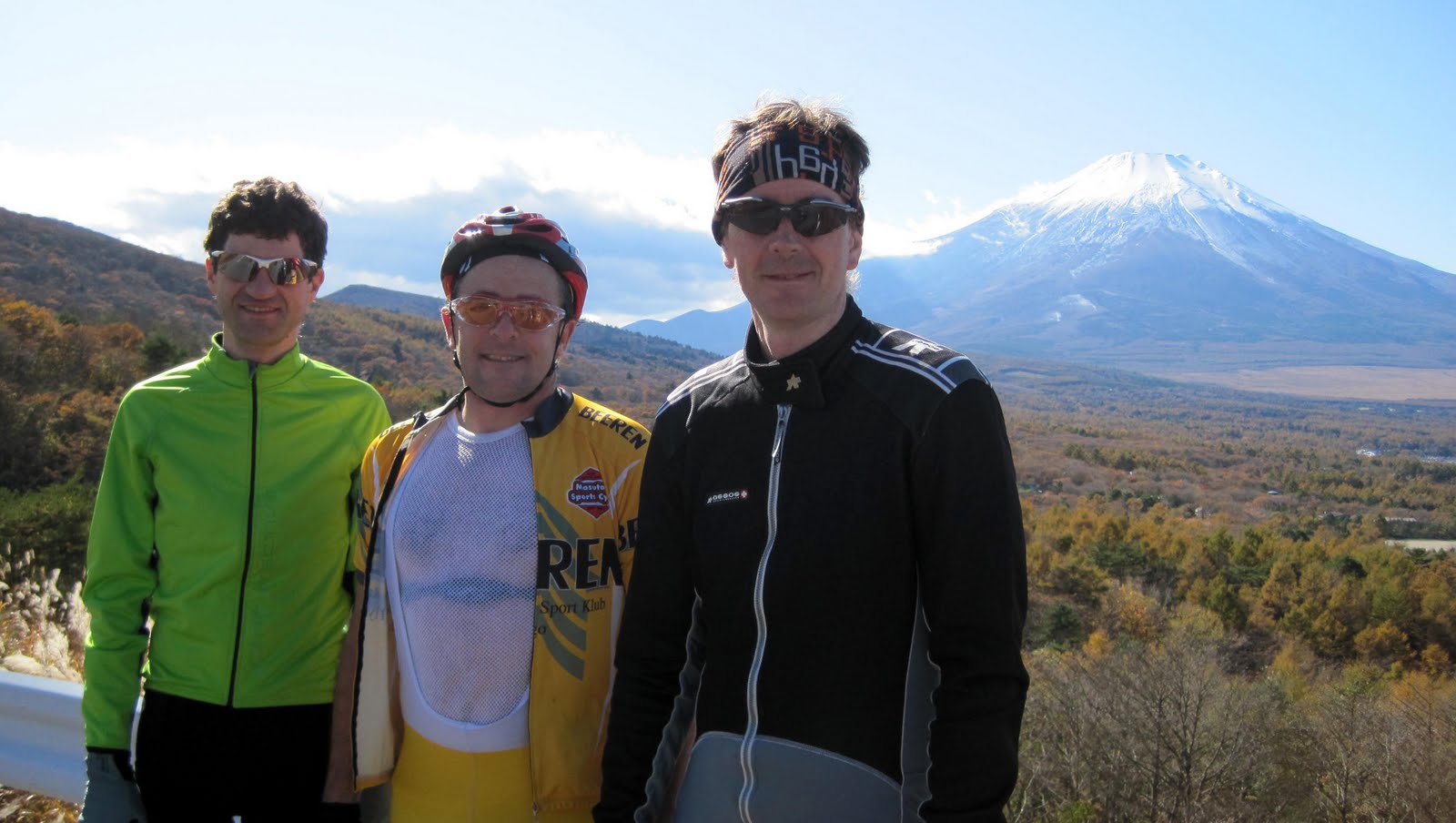
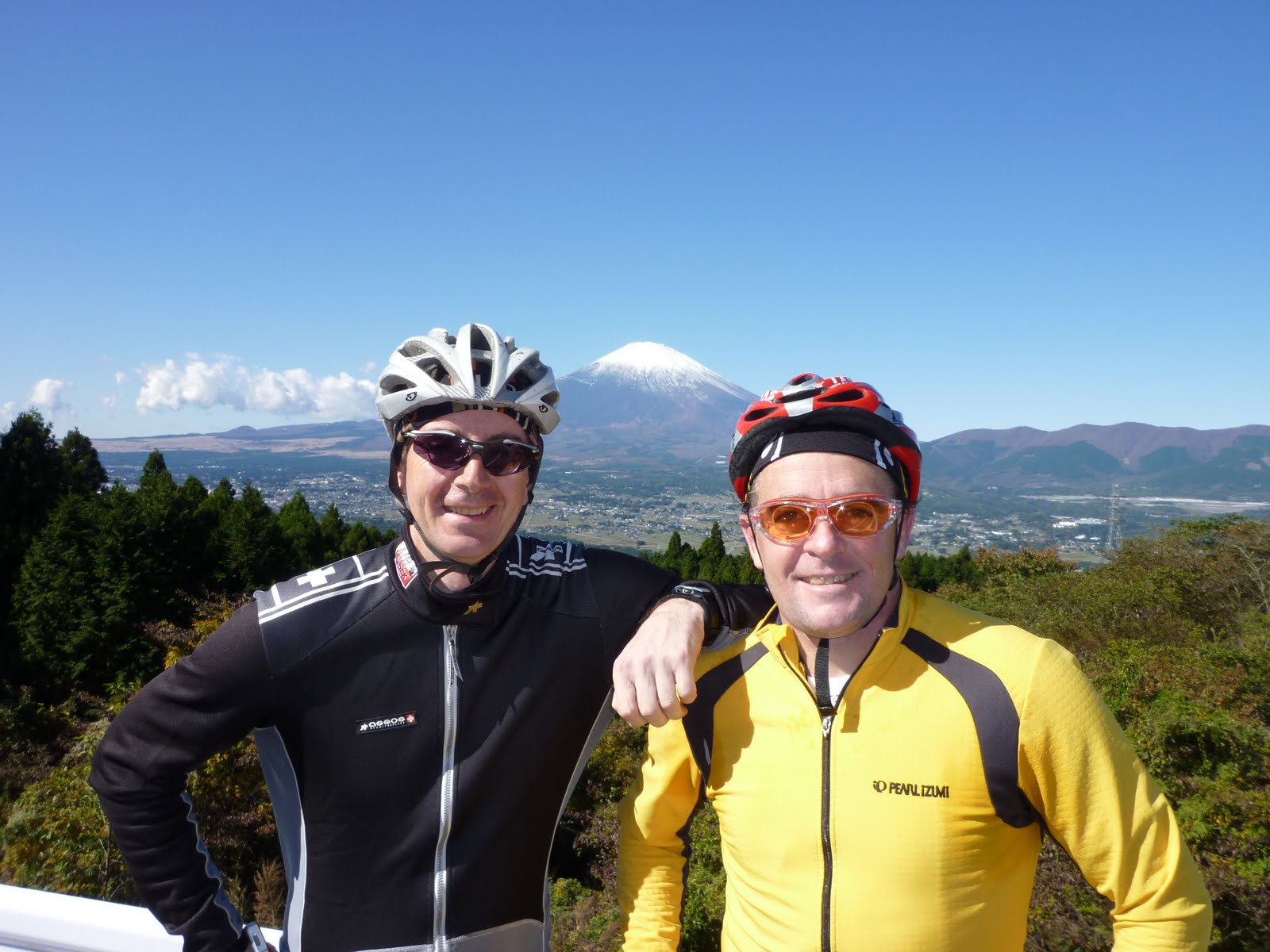
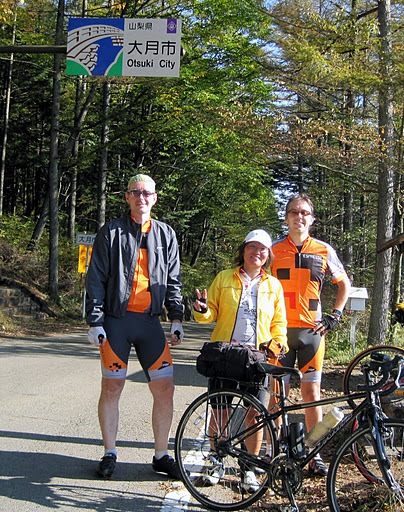
Jerome, Ludwig and me met at Odawara station at 8 and Jerome showed us the way out on a very nice road leading along the gentle slopes of the Hakone mountains. Actually he didn’t even know this road before taken us there, but nevertheless it was very nice. A lot of ups and downs and before we knew it we were on the ascent to Ashigara pass. This was the first climb of the day and it was not an easy one. There are many hair needle curves on the higher part but when we were finally up and over the pass, we had a beautiful view on mount Fuji and on the first snow of the season on it’s top.Note the hidden Belgium flag.


We went all the way down again, but not through the golf course hills but rather through a forest road which led us to a (now approved) family mart in the valley between Ashigara and Mikuni. And then we started the attack on Mikuni Toge.

After having heard much brutal stories about it, I was surely lacking self confidence when I started. Also my legs still felt weak from the Motegi race two days earlier. So it was a very hard climb indeed but luckily it is only less than 7 km long. I was expecting much more and before I knew it we were on the top and over where again we had a beautiful view on mount Fuji and lake Yamanaka. My guess? OWI = 2.0 as it is about double the distance and elevation.
We stopped at the approved 7-eleven at Yamanako and both Ludwig and me had a good Oden-lunch while Jerome was showing off his Ukranian army underwear and pretended that it was still summer. In fact it was cold. Very cold.

We continued to ride along the lake and then up to a new pass called Nijumagari Toge which was kindly introduced to us by Y I. Eternal thanks to you for that one. From lake Yamanaka it is a very gentle approach up only 150 – 200 meters and from the top one has again a nice view on mount Fuji plus there is another holy fountain providing water for the thirsty cyclist.The road that leads down to Tsuru (road 139) and further to Otsuki or Akiyama. One can also cross Dosaka pass and turn back to Doshi Michi (413).

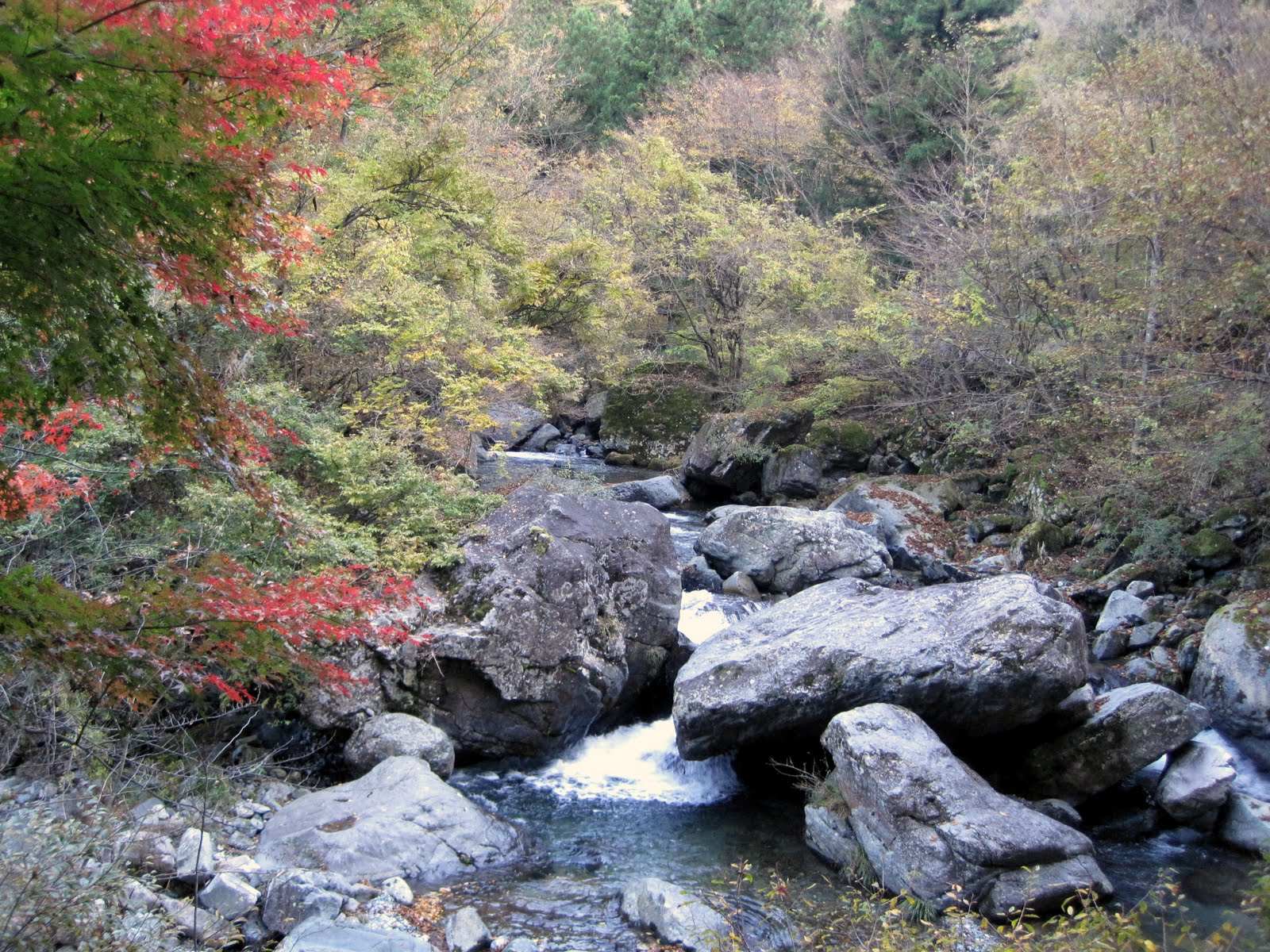
And this road is not only complete void of traffic (except for some construction equipment trucks), but also full of snow on both sides as it is mostly in the shadows. The whole ride felt like a ride in the winter: the air was clear, the sky was blue, the rivers looked beatiful with the surrounding Koyo, it was 4 degres C or so and I was glad that I overdressed on the suggestion of Ludwig.

Also there are many other interesting roads branching off to locations which are called „DO NOT ENTER“ in English. Unfortunately a part of the road is pure gravel.

When finally reaching road 139 we ramped up the speed in the spirit of Motegi and made a fast run for the train station at Otsuki. An equally fast train brought us home within no time.A very nice day out in the winter – back in the city it was much warmer.

3 Kommentare

Eingeordnet unter 2009, Jerome, Mob

Cycle Mode International 2009


... as usual at Makuhari Messe from Dec. 11th (Fri) to Dec. 13th. Details in English.

2 Kommentare

Eingeordnet unter 2009, Mob

Motegi Race Data

Lap charts have been isused finally by powertag for the Motegi race and here we can nicely see our good performance.Explanation:

Left vertical axis : lap time in minutes
Right vertical axis : team position
Horizontal axis : lap number

Bars (lap time)
Left, Green : Fastest time in this lap
Middle, Yellow : Winning Team lap time in this lap
Right, red : Positivo Espresso time in this lap

Lines (Team Position)
Blue Line : Position of winning team in each lap
Orange (!) Line : Position of Positivo Espresso in each lap

Believe it or not, but we were in front of the winning team and in 8th position after the third lap……

Hinterlasse einen Kommentar

Eingeordnet unter 2009, Jerome

Seasonal Bonfire

I have been asked recently by a much younger and less mature member of our team, if or if not, there is an official date when to change from summer riding dress (short sleeve team jerseys, short team bib shorts, short finger team gloves) into winter riding gear (not existing long sleeve team jersey, whatever long trousers and anyway not warm enough gloves).

After all, we are living in Japan, and such drastic seasonal changes in appearances and habits cannot be done by everyone just as one feels that they should be done. No, there has to be a clear rule, a precise date when the change has to be simultaneously conducted by all affected:


  • Open air swimming pools close on August 31st when the summer is over, regardless of the fact that the weather continues to be hot and humid for at least another month. North-Germans, British and Scandinavians can possibly continue to swim outside for another three months.


  • School uniform must be changed precisely on October 1st from light summer into equally light winter clothes of a different color.

  • Regrettably, the return of ties and the close of the cool-biz season seems not be aligned yet along strict rules on the other hand.

For compelling reasons, I would like to state clearly how the Positivo Espresso Team has handle the change of the seasons in it’s long and proud club tradition (since 2007). Most important I assume, is the ability of „blissful ignorance“ of the seasons which will help experienced members to withstand any adverse circumstances. In case of doubt, please note the club slogan noted on the very bottom of this page.

But secondly, yes, there is actually a date for team wear changes and this is the second Sunday on November, or, to be more precise the day on which the JCRC / Tour-du-Japon Saiko race is conducted. On the Saturday before the race team members are allowed and actually encouraged to ride training laps around the lake in short sleeve jerseys, however shortly before midnight of the same day, a huge bonfire is lit by a team member with a similar name in the village of Saiko before an old abandoned shrine dedicated to the goddess of mompe.

The members assemble and one after each other they throw their summer wear into the fire and mumble heathen slogans in English spoken today only in the city of Bradford. Thereby they get rid of their dreadful summer season racing or training results and prepare themselves for another season where nothing will be achieved but with much more expensive clothing and equipment.

David Marx from Assos Japan continues to sponsor the event and his booth with brand new Assos winter gear is conveniently located close to the bonfire so that the now naked and freezing member can enjoy the purchase of something not as expensive as Rapha.

Ein Kommentar

Eingeordnet unter 2009, Mob

Forthcoming Endurance Races

Guys,

I wonder if we should not attend some more endurance races as we really had a lot of fun on Sunday in Motegi. Endurance races are also a good way to start racing, there are much less dangerous as the JCRC class races and by overtaking lots of other riders it is somehow more fun.
So I ask particular the Positivistas and TCCers with no racing experience to attend.

There are two more in November which is normally a rather dry and good month to go out cycling:

21.11. (SAT) SODEGAURA FOREST RACEWAY

Flattish 2.4 km track in Chiba, so we could go in the morning, race and ride back.
Eight hours team with 1 to 5 riders.
On the expensive side, app. 12.000 Yen registration fee per rider. Perhaps we can circumvent that .. somehow.

Drawback : we need to register …. today.

29.11. (SUN) HITACHI NAKA ENDURANCE

Flattish 4.3 km track about 100 km North of Tokyo.
Again, it would be possible to go there without staying overnight in the area.
Seven hours team race with 1 to 5 riders.
About 9.000 registration fee.

Need to register by next Monday.

Please let me know, I am ready to help with the organization.

Hinterlasse einen Kommentar

Eingeordnet unter 2009, Mob

Seven Hours in Motegi

„And this is the brake, yes !???!“
„No, there you can shift the gears.“

„So, where is the brake, then?“

Should one be worried, if the rider next to you in the pit during a bicycle race is getting instruction from the friends like this? Well, the weather was fine in Motegi and the course has wide roads, so all kinds of beginners and the usual assortment of fluffy animals, kappas, ultramen and riders dressed as cockroaches can be tolerated I guess.

Our team for the seven hours endurance race in Motegi consisted of David „Jerome“ Litt, James „Augustin“ Machin and me, Michael „Michael“ Kraehe. With the exception of James Augustin, who is 11, we were all at least 18 years old.

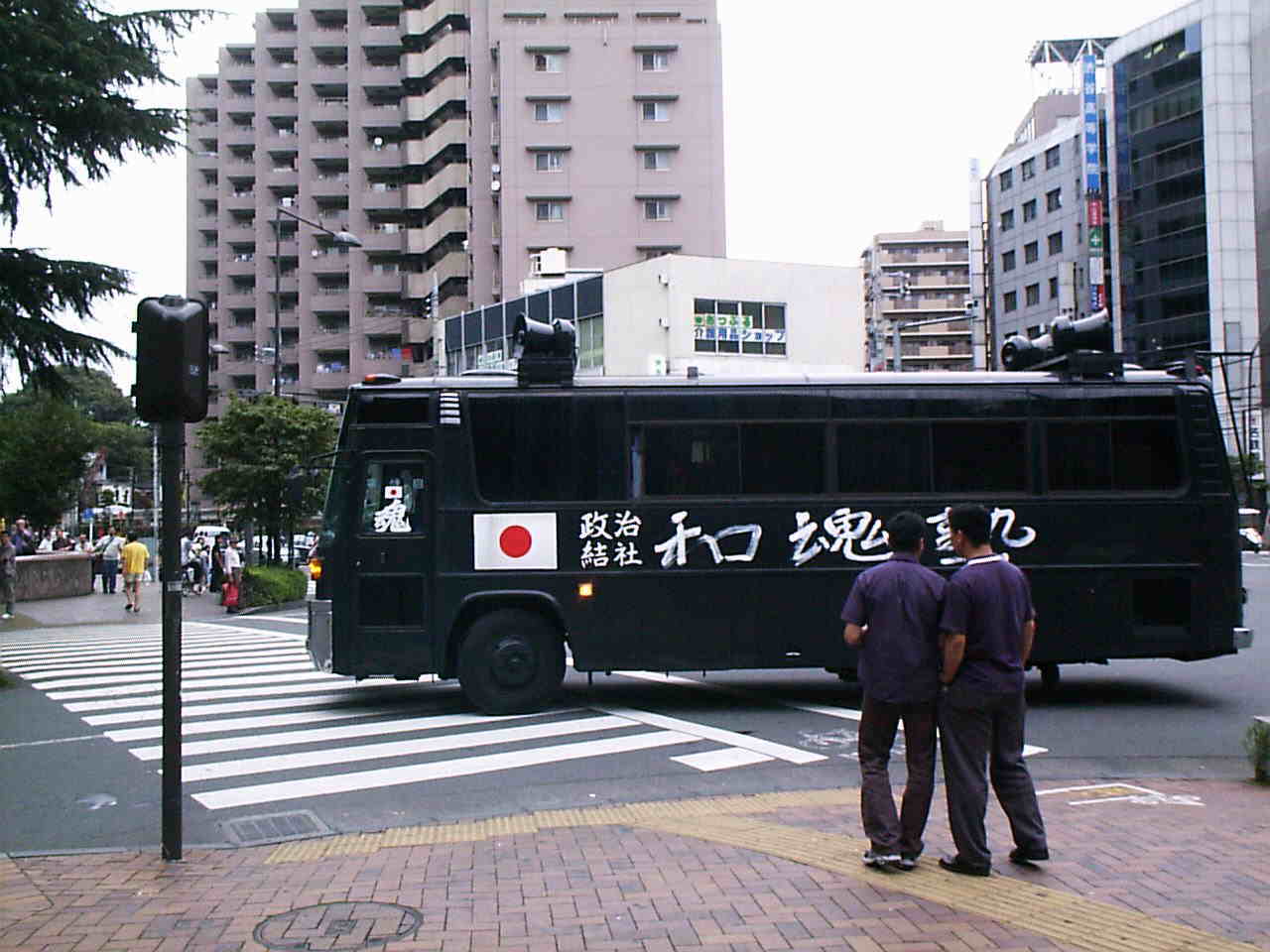
Therefore the objective was not to win the race, but to race as hard as we could and have a good time.What has the above and the below in common?

We started the night before at the Positivo shop where we had last minute maintenance to our bikes. Why?

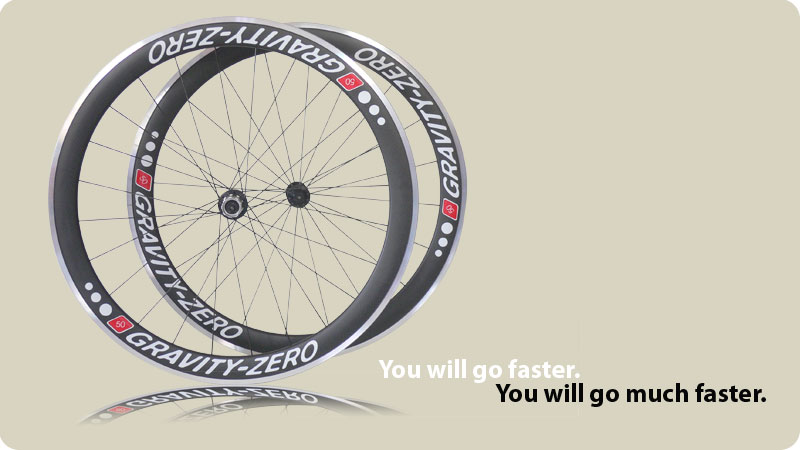
Answer: The gravity zero wheels emitted more noise than the average right-wing truck. I bought this wheels some time ago from David Marx and they are not only the most wonderful wheels I ever had but also for sales. I was very excited when I unpacked them the first time and then I found the owners manual which clarified that „high performance = high maintenance“ and that every time I ride in the rain with these wheels I need to disassemble the bearings and re-grease them. So when riding home from the race in pouring rain with the bike mounted on top of the car I could hardly think about anything else than the bill Nagaisan from the shop will present me after having done his part of work on the wheels.

We left for Utsunomiya to stay at the Richmond Hotel. The next time we meet, please ask me how we parked in front of the hotel because the story is so long and complicated that it can only be verbally transmitted.

But it’s a nice hotel nevertheless and father and son can save a lot of money as a single bed seems to be wide enough to accommodate both of them. And in addition there is also space for our bikes in the room.

An early start next morning saw us crossing through an ugly Utsunomiya. This is not the pearl of the orient, in case you wondered. This is in fact really the problem mid-size towns in the Japanese country side have: They are not old, so nothing of historical interest or beauty is left in town. They are also not new: in times of prolonged economic crisis in the countryside (basically since 1990) and few investments in the last 20 years, everything is modern but old, poorly maintained and not built to last. There is also no natural beauty left. Go to any of these smaller towns in Japan and leave depressed.

Working for a Japanese construction company in the early nineties I had a superior who bought a house in Utsunomiya and commuted by Shinkansen every day to Tokyo. This made sense in pre-bubble Japan for two reasons: first land prices were still rising in the city and it was almost impossible to realize the dream of the own home close to the center and second, working for construction one needs his own own house in order to stay true to the system.

He was a particular bad tempered guy and after having seen Utsunomiya, his fate, I may begin to understand why.

Sorry for leaving the red line of this story, the only positive thing was that there was thick mist so not all of Utsunomiya was revealed to us.

We arrived at Motegi, secured a place in the pit and made some training laps. The course is basically flat, two difficult corners, 7.2 km long, I like it and it is the third time after 2006 and 2007 to race there. Also the weather was becoming better: warmer and blue skies.

I was the first rider at the start and as I was late I ended up pretty much at the end of the field, composed of more than 300 riders. But I could make my way up into the top 50 or so during the rolling start, which lasted for one complete lap. The race then started for earnest and I managed to stay with the top group and climbed up the first small hill at 30 km/hr+ always with the top 20 – 30 riders. So the second lap went good and the third lap as well. Slowly the top field was also becoming smaller and smaller. At the end of the third lap only 30 riders or so were left with the fast group. And you need to stay with a group as otherwise you loose so much time fighting alone against the strong wind.

But then the inevitable happened.

As I pointed out alreday the track in Motegi is very flat, expect for a small hill which can be easily over-sprinted. This statement is true, but only for the first three laps of the race (in total we made 36 laps). I am not sure, but one of the two things written below happened after lap #3:

  • Hydraulic mechanisms located under the hill and operated by the race organizers jacked up the slope for about 100 meters so that a relatively modest hill became a murderous slope for the rest of the race or
  • Tectonic movements had the same effect on the slope.

In any case, I was fighting my way up the hill and lost contact with the fast group in lap #4 and once lost and basically alone in nowhere land between the very good and the good racers, it is a lonely and futile fight against the wind. I handed over to Jerome in 36th position and he fighted the next four laps before handing over to Augustin who made one lap with Jerome providing draft for him.

The endurance races are very hard and one is pushed to the limits: One has constantly to motivate oneself and make contact with riders in front. And that is pretty much how the race continued: Having small breaks, trying to stay focused and motivated. Then out on the track, finding a good groups of riders to stay with.

I thought that the pit would close half an hour before the end of the race at 15.30hr, so I tried to squeeze in four laps between the closure of the pit before handing over to Jerome who would do the last three laps. This worked just perfectly, I made in about 30 seconds before 15.00hr into the pit only to realize that the pit closes only at 15.25hr. OK, but now it was Jerome’s turn to finish the race.

Which he did in a very good manner. I haven’t see the lap charts yet, but as usually I would guess that he would loose not too much speed compared to the start of the race because of his big, big stamina. Augustin was also doing very well, averaging 30 km/hr on his laps.

And then the race was over. I checked our position and we had finished in 50th position with 36 laps in 7:05:51 hours. Not too bad, I thought at first, considering that we only had three guys on the team, one of them (James Augustin) only 11 years old.

But more surprisingly, I checked against the performances of 2006 and 2007 once I was back home and I found out that:

Racing there in 2006 with Stephen and a guy called Larry Banks (actually a motorcyle guy) we finished in 39th place with 33 laps. With our 2009 performance we would have finished in 8th position, with the winner doing 38 laps. Not bad.

In 2007 our team consisted of Tom, Marek, Stephen and me and we finished in 11th position, also covering 36 laps, but one minute slower. OK, it was raining hard that day and the race would have been faster if the weather has been better, but nevertheless, we had beaten our strongest club team in comparison.

A 39th place in 2006 and an 11th place in 2007 adds up precisely to a 50th place in 2009 which is the weakest position so far but still the best race we made. The competition is also getting stronger, the winning team this time made 41 laps.

So there was much to talk about on the way home in the car, during prolonged hours of traffic congestion and at a nice yakiniku dinner somewhere close to Tsukuba. It is really a joke, we raced almost 260 km in seven hours, and then it takes as 5 hours to ride home in the car 140 km.

We were all done but as usual proud of ourselves. And of course we can do this again any time (see next posting).

PS Sorry, I forgot to take my camera with me, so no photos this time.
Ein Kommentar

Eingeordnet unter 2009, Cervelo Soloist, Jerome, Mob

Train with POWER pain and simple

OK so I have had some feedback from the postings in regards to the CompuTrainer.
Most of these questions are centered around the same topics, „why would I need to do this“, „what would I benefit from testing or training on that thing“, “ I have been doing the same thing for ages why should I change now“ and so on.

In hopes of clearing up these questions and any others the team may have…

Citius, Altius, Fortius
Faster, Higher, Stronger
Latin motto for the Olympics

  • Testing on the the CT (computrainer) is the same as testing on a cycle ergometer. Some of the tests we conduct can tell you your VT or LT, Ventilatory Threshold or Lactate Threshold or Anaerobic Threshold. What can these numbers do for you? Using these values you can train for longer more powerful climbs. This specific training increases your bodies ability to deal with the „burn“ and thus push yourself further and longer then past efforts. Training with these values keeps your heart rate lower while preforming better. This training is the gold standard for all cyclists as well as many other sport competitors. Over all this training will make you more efficient and FASTER

  • Cycle ergometers have long been the standard for testing and predicting VO2 max, or the volume of oxygen you can use. Without a spirometer, see photo, you can only predict the VO2 but the difference is that with this number we can determine your specific training intensities for the greatest results. Training your lungs and heart to work better, with less effort for longer durations will help with other systems in the body as well. Just as when you climb high onto a mountain and you struggle to catch your breath, training is this specific area will improve your bodies ability to cope with such stresses while improving the efficiency of the bodies systems at that intense level of exercise. You will be able to train harder and more efficiently and ultimatly with less effort, HIGHER


  • Most of all POWER is the unit of measurement that…if you don’t know by now, means everything to most professionals. Simply put power is the product of speed and strength. To produce long sustained bouts of power you must train the systems that contribute to the direct output of said power, your legs. These systems are of course your BASE strength, your cardiovascular, lung and heart, endurance, muscle endurance, your ability to deal with the byproducts of fatigue, Lactate, and of course your ability to handle PAIN, STRONGER

This CT is primarily for testing purposes although there are extended training packages available. For general use one should try to test one or two times a month. Preforming these tests will give a rider feedback on their training both negative and positive. One may ask, „what negative information would that thing be able to tell me“? Using data from past tests and a specific test called the Ramp Test, determining your training effectiveness is revealed. First of all via your power output, secondly by your heart rate values as a sum from the test. If your heart rate sum is higher or the same as past tests, your most likely over-training or not training to improve your VT. If your power output is lower, your either over-training or your not training properly for power improvements.


Lastly its good fun to compete against others. Sitting around talking about how much power you can produce is empowering and well much like a big dogs bark.

In light of this simple nature that exists in our little group I would like to have a day of free testing on the CT. I’m thinking of a Saturday or Sunday in the near future. Nothing big or intense, just a simple power test. This will take place at my new studio rental space located at Tokyo Physio

If there are any suggestions please feel free to send em over as well as any questions, comments, complaints or self doubts.

Pain is Inevitable, Suffering is Optional

9 Kommentare

Eingeordnet unter Uncategorized

2010 Giro d’Italia Penultimate Stage Follows 2009 Transalp Penultimate Stage!!!

This weekend the Giro d’Italia 2010 route was announced at the usual presentation ceremony.

There are some interesting highlights, including a Stage 16 uphill time trial with 20% and 24% grade sections, and spending the first 3 days riding around/out from Amsterdam (hope for dry weather).

Of greatest interest to me is the 20th stage, which starts in Bormio, first goes over a pass we did not ride on this year’s Transalp, then … through Livigno, then Passo di Eira, Passo Foscagna, Passo di Gavia (watch out for that crazy descent!) and a finish at the top of Passo del Tonale (a piece of cake, if memory serves) … but does not go on over Mendelpass and to Kaltern, as we did. Perhaps the Giro organizers read the Positivo Espresso blog and realized first time what a great series of climbs this is in their own country?

Giro 2010 Stage 20:

Transalp 2009 Stage 6 (click on image to expand) or see it here in better resolution:

So the pros ride 178 km, compared to our 180.8 km/3770 meters elevation gain. Their first hill is higher than our last hill (Mendelpass), making their day much harder overall. Then again, the next/final day they have only a 15km TT, whereas we had to slog through the stifling July heat from Kaltern to Arco, with one more nasty 1000 meter climb.

Hinterlasse einen Kommentar

Eingeordnet unter Uncategorized

Hombeline et Thomas

Regular readers of this blog may recall that I have been approached by two French students from my class at university before the long October weekend if I could make some suggestions for a nice bike trip.

Well, being a demanding teacher providing new challenges fro my students, I suggested that they should ride out along the Tamagawa to Ome and continue to the Okutama reservoir where another nice road would took them over Matsuhime pass (1.250 meter) to route 20 and then, back over Otarumi to Takao and home in Roppongi. Nothing special, something we can do easily in a day on our bikes after having trained all year long.

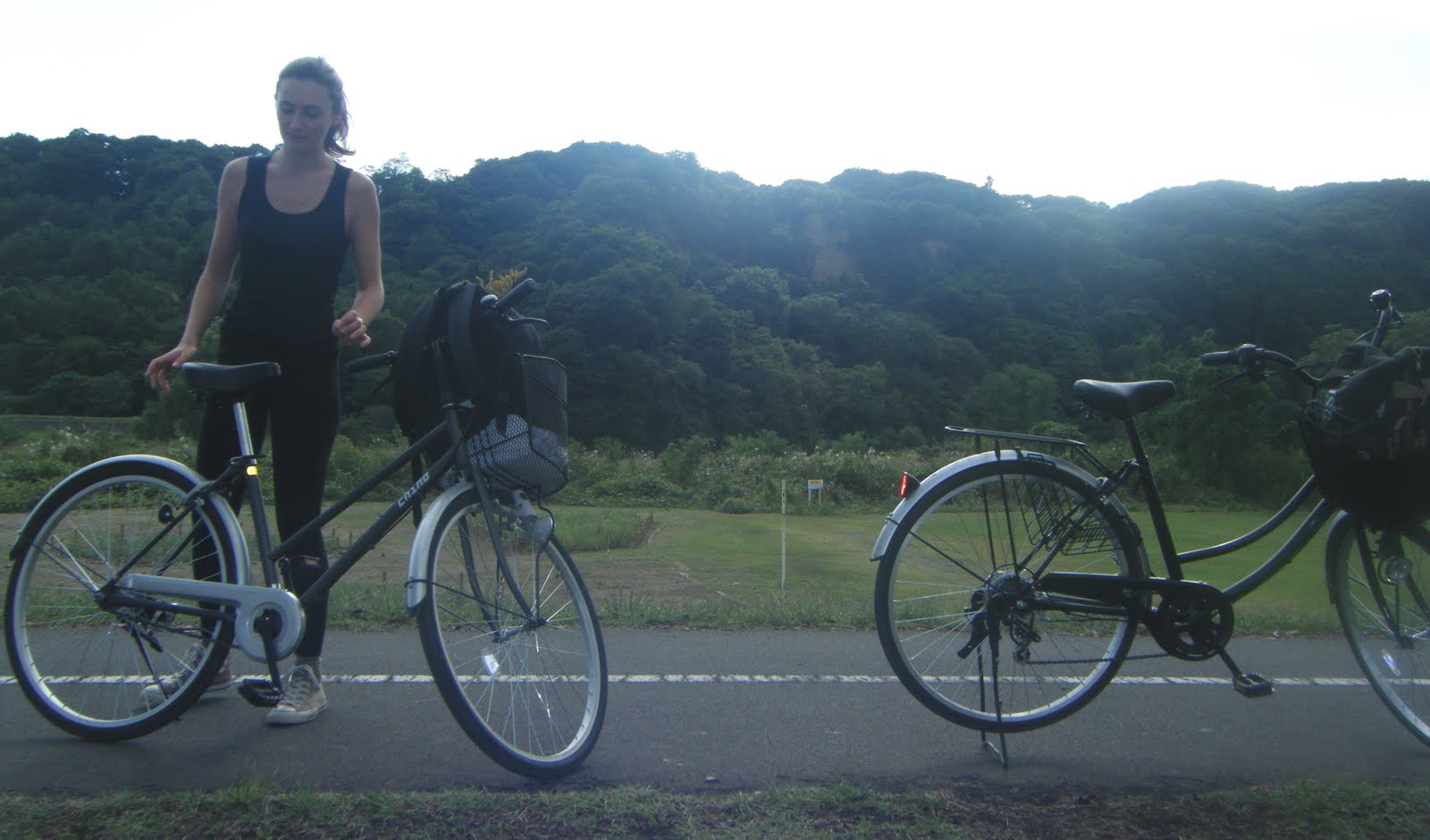
Little did I know that they were attempting to make this tour on single-speed mama-chari. Without any training.

So when I came back to class after the weekend and met them I was very surprised that they made it and I was even more surprised that they were physically able to attend class after they have made it.

Please keep in mind that they came to Japan only at the start of September, speak almost no Japanese, had no maps, no previous cycling experience and acquired mama charis for a sum we pay when riding out and return from rides for a Shinkansen ticket.

The trip started pretty early in the morning and first rests were made along the Tamagawa.
So slowly they moved towards Okutama on day one of their journey on their steel frame single speed bikes – has cycling ever more pure?
Then, arriving in the rain in Okutama with no idea where to stay and believing that shelling out 8.000 Yen per person for a pension room would be pretty outrageous (after all, you can get a mama chari for this money), they decided to knock on the houses of the local inhabitants and asked them if they could stay the night there. Finally somebody showed pity and transported them and their bikes to a pension where they were allowed to stay.Thomas showing clear signs of physical (the left cheek !) and psychic (the eyes !) stress from the trip. While Hombeline looked like „Girl with pearl earl ring“ from Jan Vanmeer in Japanese surroundings (see above).

But in good mood both of them continued to the reservoir the following day, up Matsuhime and down to Otsuki where they spend the second night.
And as planned they rode all the way home on route 20 to the Tamagawa and then back to Tokyo on day three.

Some days later they became the first ever honorary members of the Positivo Espresso Team and owners of some rather cheap pairs of orange cycling gloves.

Life is lending us amazing stories and I am thankful that even if I cannot live them, I can write about them.

5 Kommentare

Eingeordnet unter 2009, Mob

I Y

Dominic, Ludwig and me decided to turn Wednesday’s workday into a more pleasurable past time.

Ludwig and Dominic met for the first time on the train to Hashimoto, where Ludwig was pretending to read the Financial Times which caught Dominics attention as he was holding it upside down. Actually Ludwig has two reasons for that, first he wants to see rising curves on financial related charts more often and second it is just too easy for him to read a newspaper the normal way.

I was 10 minutes late but we started early at 7.30 in direction Tsukui lake, where we parked our bikes at a 7-Eleven to take supplies. (my one in the prescribed position).According to Ludwig that was the worse 7-Eleven he has ever visited, justified in particular by the missing assortment of Soyjoy bars. So we declined politely the official approval.

We then continued along Doshimichi and after finishing our pointless ride through Aone village (please check this club tradition which is now a must for every ride) we entered route 76.

Trucks have long been a source of cyclists dissatisfaction on the roads outside of Tokyo, but recently many improvements have been done to make the cyclists fate more bearable. Thanks to the support of the All Japan Truck Drivers Vehicle Beautification Association, cyclists can now enjoy the backside of trucks even more.

+
+
+
+
+


+
+
+
+
+


+
+
+
+
+


+
+
+
+
+
V

Anyway, we moved further along the TCC winter shortcut to road 35 leading to Akiyama and Hinazuru tunnel.The manju shop passed approval procedure without any problems (although they only had anpan manjus, miso manjus were sold out). Dominic was surprised that, given the state of the building, the age and state of its inhabitants and the open fire burning in parts of the houses, that they actually owned a telephone.

He was also surprised to find his front tire punctured. Ludwig, who was anyway only in for the morning went ahead to catch a train from Otsuki, while we repaired the tube and buried the old one in the garden behind the manju shop as old Japanese cycling tradition requires.

A short climb up to Hinazuru, followed by a quick climb up to Suzugane, peaceful as always and a quick visited to a combini at Sarubashi resulted in a luke warm lunch at the resting place in front of the old Sarubashi.

And then after preludio (Hinazuru) and allegro (Suzugane) we started the main climb of the day, Matsuhime Toge (Furio). Dominic became recently stronger and stronger and we decided in view of the fact that he has applied for next years L’etappe du Tour that I will coach him for the event and that this would be our first training ride.

So from this point in time on I have the right to address him as „O-mae„, „Kimi„, „Baka“ or whatever I feel just, while he has to use the most intricate forms of „irassharu“ and „itadaku“ when daring to approach me while scrubbing my back in the local sento. For this I will teach him the secrets of cycling which, honestly, consist mostly of suffering.

So we were happily going up the road and I was pointing out to Dominic that the small grey strip up high in the mountains before us IS actually the road we will need to ride up. And suddenly we saw another cyclist about 50 meters in front of us. He looked like a short hippy with long grey hair and old fashioned glasses, on a bike with backtray, somebody left over from the occupation of Todai’s Yasuda clocktower in the sixties.

In turned out to be a women, I Y, as we later learned, who happens to cycle quite a lot and was not even very strong, (we could chat and ride up Matsuhime while Dominic had to stop and was much more silent in general) but who knows also every single road in the area. I mentioned some of the roads we have found out recently (Arima Toge, Haccho Tunnel, Nennogon) and she knew all of them and many more I haven’t ever heard about (Nijumagari Toge) which seemed to be the most interesting places.I must say that I was very, very impressed. Since 8 years or so she is riding out regularly two, three times a week with the bike and we have never met despite the fact that we have done more or less the same roads all the time. She would definitely become a good addition to our team, however unfortunately she does not race.

After having a short break at Matsuhime we took the road back to Okutama where we left I Y at the parking place (she clinged to my back wheel all the time even when I tried some macho accelerations) and Dominic and me continued towards Ome.

Dominic was quite done and every movement was accompagnied by an assortment of noises indicating pain and disaster. But these are the rides that make adults out of boys and separate the guys who are standing in front of the toilet or sitting on it.

In Ome we had our meal at the approved Aurore bakery and watched a group of foreign school kids running around the block. No Japanese school kids in sight, perhaps some kind of punishment or special training for the Ome marathon?

Then we made some Japanese local girls laugh when they saw our „Shingo Mushi“ mark on the back of our bib shorts.

And then we rode home by train.

Koyo leaves were beautiful by the way starting from 1.000 meter elevation. Temperature was just right and all in all it has been another beautiful day.

Ein Kommentar

Eingeordnet unter 2009, Cervelo Soloist, Mob