Archiv der Kategorie: Mob

Optimizing Tire Tread

Nach meiner etwas harschen Kritik an Jan Heines Beitrag zum Thema „Je suis Charlie“ als Ausgleich einer der wirklichen guten Beiträge aus seinem Blog „off the beatne path“ zum Thema Radreifen.

via off the beaten path

Compass_tread_pattern

Most tire manufacturers agree that supple sidewalls and a thin tread make a tire fast, but the role of the tread pattern remains poorly understood. Most modern tires have either a completely smooth tread (slicks) or a coarse tread pattern similar to car tires. Many high-performance tires are smooth with just a few large sipes. None of these tread patterns are optimized.

Car tires have tread mostly to prevent hydroplaning. With their wide, square profile, a layer of water can form between tire and road surface. The tread pattern forms channels so the water can be pushed out of the tire/road interface.

Bicycle tires do not hydroplane. Their contact patch is too small and too round for that. This means that car-inspired tread patterns are not necessary on bicycle tires. Does this mean that no tread pattern at all – a slick tire – is best? Any tread pattern reduces the amount of rubber on the road surface… In the lab, it does work that way: Slick tires grip best on smooth steel drums.

Real roads are not as smooth as steel drums. An optimized tire tread interlocks with the irregularities of the road surface to provide more grip than the pure friction between asphalt and rubber. This is especially noticeable in wet conditions, when the coefficient of friction is reduced by half, yet you can corner with about 70-80% of the speed you use on dry roads. (Unless the road surface is greasy…)

The ideal tire tread has as many interlocking points with the road surface as possible. The “file tread” found on many classic racing tires does this. The ribs are angled so they don’t deflect under the loads of cornering or braking.

Why do race cars use slick tires, and not a file tread? The reason is simple: It would be abraded the first time the car accelerates. However, bicycle tires don’t wear significantly on their shoulders – the part that touches the ground when you corner hard – so we can use a tread pattern that is optimized for grip without worrying about wear.

Each Compass tires has three distinct tread patterns, each designed for a specific purpose.

  • Center: Fine ribs serve as wear indicators. When the lines disappear, the tire is about half-worn. (The tread of our narrower tires is not wide enough for ribs, so small dots are used instead.)
  • Shoulders: When the bike leans over as you corner, the tire rolls on it shoulders. A chevron or “fine file” tread pattern optimized grip.
  • Edges: This part never touches the road (unless you crash). They serve only to protect the casing from punctures, so they don’t need any tread.

TireProfile-hi

Supple casings make tires faster, but a supple casing is of little use when it’s covered by thick tread rubber. The fastest tire would have just a minimal layer of tread rubber, and many “event” tires are made that way. Unfortunately, that means that they don’t have much rubber to wear down until they are too thin to use. At Compass Bicycles, we call these tires “pre-worn”.

Compass tires have a slightly thicker tread in the center. A little more material there doubles or even triples the life of your tire, while adding minimal weight and resistance. (On our widest 650B x 42 mm tire, the added tread weighs less than 50 grams.) Once you have ridden the tires for a few thousand miles, they’ll be as light as the “event tires”.

On the shoulders and edges, the tread does not wear. So we made it much thinner to keep the tire supple and reduce its weight. The tread extends far enough down the sidewall that the casing is protect when seen from above. Extending the tread further adds little protection, but makes the tire less supple and thus less comfortable and slower.

tires_comp_650_42

Another important factor is the tread rubber. This is an area where incredible progress has been made in recent decades. In the past, you could either have good grip or good durability. I used to ride Michelin’s Hi-Lite tires, which gripped well, but rarely lasted even 1000 miles (1600 km).

Compass tires use Panaracer’s best tread rubber, which is amazing. Our tires are among the grippiest you can find, yet I just got an e-mail from a 230-pound rider who got 3786 miles (6093 km) out of a set of our 26 mm-wide Cayuse Pass tires. The wider tires spread the wear over more rubber, so they last significantly longer. (Don’t try to set wear records, but replace your tires once they get thin. The risk of flats, or worse, blowouts, is not worth getting an extra few hundred miles out of a worn tire.)

Tread color is another important consideration. Modern colored treads no longer are the “death traps” they used to be, but especially in wet conditions, the grip of tires with colored treads – including the Grand Bois Hetres we sell – is not quite as good as that of black treads. That is why we offer only black tread.

Hinterlasse einen Kommentar

Eingeordnet unter Ingenieur, Mob

Die Geschichte der SB.

via Cycling Tips

Sunglasses have evolved from a humble yet essential piece of protection in the cyclist’s kit bag to an expensive fashion statement. Dave Everett and Wade Wallace look back through the archives to find some of the more memorable and outlandish examples of cycling-specific eyewear that we’ve seen in recent decades.

The first use of sunglasses in sport dates back roughly to the turn of the 20th century. Long after God invented bicycles was the creation of dirt, grit and flies. Man found it necessary to shield the eyes from the ocular problems that could occur from such things.

The flying goggles and eyewear that were donned in the early days of ‘fast-paced transport’ were adopted by cyclists who were tackling the then-unpaved roads. Large ex-military flying goggles made of glass and leather were the choice of such early tour champions — riders like Octave Lapize, Phillippe Thys and Ottavio Bottecchia all could be seen racing to victory in such eyewear.

The goggles style eyewear from the classic 1920's (Vervaeke and Geldhol smoked the cigarette.)

It wasn’t until the 1950s that eyewear that we’d now recognise as sunglasses was first used in the peloton. Until then the flying googles were still used but modified — rubber replaced leather and frames became lighter.

Persol and Ray-Ban were at the forefront of lens and frame design at this time and sunglasses had become fashionable as film stars made them popular.

With new materials being used — such as nylon and silica — you’d think that glasses would have been on every face in the peloton. The champion of champions Fausto Coppi used the lightweight and popular Aviator; being Italian he pulled off the film star look without a problem. But he was one of only a few in the peloton at this point.

Fausto Coppi was one of the first to don the aviator sunglasses

The flying goggles look was slowly disappearing from the peloton and, partly due to roads becoming better paved, cyclists were seen using sunglasses.

There were several riders that still went against the grain though. Dutch Tour de France winner of 1968 Jan Janssen was one. His reason for wearing glasses was not to look cool or to keep the grit out of his eyes, but because he was short-sighted.

1974 Tour de France winner Jan Jannsen, pictured left with Eddy Merckx.

Even through the 1970s and into the 1980s, it was largely only the guys who needed proper spectacles that were seen racing in them. Laurent Fignon, or “The Professor” as he was nicknamed due to his spectacles, was one of the few. Right through his entire career, from 1982 until 1993, he could be seen sporting his rounded spectacles.

Archieffoto's Cor Vos

It wasn’t until companies like Carrera started developing skiing goggles that things got exciting. Since 1956 Carrera had been making glasses but the inclusion of thermo-plastics and interchangeable lenses helped with the boom of cycling-specific glasses. It was one guy and his dog that really changed the face of sports optics though. The man was Jim Jannard and his dog was called Oakley.

Jim started out in 1975 by making and selling motocross and BMX grips. After success with grips he turned his attention to goggles for MX and BMX. Then in 1984 the start of what we can now call performance eyewear hit the market. That was the time of the Oakley Eyeshades.

While some riders were using aviation-type glasses, Greg Lemond debuted the Eyeshades. He’d purchased them himself then later, before the Tour de France, he contacted Jannard to get a few extra lenses. From that point on Oakley became a firm part of road cycling culture.

Greg Lemond sporting the Oakley Eyeshades during the 1986 Milan-San Remo.

In 1985 Lemond and Phil Anderson were the first official Oakley athletes in the peloton. The huge lens and bright colours stood out and with prototypes such as the rip-off lenses that Anderson used in Roubaix it wasn’t long before they grabbed people’s attention.

Untitled-3

Come 1987 and half the peloton was wearing Eyeshades. The Tour that year saw riders harassing Jim for a pair — they were a must-have item.

glf-eyeshades-85

Oakley weren’t the only ones at this point attempting to break into the cycling and sports scene. New brands were popping up to take on this market. Briko and Rudy Project and even French manufacture Look all had a background in snow sports, and they all entered the sports glasses market. Some succeeded while others fell by the wayside.

People didn’t just want to look the part and to have quality optics; they wanted to be part of a brand. Along with either being a Campag or Shimano rider you were now either Euro chic or American cool dependent on your eyewear choice.

Development rolled along pretty quickly from this point thanks to the introduction of new lens tints, interchangeable lenses and new frame materials. Briko entered the market with insect-eye-inspired designs while Oakley developed the integrated prescription lens on a curved surface. This meant the likes of Alex Zülle, with his bad eye sight (and poor descending skills), no longer needed to look quite like the librarian of the bunch.

Untitled-2

Back in the early 1990s, if you thought yourself a sprint ace or Classics contender you’d probably be going for the Briko Shots — a multi-coloured and swivelled-armed affair. Franco Ballerini and Mario Cipollini made them look cool, even with the latter’s lion’s mane.

Untitled-5

If you weren’t the build of a sprinter you could always look towards Marco Pantani and his stylish Briko Stingers.

Untitled-11

Not a fan of the Italians? Prefer a bit of old-school German? Best to choose the Rudy Projects Noosa. Behind the lens you could hide the pain of pushing a huge gear just like Jan Ullrich.

Untitled-7

But Oakley has always been the brand in the front seat with regards to style, development and advertising. Sometimes they got it seriously wrong though — just look at the Over The Tops from 2000. Were they simply a marketing stunt or was Oakley genuinely trying to change what sports sunglasses could look like? Who knows. Either way they suited their name but never stood the test of time.

David Millar (left) and Frank Schleck (right) sport the aptly named Over the Top glasses.

Lance and his army were the pin-up boys for Oakley in the mid 1990s and right through until they all retired (or got bust). M-Frames were the item all self-respecting cyclists wanted to own. Or if you were a hard-man, the Racing Jackets that George Hincapie seemed to have 1,000 pairs of in fancy paint jobs were also a good option.

Untitled-8

Huge brands like Specialized and Giro attempted to enter the dog fight of selling glasses, but found it far to hard to get a large enough market share to warrant continuing.

Specialized made a brief foray into the sunglasses market, releasing the Specialized Miura as worn by Philippe Gilbert and Tom Boonen here.

Of course, we’ve seen some interesting (and sometimes questionable) developments in sunglasses in recent seasons as well. Ryder Hesjedal made waves with his Poc glasses in 2013 and whether you love or hate them, you have to admit they got people talking.

Ryder Hesjedal introduced POC's disco-inspired eyewear to the cycling market. He is pictured here in the 2013 Tour de France wearing Poc's DID shades.

Earlier this year Oakley released its Heritage Collection to celebrate 30 years of making sports eyewear, with Eyeshades, RazorBlades and Frogskins among the models to make a return.

Yoann Offredo was spotted at the 2014 Milan-San Remo wearing some Vintage Collection Eyeshades.

Other notable brands in the modern pro peloton include the Zero H+ shades worn by recent Vuelta a Espana winner Alberto Contador:

Untitled-10

And the new Bolle 6th Sense (not yet released to the public), as sported by Simon Gerrans in Canada recently:

Gerrans_Quebec14

Another yet-to-be-released model is Oakley’s Jawbreaker, a successor to the ever-popular Jawbone. The Jawbreaker has seen a few public outings this year, including in Mark Cavendish’s short-lived appearance at the Tour de France:

Image right: BrakeThrough Media

And for something a little different, look no further than Giro’s Air Attack aero helmet which has a magnetically attached “optical shield”:

Garmin-Sharp used Giro helmets until they changed to Poc in 2013.

Lens shapes, optical clarity and frame materials have all been refined and developed in recent years. But what can we expect next? It would seem sunglasses are going high-tech.

You can already buy glass with built-in cameras, perfect for filming crazy car divers in action, chopping you up. Could we see this technology develop to the point that we’re able to watch races from the point of view of the riders? It’s hard to see why not.

We’ve already seen the release of the Recon Jet glasses, which feature a heads-up display and can show you speed, distance and cadence all right in front of your face. Google, too, has its Glass project, which will make it possible to have all the whizz-bang tech of an iPad within sight at all times. Maps, how to swear at the Italian driver cutting you off, the number of kilometres until the nearest coffee shop — a whole range of data will be available to us, all via our eyewear.

Image: Recon Instruments

But is this what we want? Or do we just want a good looking set of shades so we can look the part when sipping our lattes or suffering in the bunch? I guess that’s down to personal preference, but either way, the long and colourful relationship between cycling and sunglasses certainly isn’t going to end any time soon.

What have we missed? And what are your favourite cycling sunglasses of all time?

Hinterlasse einen Kommentar

Eingeordnet unter Design&Fashion, Mob

Fyxo in LA

FYX_1781

FYX_1823

FYX_1964

FYX_2394

FYX_2623

FYX_2089

via Fyxo

Hinterlasse einen Kommentar

Eingeordnet unter Mob

Festive 500: In Schweden

Manchmal, wenn ich mich zwischen Weihnachten und Neujahr auf das Rad gequält habe und in dem sehr bescheidenen Wetter um Bremen gefahren bin, habe ich die Unfairness bejammert, die es Teilnehmern in, sagen wir mal Australien oder Südafrika, so einfach gemacht hat, die 500 Kilometer abzuspulen. Bis ich diesen Bericht über die festive 500 in Schweden las.

via The Radavist

Ein Kommentar

Eingeordnet unter Mob

Gierige Räder: ROCK LOBSTER SINGLESPEED BELT ‘CROSS

viaThe Radavist

Hinterlasse einen Kommentar

Eingeordnet unter Gierige Räder, Mob

Lenkerband wickeln wie die Pros: Eine Einführung

15741620215_5a9e268de3_bFortgeschrittene können sich hier versuchen:

10647162_788310477878804_802419453779654936_n

3 Kommentare

Eingeordnet unter Mob

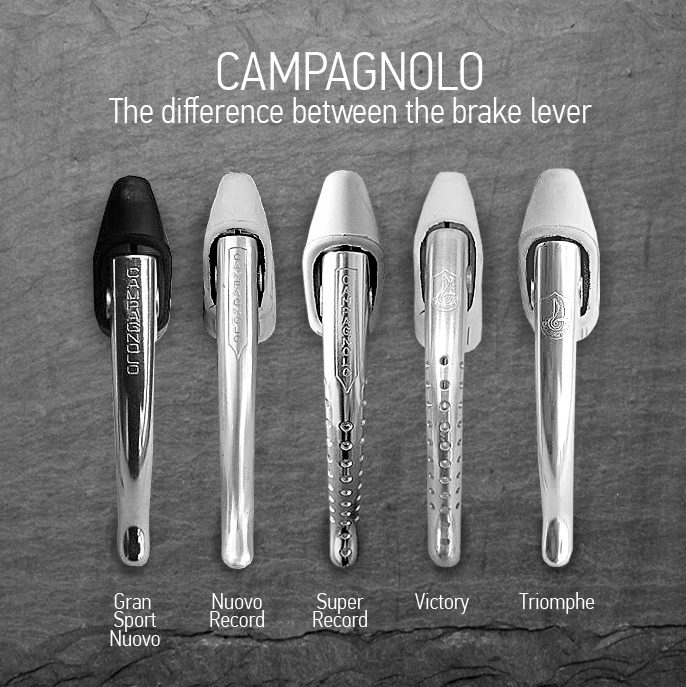
Campagnolo Lexikon

tumblr_nes9zaKFiD1r4p63so1_1280

Hinterlasse einen Kommentar

Eingeordnet unter Mob

Je suis Jan Heine. Well, perhaps not.

„Like everybody, we’ve been shocked by the terrorist attacks on the French satirical newspaper Charlie Hebdo. They are abhorrent, and I am glad that the French have stood united against this attempt to stifle free speech. (“Je suis Charlie” means “I am Charlie”.)“

..is the start of a blog post written by Jan Heine from his blog „off the beaten path„. I like this blog very much, as it quite often include interesting technical issues, most notably a piece about the conversion of bikes to „rain bikes“ which in turn motivated me to buy an expensive Brooks mud flap. I don’t regret this decision, je ne regrette rien.

This particular blog post than continues start drawing a very fineley dotted line between the journalistic work at Charlie Hebdo and Off the Beaten Path:

We don’t face that kind of threat at Bicycle Quarterly, but we have to admit to misgivings when we published some articles that we knew would offend some. The most recent example was “Tullio Campagnolo – The Visionary behind the Legend” which debunked many of the myths surrounding this legendary man, questioning whether Tullio Campagnolo really invented the quick release.

We knew that we’d lose some readers over this, and infuriate others. We published the article anyhow, and I am glad we did. It’s our job to provide information, to challenge the status quo (even if it’s only in the arena of bicycle history and technology), and then let our readers form their own opinions. As a result of this approach, we are no strangers to controversy. (Long-term readers will remember the Internet flame wars when we first realized that higher tire pressures don’t make tires faster.)
For us, the attacks on Charlie Hebdo hit close to home. We hope the newspaper will continue to publish, and we vow not to censor ourselves for fear of offending.“

Honestly, I find that a little bit overdone.

It is hard to imagine that someday we will see a group of fanatical Campagnolo supporters storming into the appartment of Jan Heine, threatening to kill him and worse, to destroy all his bikes, because he had casted doubts that Tullio Campagnolo had really invented the first quick release. And I think it is just to assume that the risk of getting killed because of discussing tire pressures in relation to rolling resistance is far smaller than because of drwaing cartoons about the prophet Mohammed.

So, please Jan, please continue to write about technical issues from your unique ranndonneur point of view and not about moral ones.

Hinterlasse einen Kommentar

Eingeordnet unter Mob

Elliptische Tretmühle

DSC02621

In der Schule, so ca. in der 9. Klasse und in den Siebzigern, wurde ich gezwungen die Reportage von Egon Kisch über das Sechstagerennen in Berlin, „Elliptische Tretmühle“ zu lesen. 

Da in der Schule und dann auch noch bei Frl. Stürmer (später: Frau Schimanski) fand ich das einfach gähnend langweilig und konnte mir auch nicht vorstellen, dass das in einer Zeitung veröffentlicht wird, denn es war so anders als die Artikel in der „Rheinischen Post“, die ich sonst so am Frühstückstisch vorfand.

Ein paar Jahre später.

Positivo Graham weilte letztes Jahr um diese Zeit in Berlin und wollte u.a. das Sechstagerennen besuchen und einen Artikel darüber für „Rolleur“ schreiben. Er fragte mich worum es bei den Sechstagerennen geht. Da bin ich Spezialist, denn ich habe 2010, 2011, 2012, 2013 und sogar 2014 das Bremer Sechstagerennen besucht, nur um anschließend darüber enttäuscht zu sein. Erstens, weil da ja nur an sechs Tagen und nicht sechs Tage lang gefahren wird und zweitens, weil das musikalische Rahmenprogramm Seventies Größen wie Suzi Quattro, Hot Choclate und Middle of the Road zu bieten hat – aber eben vierzig Jahre später. Jedenfalls erzählte ich Graham von dem Kisch Artikel und wir stellten fest, dass es keine englische Übersetzung gab.

Hier ist, was Graham auf dem Positivo Espresso Blog darüber geschrieben hat (englisch).

Erhältlich bei Amazon im Kindle Format.

Lobende Worte gab es dann von der Verwaltung des Kisch’schen Nachlasses.

Noch besser als das Sechstagerennen ist allerdings die Geschichte von Kischs Reise nach Australien 1934.

„Kisch’s visit to Australia as a delegate to an anti-fascist conference in 1934 was later chronicled in his book Landung in Australien (Australian Landfall) (1937). The right-wing Australian government refused Kisch entry from the ship Strathaird at Fremantle and Melbourne because of his previous exclusion from the UK. Kisch then took matters into his own hands. He jumped five meters from the deck of his ship onto the quayside at Melbourne, breaking his leg in the process. He was bundled back on board but this dramatic action mobilised the Australian left in support of Kisch. When theStrathaird docked in Sydney proceedings were taken against the Captain on the grounds that he was illegally detaining Kisch. Justice H.V. Evatt ordered that Kisch be released. Under the Immigration Restriction Act 1901, visitors could be refused entry if they failed a dictation test in any European language. This law was used to enforce the White Australia Policy by ensuring that potential Asian immigrants were given an impossibly hard test. As soon as Kisch was released, he was re-arrested and was one of the very few Europeans to be given the test; he passed the test in various languages but finally failed when he was tested in Scottish Gaelic. The officer who tested him had grown up in northern Scotland, and did not have a particularly good grasp of Scottish Gaelic himself. In the High Court case of R v Wilson; ex parte Kisch, the court found that Scottish Gaelic was not within the fair meaning of the Act, and overturned Kisch’s convictions for being an illegal immigrant.

On 17 February 1935, Kisch addressed a crowd of 18,000 in the Sydney Domain warning of the dangers of Hitler’s Nazi regime, of another war and of concentration camps.“

via Wiki, eine längere Version auch bei Wiki.

Naturgemäß gefällt mir die Kombination von Radfahren und Schreiben.Und die Kombination von Frauen und Schreiben.


Hinterlasse einen Kommentar

Eingeordnet unter Mob

Merckx Tuesday.

eddymerckx_full

Hinterlasse einen Kommentar

Eingeordnet unter Mob