Archiv der Kategorie: Uncategorized

Troubles for the Quintessential Euro Cyclist?

They say that bad things come in threes.

First it was my shoulder injury last week.

Then it was James‘ rear wheel rim dying this morning.

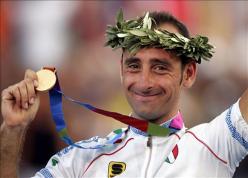
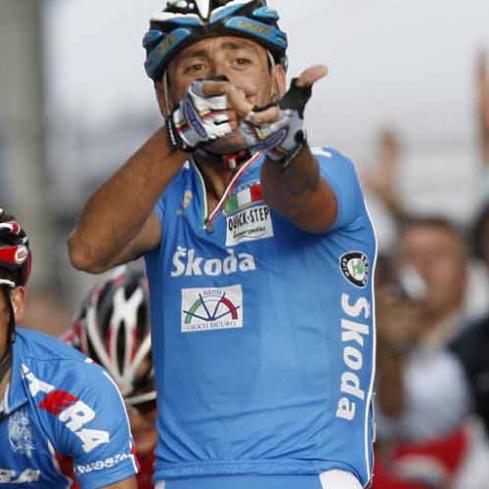
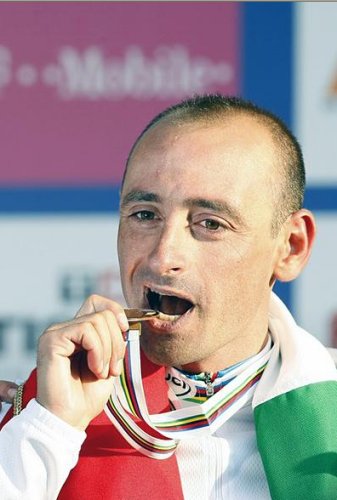
Now I read the news that Paolo Bettini, former world champion/olympic champion/Italian champion and recently retired one-day classic racer, is being investigated for 11 million Euros of tax evasion. The old „I live in Monaco“ scam. People always forget requires that it requires that you actually LIVE in Monaco (or at least outside of Italy), if you don’t want to pay Italian tax on all those winnings and that endorsement money.

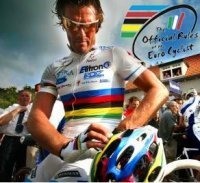
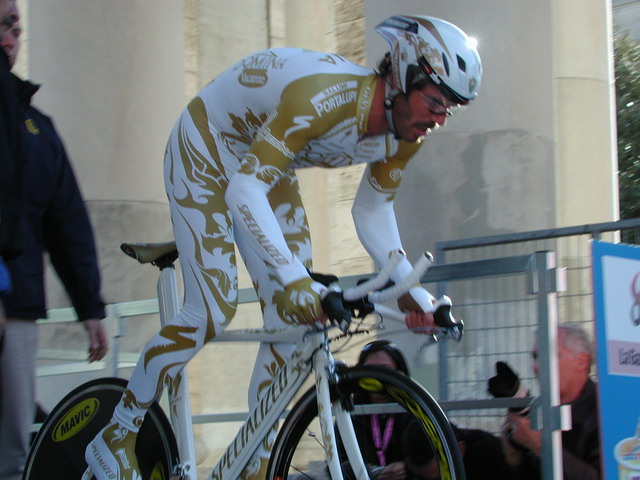
I’ve always thought that Paolo was a special cyclist. He is the clearly the inspiration for the Official Rules of the Euro Cyclist — could never have been compiled were it not for him, with his gold accented world champion’s shoes and helmet. (I was reminded of the rules recently thanks to an email from F2P of Singapore forwarded by our friend David M. at RGT Enterprises, importer of Assos and other Euro-approved gear — see the display at Cycle Mode).

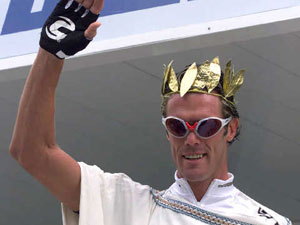
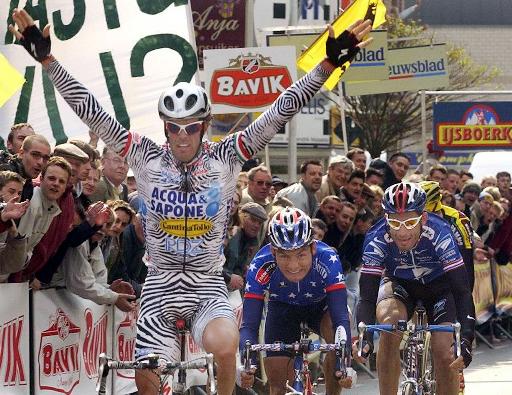
Of course, I exaggerate Paolo’s role. I should also give top billing and extra credit to Mario Cipollini, another former world champion, who serves as an even greater inspiration to the Euro cyclist than Paolo. So I was amused to read that Mario, too, is now being investigated for tax evasion, along with some other Italian sports heroes, though Mario must be a little embarrassed that his evasion is so much, um, well, SMALLER than Paolo’s, and happened so long ago.

You would think if these guys all wanted to claim Monaco residence and given how they like to pose for the cameras, they would at least get together for a photo op in Monaco (maybe with Rebellin and the other F1 drivers), instead of at the start of a Tour of California stage.

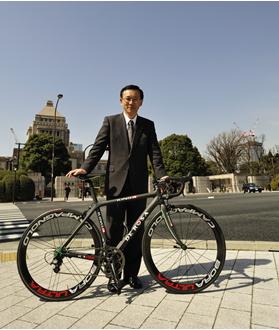
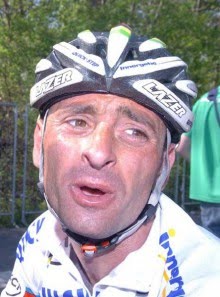
Some photos of Paolo and Mario in happier Euro cyclist days (thanks to Google’s image search engine):

Hinterlasse einen Kommentar

Eingeordnet unter Uncategorized

Death in the Family

After an enjoyable evening with the Team last night, I awoke this morning ready to do some work on the bike. Last week I hit a rut in the road that caused the wheel to become untrue and I decided to fix the problem this morning.

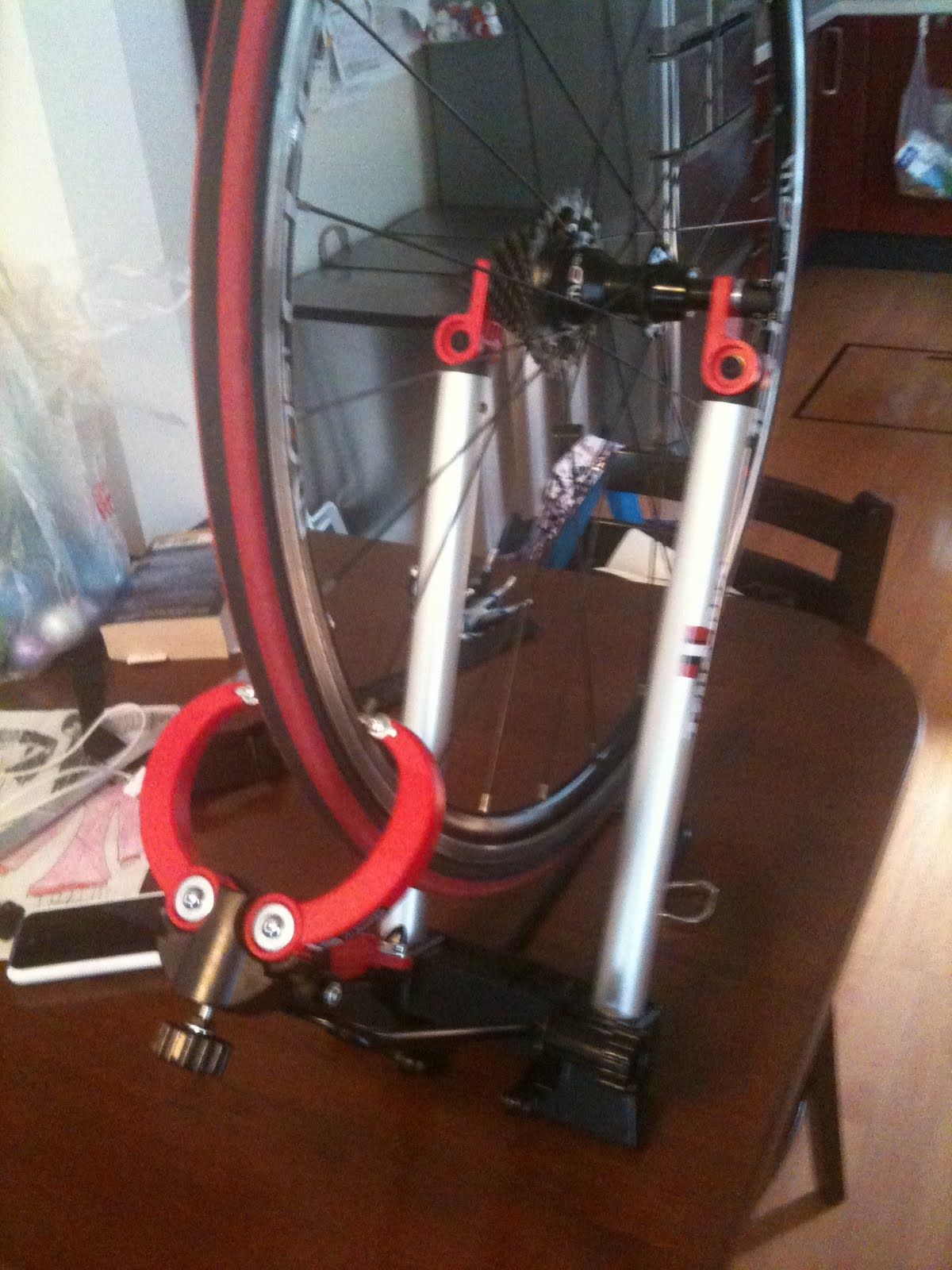
Setting up the wheel rig and making sure that it was all centered correctly, I went about tightening the spokes to remove the buckle and get the wheel nice and stiff again. First, I went about making sure the wheel was actually round and equally tightened across the whole wheel and then finally went about removing the side to side wobble.

After 5 minutes of work I was very happy to have a nice stiff, true wheel again and went about cleaning my rims, especially the breaking surfaces.

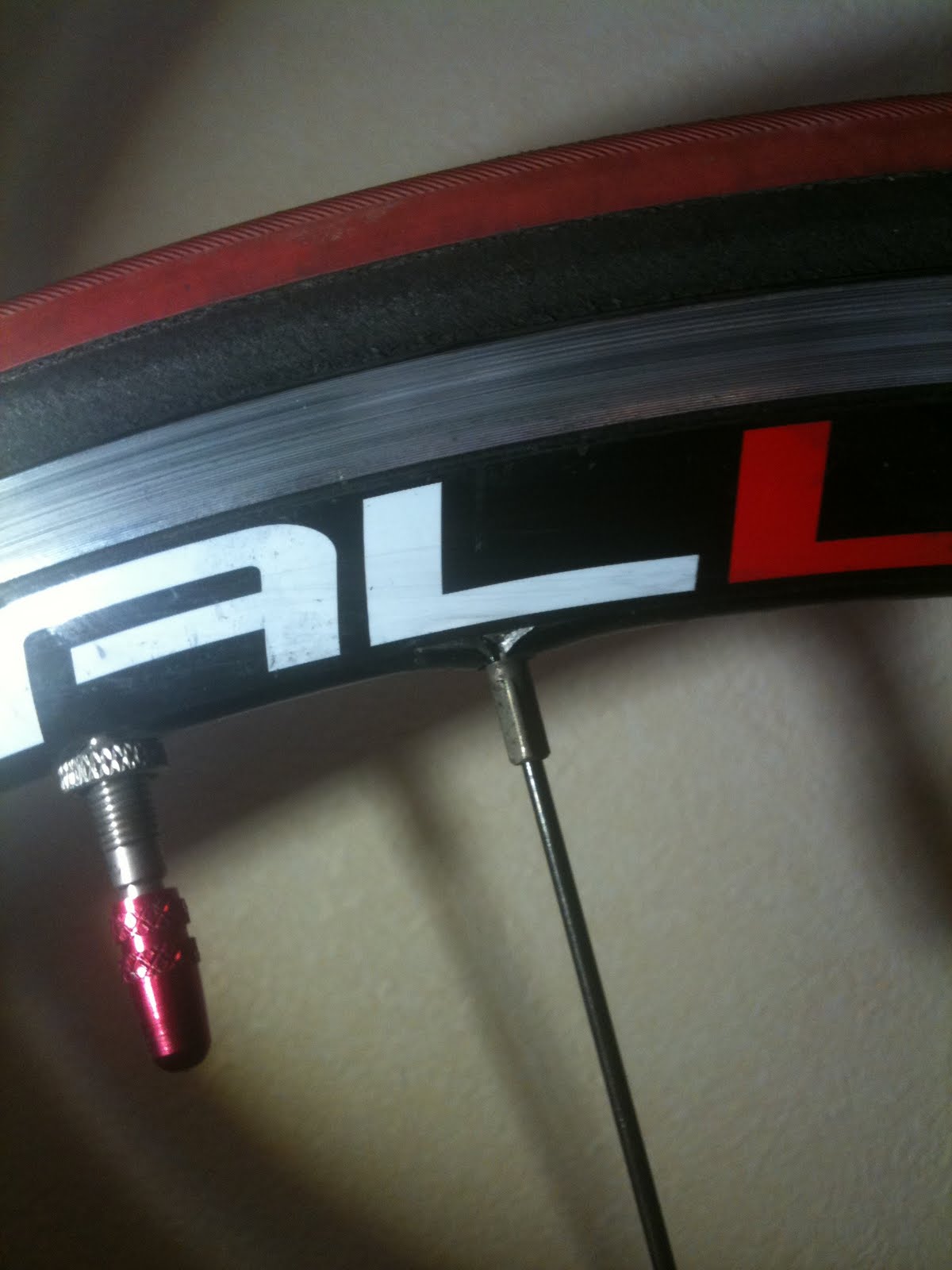
At first I noticed what I thought was a deep scratch around one of the nipples. On closer inspection and to my horror I realized that the rim had cracked around the nipple and was being pulled out through the rim. I continued my inspection and discovered 3 more areas on the rim that had cracked around the nipple, sadly the rear rim is dead and must be replaced which is a shame as it was the set that came with the bike.

I will hold a minutes silence to morn a great wheel and hope that possibly it can be reborn with a set of Mavic, Spinergy or Shimano rims or the heart break softened by a new wheel set.

9 Kommentare

Eingeordnet unter Uncategorized

F2P at Tokyo Cycle Show


Kenichi will be representing F2P (PE’s official outfit supplier) at Cycle Mode 2009 (Makuhari – Dec. 11~13). For those going, look for Booth 2-73.

Hinterlasse einen Kommentar

Eingeordnet unter Uncategorized

Good manners count…

The Nikkei Weekly – November 30, 2009

Speeding cyclists pose threat

Health, green issues get people on bikes; poor habits result in pedestrian collisions

An increase in accidents involving pedestrians is forcing the city to place limitations on a popular cycling course in Tokyo. Some of the plans under consideration include building a platform that separates the pedestrians from the cyclists and enforcing speed limits.

Some municipalities have changed street names to emphasize the pedestrians‘ right of way. A strong awareness of health and the environment is turning more and more people into cyclists, but these cyclists need to find a safe way to coexist with pedestrians.

„Watch out for pedestrians“ and „Reduce speed“ are among signs that dot Fuchu Tamagawa Kaze no Michi, a 9.4km road alongside the Tama River in western Tokyo.

Cars and motorcycles are not allowed, but the road has been the site of collisions involving pedestrians for about 10 years. According to Tokyo Metropolitan Police Department’s Fuchu Police Station 2007 and 2008 saw 23 accidents – two serious ones in 2008- involving pedestrians. The main cause was the excess speed of cyclists, who were unable to get out of the way in time and collided with pedestrians.

Fuchu spent about 12 million yen ($134,830) through last year building speed bumps into roads with frequent accidents. This fiscal year, the city plans to install signs along the route that appear like the road is narrowing to encourage slower speeds. A 53-year-old man who commutes by bicycle said, „The only way to tackle this is for cyclists to reduce their speeds.“

Machida city recently renamed the 14.5km stretch used by both cyclists and pedestrian known as the Sakaigawa cycling road. Complaints from pedestrians about cyclists – from rudeness to accidents – have increased in recent years. The city said the name erroneously led cyclists to believe the road was for them only. The name, Sakaigawa Yukkuri Road, reflects the fact that pedestrians have the right of way, city officials said.

Bicycle accidents involving pedestrians are on the rise even in the city. According to the National Police Agency, there were 2,942 bicycle accidents in 2008, a 4.5-fold increase from a decade earlier. Part of the increase stems from the fact that a growing number of cyclists are riding faster, sports-type models.

According to a nationwide survey of 100 bicycle shops conducted by the Tokyo-based Japan Bicycle Promotion Institute, sports-bicycle sales per store jumped 45% in fiscal 2008. In the last three years, sales of other types of bicycles have stagnated, while sports-type bicycles are rising 30-45% compared with previous years.

Many people are buying sports-type bicycles for the first time to combat the onset of metabolic syndrome and save on gas costs, observers said. Most of the sports-type bicycles are racing bikes, which can easily hit speeds of 30-40kph. If the pedestrian walking ahead makes a sudden turn, cyclists have a hard time avoiding a collision. The bikes are quiet and pedestrians may have trouble noticing them.

Arakawa emergency riverside road, also known as Arakawa cycling road, has adopted speed limits. The Ministry of Land, Infrastructure, Transport and Tourism, which manages the road, has called for a speed limit below 20kph – the speed at which a cyclist can easily stop. Signs warning speeders have been placed at 91 locations on the road.

Good manners count

Residents of local municipalities are pushing for separate roads for pedestrians and cyclists, but officials say roads do not have enough shoulder space nor can they be widened to create separate paths for both. The reality is urbanites on foot will just have to count on the good manners of cyclists for peaceful coexistence.

Masahiro Mashimo, former racer and leader of a hobby cycling team, acknowledged that it would be ideal if pedestrians could be separated from cyclists, but said in tight spaces, „speeding is a bad idea.“

5 Kommentare

Eingeordnet unter Uncategorized

Further Update – Shoulder injury — and random thoughts on cycle commuting and Japanese health care

Further Update: Checked in to Tokyo Medical Center on Tuesday afternoon.  On Wednesday, they were able to reset the shoulder with me under general anesthesia … without making an incision or cutting up my muscles/tendons.  I’m out of the hospital this morning, with my upper arm heavily taped to my side/back for the next 3+ weeks so it does not „pop out“ again.  Seems like everything went smoothly, and the usual pleasant surprise with a bill that is probably 10-20% what it would have been in the U.S. and leaves one scratching one’s head as to how they can possibly pay salaries of the docs and staff.

_________________________________

Update:  The shoulder movement was not returning as quickly as it should have — I cannot turn my arm outward or lift it up. I had my 2nd follow up visit yesterday to the doctor and still nothing showed on another x-ray — so he had me CT scanned. The CT scan shows very clearly (1) a portion or the back side of the „ball“ joint of my arm into my shoulder socket was crushed in the impact against the shoulder socket — nothing that won’t heal with time and still plenty of bone left all around it, but also (2) the arm is dislocated … not all the way out of the shoulder socket, but about 1.5-2 cm shifted back from where it should be, and the jagged edge of the damaged part of the „ball“ joint is riding/catching on the edge of the socket, which is why I have very limited movement, and also which prevented it from „relocating“ to the right place on its own.

I’m going in Tuesday afternoon, for surgery, general anesthesia, Wednesday morning. They will try to „relocate“ the shoulder and if that works, they won’t need to make an incision.

If it does not, or looks like it risks further damage … then they will do surgery to achieve the same result. Seems like the doctor wants to do this ASAP, says the longer I wait the harder the relocation will be/more damage to the non-bone parts. So I’ll just get it done … at least it is a major medical center with a good reputation from what I know (Tokyo Medical Center – Komazawa) … rather than hunting for the best shoulder doc in Japan or hopping on a plane to get someone in the U.S. to deal with it (as some of my colleagues have said I am crazy not to do, given their perception about the difference between the higher end of orthopaedic surgeons in the U.S. and Japan, as well as their desire for an English fluent doctor). We shall see.

P.S. Maybe next time (if there is a next time) this doc will believe the patient when he says it hurts so much there must be a break or dislocation — turns out there was both!

___________________________________________________________________

Original Post:

Komazawa Dori was a solid line of standing traffic on Thursday morning last week around 9AM. After passing Komazawa Park, at the Jiyuu Dori intersection, I could see not only the line of cars but also taxis blocking the shoulder that usually serves as an informal bike lane, so I went onto the sidewalk at the far side of the intersection, in front of the National Medical Center, slowing my pace.

The sidewalk is at an angle, tapering as it moves away from the corner, and a signpost of some kind blocked my view straight up the path. As I rounded the sign post, I came face to face with a college student (Y.O.) on a mamachari, going at full speed as he rounded it from the other side, starting to get a proper line to cross the intersection (late to class?). I swerved to try to avoid him, but we brushed left shoulder to left shoulder. At my very slow pace, and with my motion already to the right, that brush was enough to drive me off the bike and shoulder first into the pavement. … If I had hit Y.O. head on, I probably would have done some serious damage to him, helmetless and probably 1/2 my weight, but as it was, he stayed upright and came back to see if I was alright.

I was not — I lay on my back, a stinging pain in the shoulder immediately following impact. I could not move my arm. Anyway, Y.O. helped me over to the conveniently located National Medical Center, and spent the next 2 hours with me as I went through check-in, then by wheel chair to the orthopedics department, then down to x-ray/radiology, then back up to the orthopedics department, then to the sign out line, then the cashier. The bill was 6240 yen (US$70) without insurance. Then we walked across the street to one of several conveniently located pharmacies to get two types of pain killer and another medication to take to counteract stomach problems from one of the painkillers (another 3000 yen — under US$35).

Fortunately, the orthopedist gave priority to a large foreigner writhing in pain and I did not need to wait long. I was skeptical when told there was no sign on the x-ray of a broken bone or dislocation, even though I could see the xray myself … but was assured that, yes, it really could hurt THAT MUCH!!!!, even without either a break or dislocation. … I’ve since heard colleagues mention scary phrases like „rotator cuff“ (an injury one received upon being slammed shoulder first into the boards while playing hockey … with a four month recovery period including rehab?). Maybe I will get my first MRI after I stop back at the orthopedist on Wednesday for follow up? Doesn’t everyone get an MRI at some point in Japan (where the government-mandated cost is something like 10-15% the equivalent in the U.S.A.)?

The pain has gradually subsided over the intervening 4 days … but it is only today that I can type at all with my right hand reaching the keyboard, and only with my arm very carefully positioned and without much stamina. And I’m still on painkillers and wearing a sling for the rest of the week–I hope no longer than that.

1. I may have a warped perspective, but I think Y.O. bears at least 75% of the blame for this accident, because he was going way too fast for an obstructed view part of a sidewalk, and did not seem to take evasive action. That said, my bike was not harmed, my insurance will cover any of the (modest, in Japan) medical costs, and I really did not see the point of calling the police or filing a report for an accident that occurred on the sidewalk, as opposed to going straight into the hospital for treatment.

2. I blame myself for deciding to ride on the sidewalk. I thought this stretch of fairly broad sidewalk, with very limited access from either side and relatively low traffic after passing the hospital entrance, would be safe, but sidewalks are a much more dangerous location than streets, in my view, since you are much more likely to have a Y.O. appear immediately in front of you, or to have a high school kid with gym bag come running out of a stairwell just as you pass. The only way to ride safely is to preserve an ability to defend oneself, and that is harder on the sidewalks.

3. Even when I stay in the street, however, I often recently come face to face with cyclists riding the wrong way on the shoulder, forcing me into traffic to avoid them. I always try to scream „hantai houkou“ (wrong way) as I pass … but I’m fighting a losing battle against the umbrella-bearing, mobile-phone-screen-viewing, wrong-way traveling cyclists of this town. There are more and more cyclist commuters in Tokyo with each year, most of them quite responsible, to the point of being ridiculous — waiting at red lights at minor intersections even when there is no cross traffic nor a policeman in sight! In general more cyclists are a good thing because cars are more likely to expect and anticipate you — but it is not so great when there are no bike lanes or other real accommodations. And I see more and more cyclists zooming right in front of pedestrians who are trying to walk across the street, terrifying them like something out of a Lucas Brunelle video of messengers racing across Manhattan, flitting through lines of traffic and pedestrians like schooling fish (There were 3 of these Brunelle videos among the short films I saw at Bicycle Film Festival, even crazier, much crazier than this one on Youtube — music by ÜBERDOSE! — from a few years back). UPDATE: You can see more Lucas Brunelle videos and material at his official site, including similar Stockholm and London rides … but not yet the new NY rides I saw at Bicycle Film Festival.

4. I also am painfully reminded that the traffic, and risks, are much worse if I ride in at 9AM than if I leave home at 7:30AM. Now if I could just teach the clients to keep early hours, I would be fine.

5. The National Medical Center is impressive in at least one way. I have never seen so many elderly Japanese in a single place — the equivalent of at least 10 or 15 country villages all sitting in the waiting areas around this hospital complex. Average patient age must be creeping over 80. Is this what the restaurants and trains of Tokyo will look like in 30 years? If it is, I don’t think I want to be here to see it (at age 77).

6. What a great business the pharmacies across from the medical center have — the one I visited, Terada, had an endless stream of customers, keeping 8-10 pharmacists busy at all times filling prescriptions. The shelves and bins were overflowing with more prescriptions, just waiting to be picked up.

I’ll provide an update when I have a better idea of whether this is a 2-week, or a 4-month recovery and rehab path, and when I know what my injury is called — something more technical than „tenderized/smashed up soft bits inside shoulder area“).
13 Kommentare

Eingeordnet unter Uncategorized

ALERT — Transalp Sign up – Tuesday Dec 1, Noon CET (8PM Japan time)

Family schedule next summer does not permit me to sign up for the Transalp for 2010, but I hope to try it again in 2011. In the (unlikely?) event that anyone is going to go for it in 2010, online sign up is tomorrow, Tuesday, at 8PM Japan time (Noon CET). Here is the Transalp website in English, and in German (Ludwig? MOB? Tom?) … in case there are any takers. Of course, you need a 2-person team!

I recommend gathering all the necessary information in advance so you can sign up within a few minutes of the site opening to assure a spot — worked for Jerome and me this year). They have posted „screenshots“ of the application form on the site, so you can see what is required. … once you get a space confirmed, they give you several weeks or more to wire the payment — which, I must say, was a real bargain given the support and organization involved for a weeklong race in 3 or 4 countries.

2 Kommentare

Eingeordnet unter Uncategorized

Year in Review – 2009 Passes and Hills

Three or four weeks ago, I went into the Starbucks in the basement of my building for coffee. They were serving „Christmas blend“, and the music playing was definitely Christmas carols. It gets earlier every year. … so I guess November 23 is really not too early for a „year in review“ post.

I thought this morning that I would try to list up the passes (峠) I have ridden in 2009 so far. I’m sure that some others (Tom, Ludwig and Michael, at least) have ridden more and further, and could come up with a better list — leaving aside Transalp! — and Jerome might match me, including Transalp, but my list is not too shabby. The great thing is that has been my 5th full riding season in Japan, and I still managed to ride lots and lots of places I had never gone before. … and there are already plenty of new potential rides on the list for next year, not to mention a few that I might get in by year-end. Here is the list.


Passes/Hills of 2009
[blue text means ridden by me for the first time in 2009]
Tokyo
1. Otarumi (Kanagawa border)
2. Wada (Yamanashi border)
3. Kobu tunnel (Yamanashi border)
4. Kazahari
5. Umegaya (Jerome Hill)
6. Nikka-zuka (next route to the East of Jerome Hill – not sure pronounciation and thus the romanization)
7. Fue-Kami (heading into Chichibu — just past Higashi Oume toward Nariki)
8. Ozawa (tunnel into Naguri — Tokyo/Saitama-Chichibu border )

Kanagawa
9. Yabitsu
10. Shiroyama-ko (Hon/Moto-zawa Dam – the short climb NE of Tsukui- ko)
11. 三増峠 Sanzou Pass (S. of Tsukui-ko on Rte 65 – first leg of Kanagawa Brevet)
12. Hakone Pass (Shizuoka border)
13. Ashi-no-yu Onsen Iriguchi (Pass on Rte 1 at top of climb – Odawara to Ashinoko – name??)

Yamanashi
14. Tsuru
15. Tawa
16. Matsuhime
17. Oo-toge
18. Kamihikawa
19. Yanagisawa
20. Odarumi (Nagano border)
21. Yakiyama
22. Hinazuru (not Suzugane!)
23. Mt. Fuji 5th stage
24. Yamabushi Touge (the same name as the pass in Chichibu – but also the name of the pass/tunnel at top of Doshi Michi)
25. Dosaka (Pass between Doshi Michi and Tsuru)

Saitama/Chichibu
26. Yamabushi (the “real” Yamabushi)
27. Shomaru
28. Nenogongen
29. Karibazaka (on the Green Line)
30. [Hannari] (not sure pronounciation/romanization — on the Green Line)
31. Buna (on the Green Line)
32. Arima
33. [Nitazan] touge (pass on the Naguriharaichiba Rindo)
34. Shigasaka (on border w/ Gunma)

Nagano
35. Mugikusa Touge(麦草峠)
36. Suzuran Touge
37. Yagawa Touge (矢川 – on the Gunma Nagano border,
approaching Karuizawa from the South via “rindo”).
38. Jukkoku (十石峠on Gunma-Nagano border Rte 299)
39. Tsuetsuki Touge/杖突峠
40. Bunkui Touge/分杭峠
41. Jizo Touge/地蔵峠
42. Hyoko Touge/兵越峠

Shizuoka [no Izu rides this year beyond Atami!]
43. Jukkoku Pass (十国— on rte 20 Hakone to Atami)
44. Atami Pass (Rte 20)
45. Naka-no-Kura tunnel (中之倉) [at top of climb up Motosu-michi to Motosu-ko — WNW side of Mt. Fuji on Rte. 300 during Brevet]
46. Fuji Safari Entrance – high point on Rte 469 on S. side of Fuji (pass between small Mt. Kurodake and big Mt. Fuji)

Europe (German, Austrian, Italian Alps)
47. Oberjoch
48. Alter Gaittpass
49. Hahntennjoch
50. Arlbergpass
51. Bielerhohe
52. Tobadill
53. Pillerhohe
54. Timmelsjoch
55. Stelvio
56. Passo Foscagno
57. Passo D’Eira
58. Passo Gavia
59. Passo del Tonale
60. Mendelpass
61. Fai del Paganella/Andalo
62. Passo del Ballino
Forgotten , added later:
63.  Nokogiri
64.  Kazahari Rindo 

5 Kommentare

Eingeordnet unter Uncategorized

Bike spotting

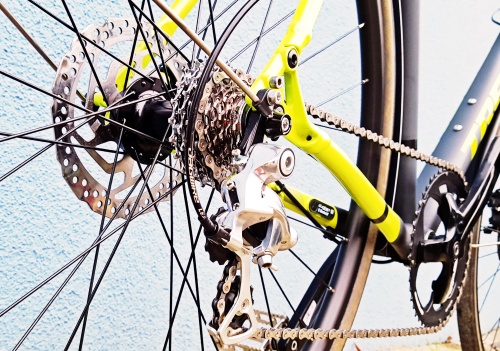
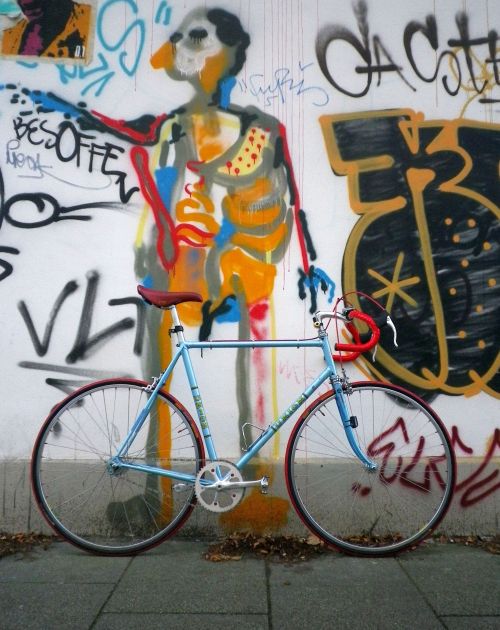
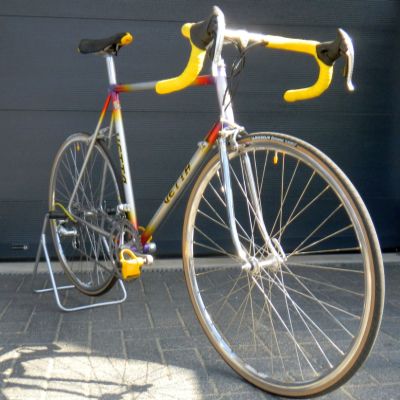
Is that a Trek Top Fuel WSD?

5 Kommentare

Eingeordnet unter Uncategorized

Tokyo Bicycle Film Festival 2009 This Weekend Nov 20-23

It is that time of year again, as the Bicycle Film Festival comes to Tokyo, as in 2008 and 2007. Maybe this year I will stop by for a show?

http://www.bicyclefilmfestival.com/?p=tokyo

Follow up note: Misako and I stopped by for the 4PM show today — a nice crowd, and fun series of 12 short films in 90 minutes. The filmed races through NYC were crazy–crazier than anything similar I’ve seen.

This is a view from the entrance to the Spazio sunken courtyard, with the exhibition space visible.

There is supposed to be a „block party“ at Komazawa Dori tomorrow afternoon.

Ein Kommentar

Eingeordnet unter Uncategorized

Stay off the Rindos?

David L. heads upstream (literally) toward Arima Pass:
Tom, Nishibe-san and I had a great Chichibu ride over Arima Pass on a glorious fall day yesterday, and he has provided a write-up with some nice photos on his blog here. I’ll remember the good things about this ride — spectacular fall colors, perfect temperature range, beautiful views, fast trip home through Naguri/Nariki and then no headwind along the Tamagawa.

Fall colors on the lower slopes of the climb to Arima Pass:

So before they fade from memory, let me list a few of the negatives:

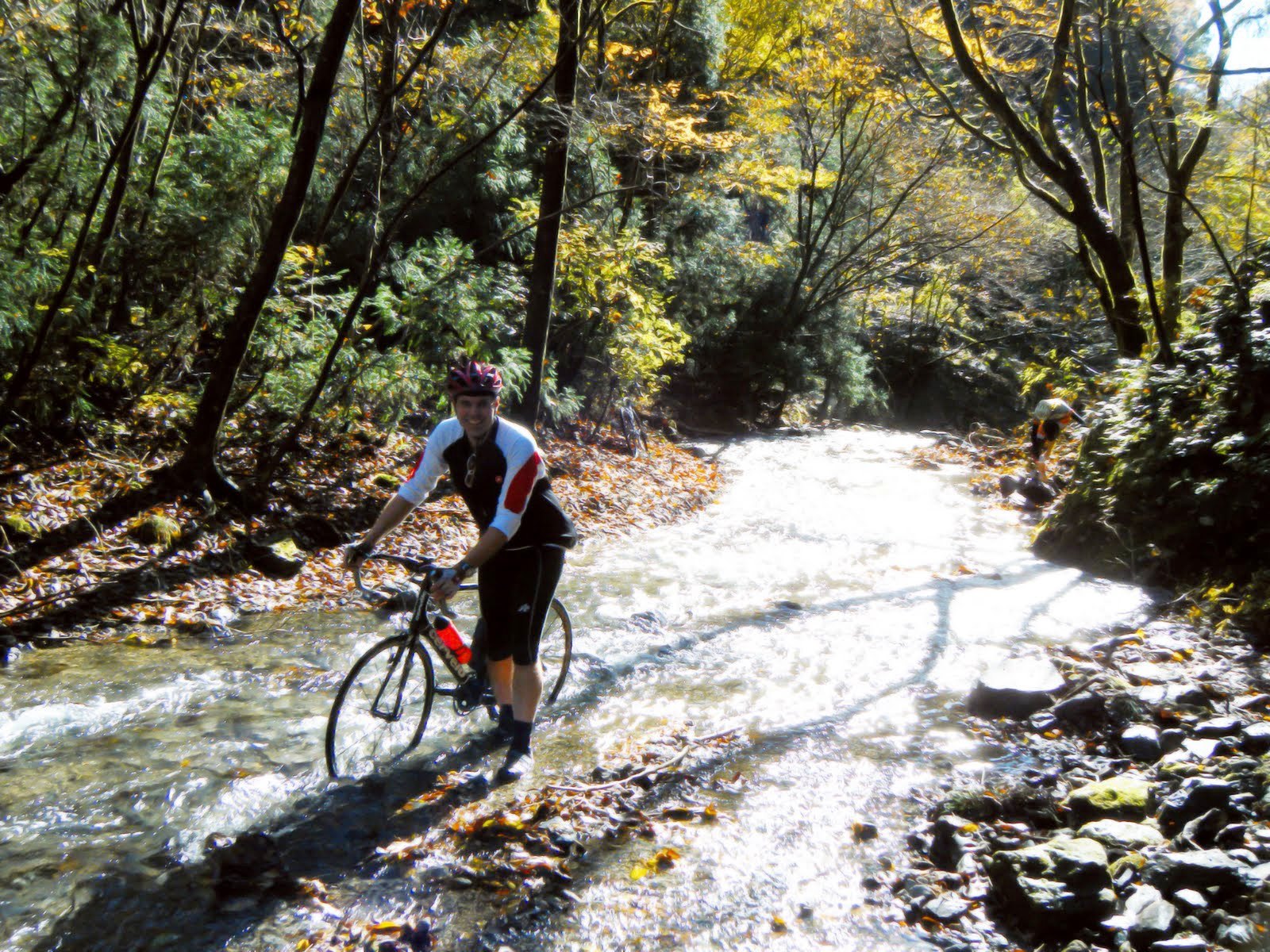
1. The forest roads (rindo) really can be difficult to travel at this time of year, especially the day after a heavy rain. The climb to Arima Touge (just a few meters higher than Kazahari) involved large stretches of road covered with wet leaves, puddles and water. No one had passed up the East side climb in weeks. Fortunately, the slope is not as steep as Wada or the climb up to the Green Line I did a few months back, so we could maintain enough traction to be able to ride all the way up. I did get a sidewall cut in my tubeless tire on the descent (I must have gone over one of the many smaller rocks in the roadway … but at least I steered clear of the big ones).

2. As Tom notes, there was one stretch where the road disappeared and a 10 meter drop appeared. We were able to go around by walking down a steep gravel slope, walking up a stream and then up another slope. Tom had his cyclocross bike, complete with 35mm knobby tires and wide clearance brakes, and gleefully attacked the gravel slope (as he did the leaf covered road). Tom swore to us that there was a road here only a month or so earlier. Nishibe-san and I were less thrilled about it, with our thin tires and carbon frames. At least our wet feet did not get cold, since we had a long climb ahead to generate heat, and the weather was mild.


3. There were lots of little 4-wheel drive SUVs that had come up the back side where the road was open. Most of them had one or two men in them … with rifles. It was definitely hunting season. I don’t know what they were hunting and we did not see anyone with a deer or inoshishi (wild bore) on his roof, or even a rabbit or rat, much less a bear, pheasant or monkey. In fact, I don’t think I even heard the crack of a gunshot. But it still made me a bit uneasy about being mistaken for something to kill.

4. As Tom notes, the 4-wheel drive SUVs were more dangerous weapons than the rifles. One almost ran me off the road a few km over the top of Arima. I was WAY over on the left side of the road, where there was plenty of room to pass, but he cut a corner and came within an inch or two of me, and refused to „adjust“ at all once he saw me. Tom says the guys in the SUV were laughing. He was not going so fast (nor was I) but if he had hit me … The next time something like this happens, I’m going to try to have the presence of mind to (1) put my gloved hand through the windshield to let him see just how close he is, or at least (2) give chase back up the hill since in 2-3 km he would have reached a gate that would have slowed him down enough for me to at least get the license plate and report to the police.

Some photos from near/at the top of the climb (see Tom’s blog entry for more spectacular scenery photos):


2 Kommentare

Eingeordnet unter Uncategorized