
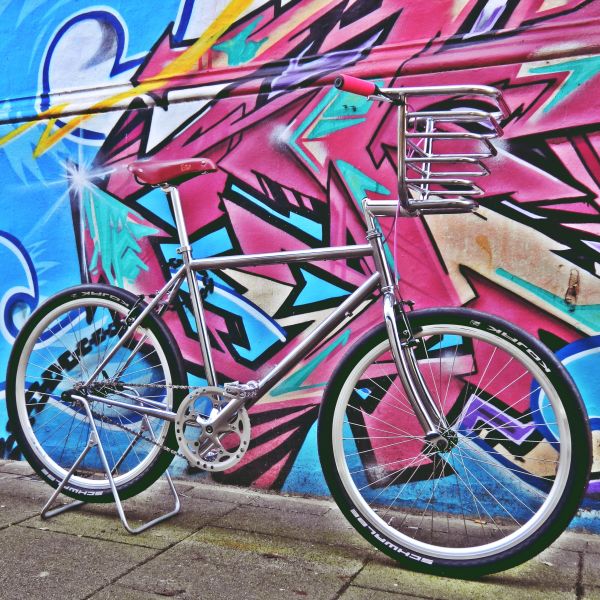
via Milano Fixed

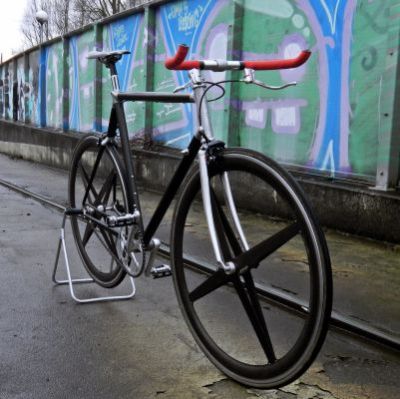
auch via Milano Fixed

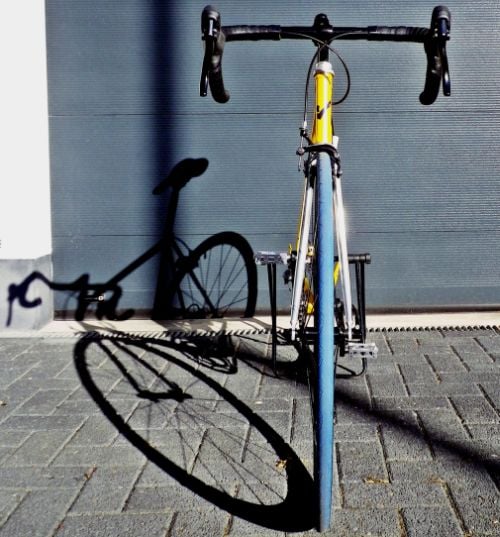
ebenfalls via Milano Fixed


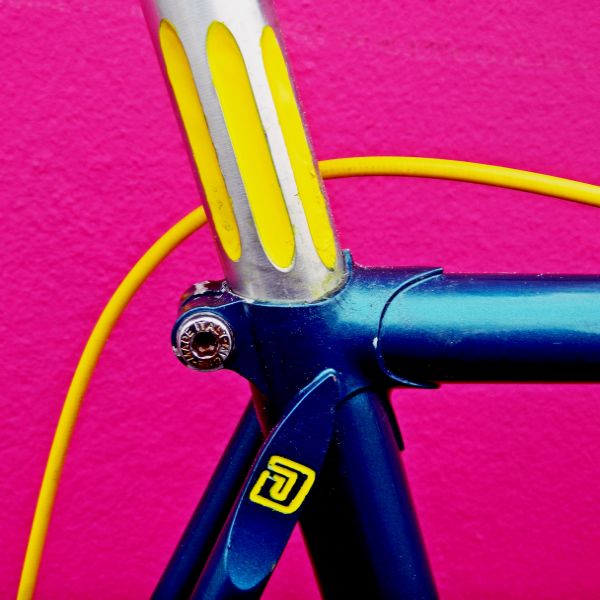
Holland Smith, via Instagram
Eingeordnet unter 2016, Mob, Sex. Lies & Vids, Uncategorized
Ein sehr technischer, komplizierter Artikel über ein allerdings auch sehr interessantes Patent von Shimano. Ich musste das mehrfach lesen, bis ich die Funktionsweise verstanden hatte. Aber dann fand ist es auch richtig gut.

Thanks to rumor and hearsay from a Bikerumor fan and our own digging, we hear Shimano’s working on all-new hub designs. one that could offer quick engagement, more durable freehub bodies and nearly silent, drag-free coasting. And we found a few patents to back it all up.
The biggest update to their current designs is the switch to a ring drive ratchet system. DT Swiss has proven it with their Star Ratchet, but Shimano’s filing actually references Chris King’s RingDrive patent, but there’s a major difference in the way Shimano’s design moves the ratchet rings. And that difference is what eliminates the buzzing bee sound during coasting, creating quiet, fast hub that might just be the heart of XTR and Dura-Ace’s next generation hubs…

Shimano’s current hubs use a standard ratchet and pawl system, clicking small, spring-loaded teeth on the freehub body into a ratchet ring mounted on the hub shell. That’s an improvement from earlier designs used on lower- and mid-level hubs like STX in the 90’s, where the ratchets and pawls were all contained in a replaceable freehub body. Those were prone to contamination but not rebuildable, and with the smaller overall diameter required to fit it all inside the FH body, things just weren’t as good.
This new design, which we hear is called Scylence, replaces pawls with two ratcheted rings and a conically slotted section on the freehub body. Before we dive into how it works, it’s worth seeing how similar systems like DT and Chris King work:

DT’s Star Ratchet uses two toothed rings, one inside the hubshell and one inside the FH body. Each is spring loaded to push against each other, and the teeth are angled such that when you pedal, they mesh together and turn the wheel. When coasting, the teeth’s angles are like ramps and the teeth simply bounce over each as the springs jiggle in micro compressions behind them. Because the teeth are always touching, you get the clicking noise. And because there are so many teeth, particularly on Chris King’s hubs, that noise can be high pitched and high volume. DT offers three different tooth counts on their rings, which make more or less noise depending. Higher tooth counts mean quicker engagement, but also (generally) more noise and more potential drag.

Shimano’s patent flips the script, slightly. And it’s brilliant. Only one of the ratchet rings (31) is spring loaded, but the spring (34) is pulling it away from the second ratchet ring (32), back towards the hub shell (16).
Inside the sprung ratchet ring (31) are slanted grooves (54/58) that catch the grooves (42/44) on the FH body (30). When you pedal, the FH body (30) spins and those grooves pull the sprung ratchet ring (31) into the floating ratchet ring (32) and the teeth connect and drive the hub shell, thus rotating the wheel and propelling you forward.

When not pedaling, those same grooves push the sprung ratchet ring (31) away from the floating ratchet ring (32), and the spring (34) assists in retracting and holding it, keeping the teeth from making any contact. That eliminates drag…and noise.
The floating ratchet ring (32) glides freely over the angled grooves on the FH body, but has splines (64) that fit into slots (18d). When it’s driven by the sprung ratchet ring, the wheel is turned.
So, rather than push two toothed rings together, Shimano’s found a way of pulling one set of teeth into the other, then retracting it while coasting. Patent drawings are typically not 100% representative of the final product, but if those tooth counts are remotely close to real, expect very quick engagement.

From the looks of it, the sprung ratchet ring (31) won’t be moving much to contact the floating ring (32). All those moving parts are covered by a seal (36), and bearings are in their usual places – widely set with cup-and-cone adjustment on the outer balls. The arrows simply refer to the direction that the sprung ratchet ring moves when pedaling (D1, in order to contact the floating ring) and coasting (D2).

On a separate patent filing, Shimano’s exploring replaceable splines on the freehub body. At first glance, it may seem as though it’s a nod to keeping things fresh and not letting their cassettes dig too far into the splines. But, the patent reads differently, leading us to believe it’s done as a way to save weight without sacrificing (probably even improving) durability.

The patent mentions using a softer material (aluminum, which happens to be lighter) for the primary cylinder (aka: freehub body) and a harder material (steel) for the replaceable splines. Marrying two different materials isn’t a new idea – Woodman showed a different way of doing itat Eurobike. The idea on both methods is to get the weight of alloy with the hardness of steel.

It’s also probably cheaper than the alternative, titanium. The current Dura-Ace 9000-series rear hub uses a titanium freehub body, but that’s expensive. And, there’s no real weight savings over alloy, it’s just that it’s harder and less likely to have the cogs slice into it. That’s the explanation White Industries gave us when they switched all of their hubs to titanium. But for lower level products (Ultegra, 105, etc.), using a multi-piece design makes more economical sense.
From the drawings shown in the patent, they’re looking at a number of methods of attachment, from press-in to bolt-on.
As with all patent reviews, what’s shown here may or may not ever make it into production. We’ve heard things on the street to suggest one or both of these will make their way to products sooner rather than later. As one source put it, the new drive system could “make XT/Ultegra hubs laced to whatever rims a LBS staple again.” Shimano does not comment on products that have not been officially released, so can’t confirm any of it. Regardless, we’re excited to see such a unique design come out of a major house. Fingers crossed it’s on the road and trail soon.
Eingeordnet unter 2016, Ingenieur, Mob, Uncategorized
Eingeordnet unter 2016, Gierige Räder, Japan, Mob, Uncategorized
„Toyama, Japan“ from Pas Normal Studios on Vimeo.

Sehr gut geschriebener und exzellent photographierter Beitrag auf Pas Normal Studios.

Eingeordnet unter 2016, Japan, Mob, Uncategorized
Neo-Retro: Ein 3Rensho Rahmen, der keiner ist, neon-blau neu pulverbeschichtet und aufgebaut im Kern mit einer Shimano 105 5800 11-fach Gruppe. Bis auf einige Teile von Campagnolo. Ein erster, kurzer Blick.

Dominant blau und silber, letzteres vor allem durch die massiven Araya Hochprofil Aerofelgen (also was man vor einigen Jahren noch unter Hochprofilfelgen verstand, heute versteht man darunter ja Scheibenräder mit einem Loch in der Mitte) und die Campagnolo Athena Ultra Torque Kurbel.

Mal wieder etwas neues an der Lenkerbandfront. Diesmal eine blau/schwarze Kombo. Oben BBB Band, das sehr angenehm zu wickeln ist, unten das ficklige Fizik Microtex. Das aber farblich sehr gut zum Rahmen passt. Ich hatte auch gelbes Lenkerband unten ausprobiert, das sah aber nicht so gut aus wie die Lösung jetzt.
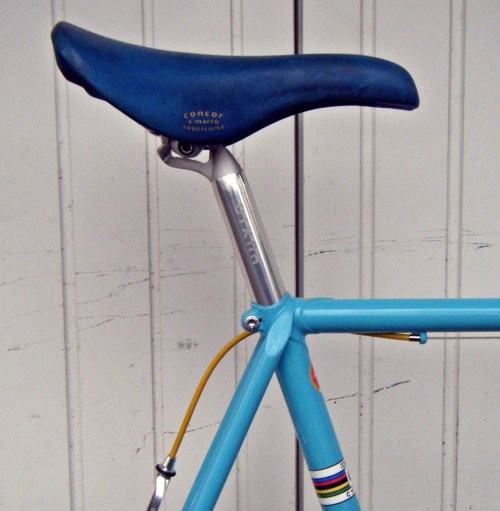
Ein blauer Selle San Marco Concor Supercorsa Sattel, eigentlich einmal für ein Olmo San Remo gekauft. Dazu eine japanische Dixna Stütze, eine der schönsten, modernen Stützen überhaupt.

Die Ästhethik des langen Hebels am 105er Umwerfer gefällt mir gut. Einbau und Justierung ist hingegen sehr aufwändig, dem 11-fachen schalten geschuldet. So hat die KMC 11-fach Kette zwar einen Missing Link – dieser ist aber nicht wiederbenutzbar nach eiinmaligem schliessen und öffnen. Neue Shimano Kurbeln kommen mir nicht an meine Räder. Diesmal dagegen Campagnolo Athena.

Shimano 105 11-fach Kassette 12/28 und Umwerfer mit kurzem Käfig. Angesteuert von einer sehr schicken Campagnolo Bremshülle.
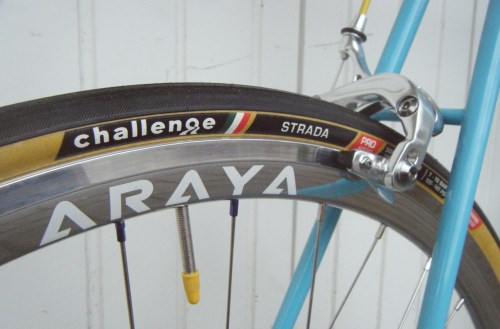

Das „piece de resistance“ in Großaufnahme: Araya Felgen. Man beachte die beiden eloxierten Speichennippel rechts und links vom Ventil, die das finden des Ventillochs bei abgenommenen Reifen und Schlauch erleichtern. Ventilkappe von Conti, NOS. Heute werden die ja mit schwarzen Kappen geliefert. Bremsen? Campagnolo Veloce, die besten überhaupt. Nur leider sieht die 2016er Version nicht mehr ganz so elegant aus.

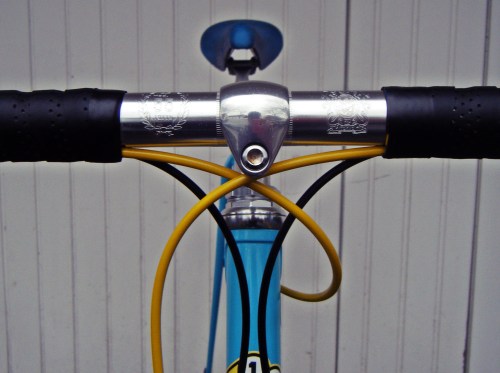
Nitto New Pearl Vorbau mit Nitto Mod. 55 Lenker und Tange Steuersatz.
Fahrbericht folgt.

Eingeordnet unter 2016, 3Rensho, Mob, Uncategorized

The first Tokyo Cycle Parts show was held last week. This trade show is open only to the bicycle industry, which allowed focused inquiry into products, and provided a good glimpse at what is happening in Japanese cycling.

For me, it also provided a great opportunity to see acquaintances, such as Mr. Yoshikawa, the president of Nitto, and his son.

Mr. Emi, the owner of Ostrich, was there, too. We discussed a few new product ideas, even though I usually visit the companies directly to discuss new projects with fewer distractions.

Among the interesting new products were Ostrich’s bike stands. They raise the rear derailleur off the ground when the bike is disassembled for Rinko. The larger collapsible stand (bottom) has been available for a while, but the minimalist single-sided ones (in two lengths) are new. You can see a bike with the single-sided stand on the table in the photo of the Ostrich booth.
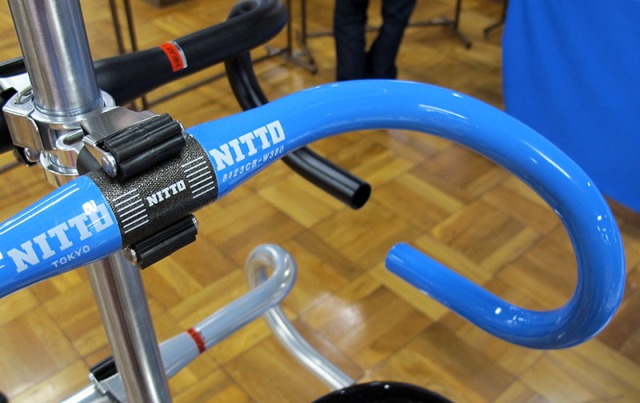
Speaking of new products, Nitto showed their first carbon handlebars. Made in Japan, they are made to Nitto’s exacting quality standards. The track version (above) is painted Nitto blue. Sharp eyes will notice the width: just 380 mm. Japanese track racers prefer narrow bars, so they can exploit small gaps when they make their winning moves.
As impressive as these bars are, I don’t think a carbon fiber version of the Compass Randonneur handlebars is in our future plans.

Another product is unlikely to make it into the Compass program: Nitto is making a seatpost-mounted Di2 battery system for Shimano.

MKS showed their pedals, including the beautiful top-of-the-line ones that Compass sells.

I finally got to see their new SPD pedal. More than a year ago, I’d seen drawings, then photos of prototypes. I am not so keen on the aesthetics, but the function is neat. The front retention mechanism is split, so you need to open only one side to release your foot, yet the shoe is held securely when you pedal. A Rinko version also will be available. And of course, the bearings are better than any other SPD pedal…

Honjo had only a small table to show their lovely fenders. I think that is because they are plenty busy these days.

From fenders to tires: Even in the mainstream, 650B no longer is purely for mountain bikes, and more companies offer road-oriented tread patterns. Vittoria’s new “Revolution” is 50 mm wide and looked promising at first. But the weight of 810 grams shows that there is a lot of rubber, and the description lists it as an “urban” tire. When will Vittoria finally offer their high-end racing tires in more sensible widths?

IRC’s new 650B x 54 mm tire felt more promising when I pressed it between my fingers. No specs were available. We’ll try to get a test sample soon. Perhaps it’s a sign that the Enduro Allroad Bike idea is catching on.

Soyo offers hand-made tubular tires that look very nice, but they are available only in narrow widths. And they carry a price tag of more than $ 200 for the best ones. Still, it’s nice to see that true handmade tires are still produced in Japan.

At the other end of the spectrum, airless tires are alive and well. And they are as scary as ever!

More encouraging: In Japan, you still can buy lugged production bikes with downtube shift levers and hammered fenders for less than $ 2000.

Of course, carbon is big in the mainstream, and Scott had their own candy made to celebrate their claim that they are “carbon experts”.

Contrasting with the carbon were the leather goods from a Japanese company. Their extra-thin handlebar tape looked interesting.

When I started cycling seriously, Hoshi spokes were considered the best. Nice to see that they are still around, offering a wide variety of spokes, including the bladed ones that they pioneered long before they became fashionable.

Another Japanese specialty are rain covers for child seats. It’s common to carry two children on your bike in any weather. This maker used cute inflatable figures to demonstrate their covers.

Among the many things at the Minoura stand was this neat camera mount, which uses your bike to stabilize your camera. Lionel Brans had a similar mount on his custom bike when he rode from Paris to Saigon in 1947. As long as you don’t need your bike in the photo, it’s a neat idea.

And then you have true oddballs, like these stickers to dress up your bike. Do you prefer your fenders with a houndstooth or a plaid pattern?

The sun was setting when I finally left the exhibit. As I walked by the pagoda of the temple in Asakusa, I was reminded how Japan has a long tradition of making beautiful things. The best Japanese bicycle makers are rooted in that tradition, and that is why we enjoy working with them so much.
Eingeordnet unter 2016, Japan, Mob, Uncategorized
Es ist ja kein Geheimnis mehr, dass SRAM in Kürze ein Wireless Gruppe auf den Markt bringen wird, man kann diese bereits auf der SRAM eTap Website sehen. Somit wechselt die technologische Führerschaft in der Gruppenentwicklung einmal wieder, von Campagnolos letztem Aufbäumen durch die Einführung einer 11-fach Gruppe (sofern man dies als technologische Führerschaft sehen mag), zu Shimanos elektronischer Schaltung zu SRAM wireless elektronischer Schaltung.
Ich musste daran denken, als ich am Wochenende bei meinem 3Rensho Rahmen anfing Schaltungs- und Bremszüge zu verlegen. Sicher, das macht auch irgendwie Spaß und verlangt etwas Konzentration und können, ist aber heutzutage etwa so sinnvoll wie Limo selber herzustellen. Von daher denke ich, dass es nur eine Frage der Zeit ist, bis auch das Bremssystem elektronisch/hydraulisch mit Scheibenbremsen sein wird.
Es folgt vermutlich die Phase des „Downngradings“, also eTap wird wie Di2 zunächst in der teuersten Preisklasse (Red, bzw. Dura Ace) verfügbar sein, bevor es in den günstigeren Gruppen (Force und Rival, bzw. Ultegra und 105) erhältlich ist und die Preise in den Keller gehen.
Interessant wird zu sehen, welchen Einfluss dies auf die Preisentwicklung in rein mechanischen Gruppen haben wird. Werden diese deutlich billiger, weil sie nicht mehr dem Stand der Technik entsprechen und keine Nachfrage danach mehr besteht (siehe Handys vs. Mart Phones?) Oder werden diese teurer, da die Produktionskosten für kleinere Mengen steigen (siehe Plattenspieler vs Streaming)?

When we attended the official SRAM Red eTap launch last fall, we provided an in-depth look at the design and development process and first impressions.
Now, they’re closer to production, with an initial run of “P1” units ready for use in the wild. The “P1” designation, as explained by SRAM’s technical marketing manager Nate Newton, means they’re “the final preproduction run”. The idea with the P1 run is that everything: tooling, production lines, parts, are identical to production, but everything gets checked over and allocated internally rather than sold to customers.”
So, that’s what we’ve got here, in for long term testing and mounted to a Cannondale SuperSix EVO with SRAM Red 22, a Quarq power meter and Zipp 202 wheels and tires. Of course, we promptly pulled the eTap bits off and threw ’em on the scale…


We put the parts on the scale at the launch event, too, which includes the Blip Box controller for TT/triathlon bikes. Here, on our test bike and our scale, were the standard road parts:
That’d put the total weight for shifting parts on a bike using two Blips at 673g. Here’s how that stacks up against the competition’s electrical parts (using actual weights for Shimano and claimed/actual weights for Campagnolo):
| RED eTap | Dura-Ace Di2 | Super Record EPS | |
| Shifter | 260g | 230g | 265g |
| Front Der. | 164g | 107g | 133g |
| Rear Der. | 236g | 213g | 199g |
| Int. Battery | — | 56g | 130g |
| TOTAL | 660g | 606g* | 727g* |
*Keep in mind, you’ll be adding a 22-50 grams of wiring and junction boxes, too, which puts Shimano very close to SRAM’s system weight. Campy’s internal battery is larger than Shimano’s and contains a good portion of the wiring, hence the heavier weight. You can find pricing here.

UPDATED: Final consumer packaging may vary from what’s shown here, but you’ll get a dual USB wall plug, charging cradle, USB cable, battery cover and instructions when you buy the whole group. Complete bikes will include a single charging cradle, but an additional cradle will be available separately. SRAM’s rep says they’ll charge faster with just a single cradle plugged in at a time. At launch, it’ll only be sold as a complete group and include that single charger. As parts start selling individually, the charging cradle will also be an individual package.

During transport, it’s best to remove the batteries since motion tends to keep the units “awake”. The battery covers have a handle little switch that lets you mark them as charged or not, so you won’t ever be wondering which ones are ready to go, and which will leave you high and dry. SRAM claims 60 hours of ride time per charge.

The shifters use a standard coin cell battery with a rubber-lined cover plate to keep moisture out. These should last you about two years.

Each shifter has two Blip ports. Shown above is the standard configuration with a single set installed and a red plug covering the second port. The wires have a red O-ring to keep moisture from entering through the port. On TT/triathlon bikes, the Blip Box replaces the standard shifter levers and provides a short and long set of Blips to reach the ends of the aero extensions and the bullhorn handlebars.

Blips can be mounted anywhere their wires will reach, and you’ve got four lengths to choose from (150, 230, 450 and 650 millimeters). SRAM sent the test bike with one pair installed on the bottom of the handlebar, but we’ll be moving it slightly to play with ergonomics.

The brake levers have a small return spring in them to assist the rim caliper in keeping the cable taut, the first time they’ve put it in a lever body that didn’t also have a mechanical shifter paddle. Without mechanical shifting or hydraulic braking internals, the lever bodies are thinner than other RED units, making them very comfortable to grip when standing and grinding through a climb or sprint.

The rest of the ergonomics are familiar, sharing the basic lever form factor with the rest of the SRAM family.

The shift paddle is large but doesn’t interfere with finger movement underneath. The Function button is used to pair the shifters with the rear derailleur and make micro adjustments on the rear derailleur.

A rubber seal surrounds the battery’s contact points on the derailleurs. The third contact point on the battery is for communicating with the charger to ensure proper charging. Both front and rear use the same type of battery, so you can swap them back and forth…no need to keep track of which goes where.
The first rides on home roads felt just as good as our first rides near their German R&D headquarters. Shifting is precise and intuitive, ushering in a new (and arguably much better) interface between rider and bike. Left to shift up the cassette, right to go down it…both to shift front. It really couldn’t be easier and takes all of two minutes for the brain to retrain itself. In fact, I anticipate having a harder time going back to my Di2 or EPS bikes (which already operate opposite each other!) than this one. I know, I know #firstworldproblems. The Cannondale they sent it on is no slouch, either, nor are the Zipp 202’s, so long term testing should be doubly fun. And I’m already scheming a few nifty things to experiment with…
Eingeordnet unter 2016, Ingenieur, Mob, Uncategorized
76.076 Meilen sind es nun geworden, der neue HAM’R (Highest Annual Mileage Record). Kurt Searvogel legte die letzte und 76076. Meile am 9. Januar zurück und überbot somit den „ewigen Rekord“ von Tommy Goodwin aus dem Jahr 1939/40 um mehr als 1.000 Meilen.
Bitte jetzt keine Diskussion, um es überhaupt eine gute Idee ist, umgerechnet 122.432 km in einem Jahr zu fahren, wo die meisten von uns froh sind, etwa ein Zehntel davon zu radeln. Aber die meisten von uns haben eben auch einen Beruf oder eine Bestimmung, eine Familie, eventuell Kinder und wir wollen Abends mal einen heben, Dead Snow im Kino sehen, uns beim vietnamesischen Imbiss Mekong im Viertel den Magen verderben und vor allem mindestens an jeden zweiten Sonntag im Winter bis 12 Uhr im Bett bleiben.
Aus diesem Grund sollte man Respekt vor Kurt Searvogel haben, genau wie man Respekt vor Boris Becker, Lothar Matthäus, Fransiska van Almsick, Oksana Baiul oder Giuliano Calore haben sollte. Das sind alles Profis und absolute Könner auf Ihrem Gebiet gewesen: Tennis, Fußball, Schwimmen; Eiskunstlaufen, bzw. den Stelvio ohne Lenker hochradeln und dabei vier verschiedene Musikinstrumente zu spielen. Solche Spitzenleistungen sind nur dann möglich, wenn man nicht allzu sehr darüber nachdenkt, was man eigentlich da genau macht, ein gewisses Defizit an Intelligenz bei den erstgenannten Vieren hat vermutlich geholfen, beim letzteren bin ich mir nicht sicher, so verrückt waren seine Ideen. Trotzdem, und ich schreibe das noch einmal ganz groß: RESPEKT.
Was mich irritiert sind die Diskussionen die nun starten und etwa die folgende messerscharfe Argumentation darlegen: „Heutzutage“, so hört man, „ist das ja alles ganz einfach. Windschnittige, leichte Karbonräder mit 22 Gängen, Mitfahrer die Windschatten geben, immer nach dem Wetterbericht mit dem Wind auf einer sonnigen, glatten Straße in Florida zu fahren, das ist ja nicht soooo schwierig. Aber damals, als Tommy Goodwin auf einen Stahlrad jeden Tag durch das regnerische Großbritannien ohne jede Unterstützung gefahren ist….Und der war ja auch Vegetarier und dann brach auch noch der 2. Weltkrieg aus….das war noch ein richtiger Mann!“
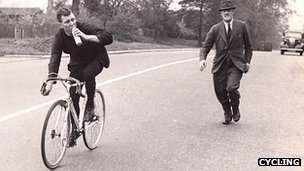
Cool.
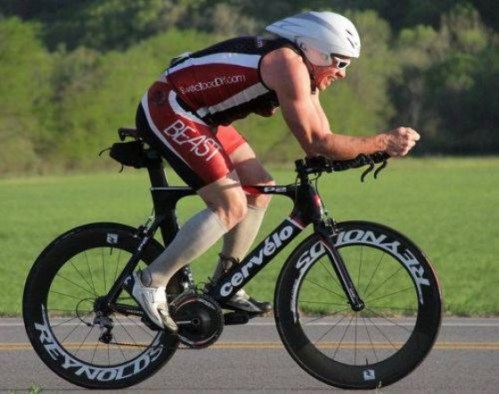
Uncool. Und noch nicht mal im Weltkrieg.
Mit anderen Worten, da kann ja jetzt jeder kommen und mehr Meilen als Tommy Goodwin fahren, aber so lange er das nicht auf einem Stahlrad von 1939 und auf dem Kopfsteinpflaster zwischen Paris und Roubaix tut, sich dabei nur von Obst ernährt und unter Ausschluss der Öffentlichkeit radelt- zählt das erst mal nichts. Und besser wäre es bei der Gelegenheit auch noch, wenn Deutschland Polen den Krieg erklärt.
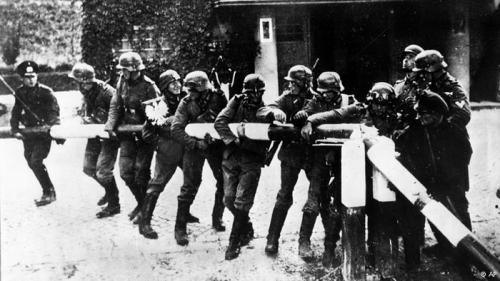
Vorbereitungen für neuen HAM’R Rekordversuch
Das ist natürlich völliger Unsinn. Auch wenn das jetzt sehr deutsch herüberkommt, würde ich da gerne einmal an die Regeln erinnern. Und diese besagen letzt endlich nur, dass man ohne Hilfsmittel so viele Meilen wie möglich in einem Jahr zurücklegen muss. Ich denke mal, das steht nichts von „auf flandrischen Pflasterstrecken“ oder „mit Reynolds 531 Stahlrahmen“ oder „in einem Land, das sich zumindest teilzeitweise während der Dauer der Rekordversuches in einem Weltkrieg engagiert“.
Das Aussehen von Kurt Searvogel spielt seinen Gegnern da leider in die Hände.

Uncool, daher unverdient.
In gleicher Weise hätten wir diese Diskussion auch bei dem Stundenweltrekord haben können. Dieser wurde über eine lange Zeit, je nachdem wie man das sieht, von Ondřej Sosenka (2005) bzw. Chris Boardman (1996) gehalten. Vielleicht aber auch noch sehr viel länger von Eddy Merckx seit 1972. Egal. Zum Glück wurde der Rekord von Jens Voigt 2014 gebrochen, zurecht Jedermanns Liebling und dem Großmeister plakativer Aussagen.

Cool, daher verdient den Rekord geangelt.
Danach kamen ein paar Hansel (Brändle, Dennis, Dowsett), die den Voigt’schen Rekord prompt übertrumpften und die die Geschichte gleich wieder vergessen wird, bis sich Bradley Wiggins rechtmäßig den Titel krallte. Alles lief nach Plan und alle sind zufrieden.
Im Grunde genommen ist natürlich jeder Rekord einzigartig. Bob Beamon 1968 in Mexiko, 8,90 Meter? Einzigartig. Weserrunde 2014? Einzigartig. Eine Stunden rumhüpfen am Boday-Attack Kurs am 16. Dezember 2015? Einzigartig. Oder wie Dominik G einmal als Kompliment zu meiner Frau nach dem Abendessen in unserer Hütte in China sagte: „Das war wirklich das leckerste Essen, das ich heute gegessen habe. In China.“
Letztendlich sind 76.076 Meilen nur eine Zahl. Wäre eine Meile nicht 1.609, sondern 2.448 Meter lang, wäre er ja auch nur 50.000 Meilen gefahren. Und das klingt wiederum irgendwie schaffbar. Aber nicht heute, bei dem Schnee da draußen in Bremen.

Eingeordnet unter 2016, Mob, Uncategorized
Alleine wegen des Namens sollte ich mir die schon kaufen. Und weil die auch an ein Cannondale Track passen.
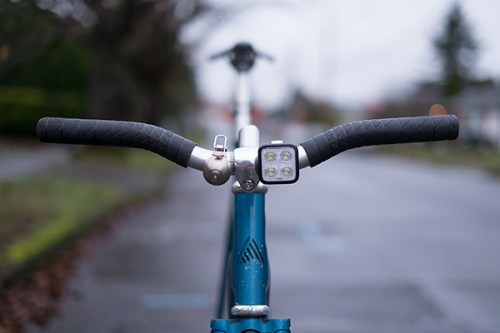
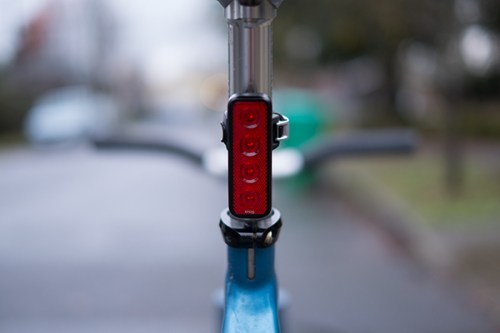
With the sad reality of darker days looming over Portland for the next few months… I was super stoked Knogsent me their new front Blinder MOB Four Eyes light, and the rear Blinder MOB V Four Eyes light to test out.
One of the biggest fears about bicycle lights that use silicone straps are how easily they snap in a short amount of time. An even bigger fear is when the extreme tension from the silicone strap snaps off the plastic housing of the light. Fear no more because the MOB lights come with extra silicone straps to accommodate ALL diameters of your handlebar and seatpost! Also, to keep your handlebar and seatpost looking pristine… the MOB lights come equipped with a plastic clasp instead of the hard-anodised aluminum clasp that helps prevent wear and tear.
With the integrated USB plug, charging these lights couldn’t get any easier. No silly plugs with annoying cables! Once fully charged… these lights perform amazingly! I absolutely feel safe knowing that motor vehicles from both directions can see me. In day or night, I highly recommend the Knog Blinder MOB lights!
Eingeordnet unter 2016, Mob, Uncategorized
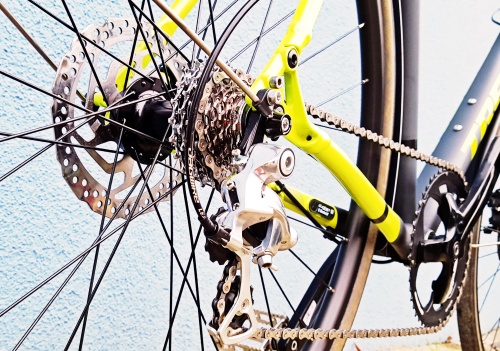
11-23

Rot Weiß Silber Schwarz
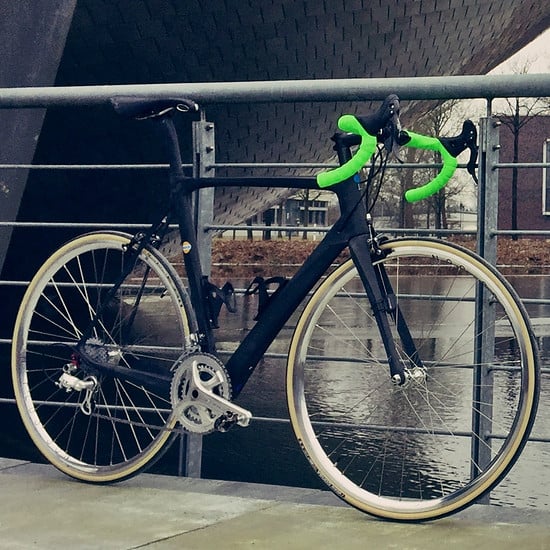
what ?

[not for real]

Geldgrab mit 61 Zähnen.

Fuchsien Schönheit

Japan Braut
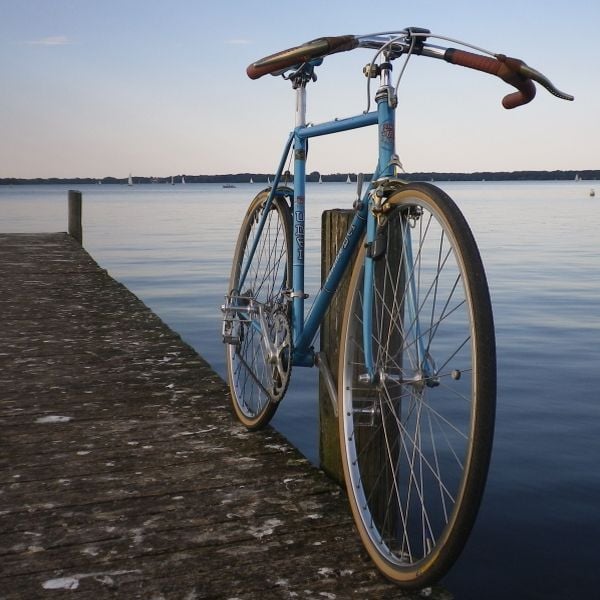
Blau Gold Weiss
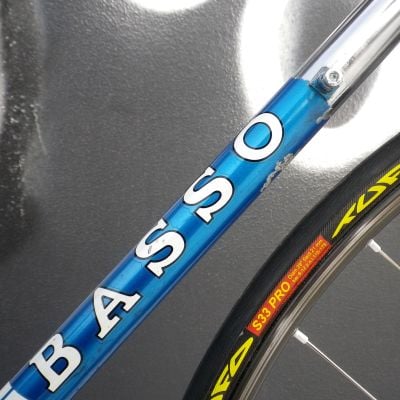
Track Version
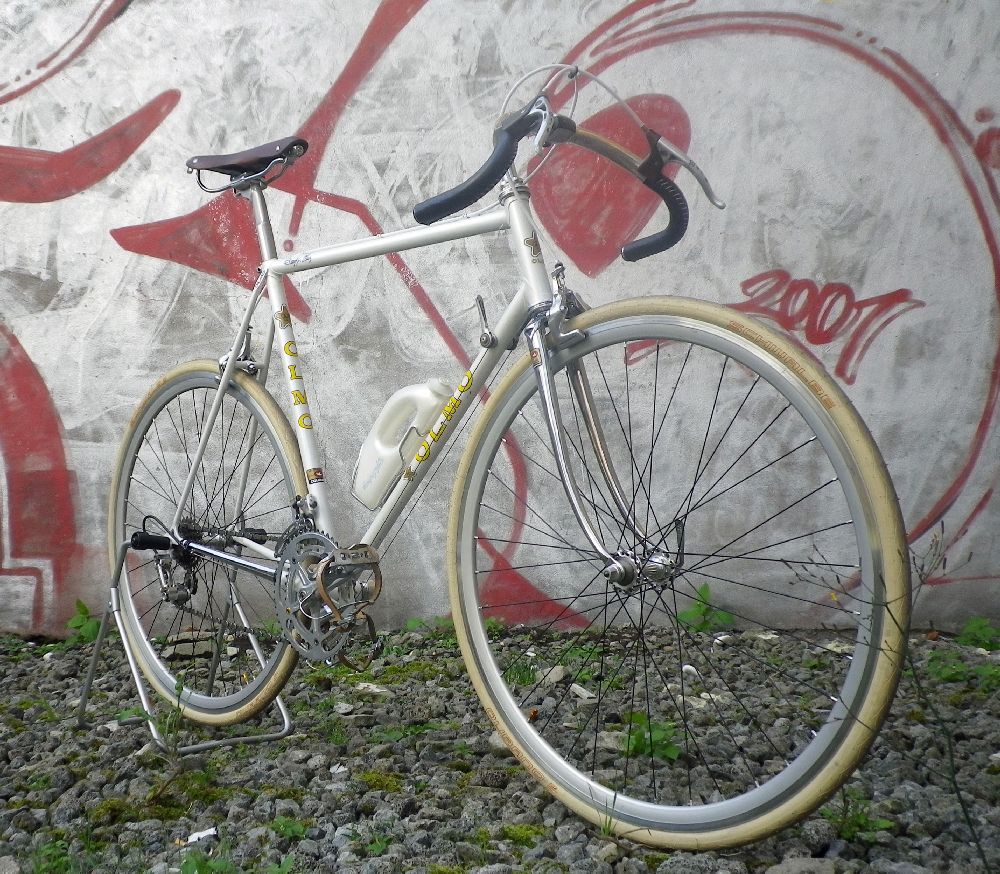
Zu schön zum fahren

7 kg Plastik und Blech

Motobecane, Raleigh oder Peugeot?
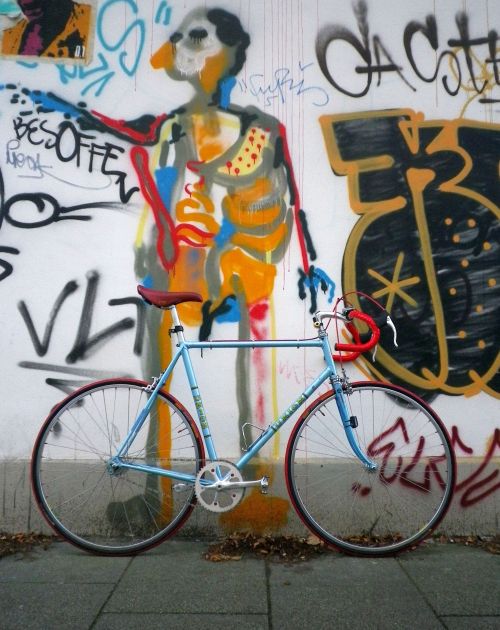
Beginn der der Fixie Liebe

... what you gonna do ...
Nun komplett in blau



Leider nicht in Gunmetal Grey
Da einzige RH 60+ Rad in Tokyo



Keep on cruising in the free world
Der Todesstern
Daccordi Universum

Design follows function
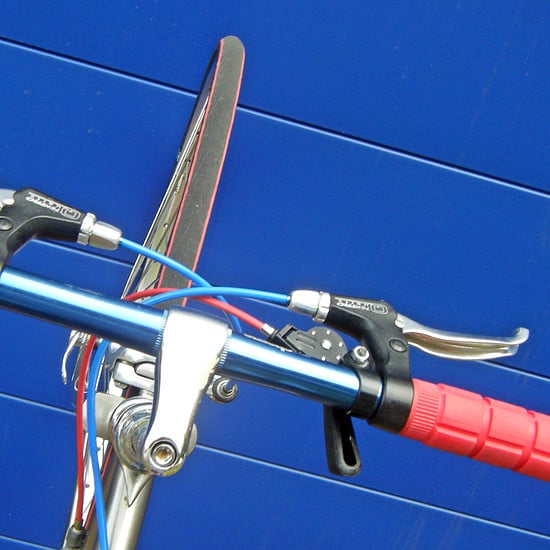
Blau Rot Silber

Arktis Blau
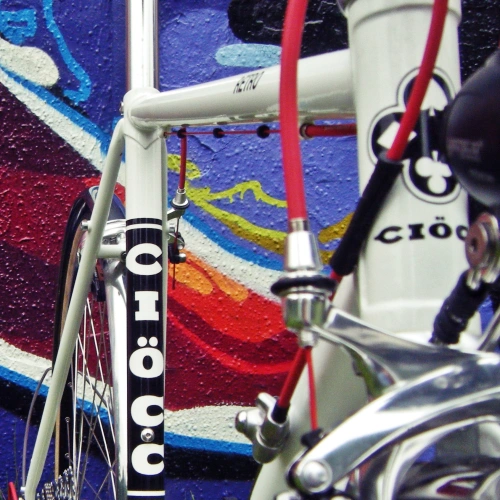
CIÖCC. Hannes.
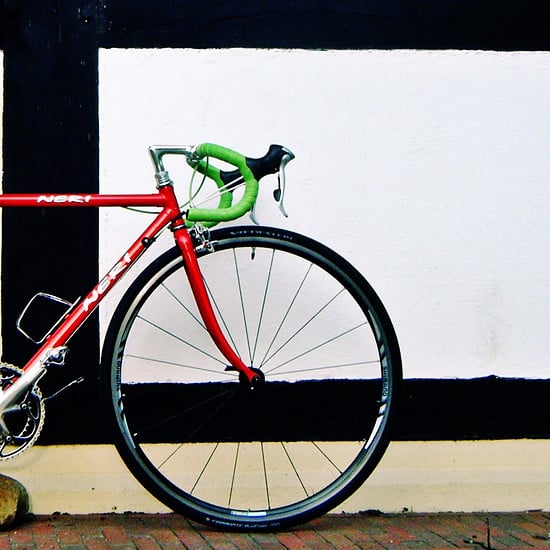
Drei Farben. Schwarz.

Beim Shopping.
Schwarz Rot Weiß
Shopping Blockade Runner
Entlackt
Viner Black Viper
Gross und Gelb
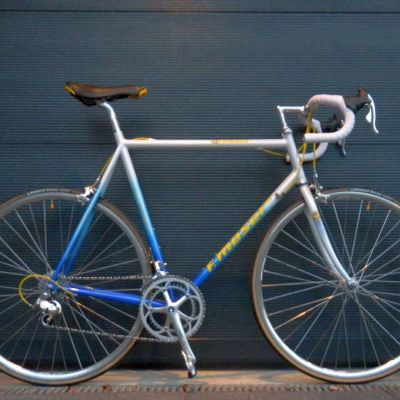
Oops.
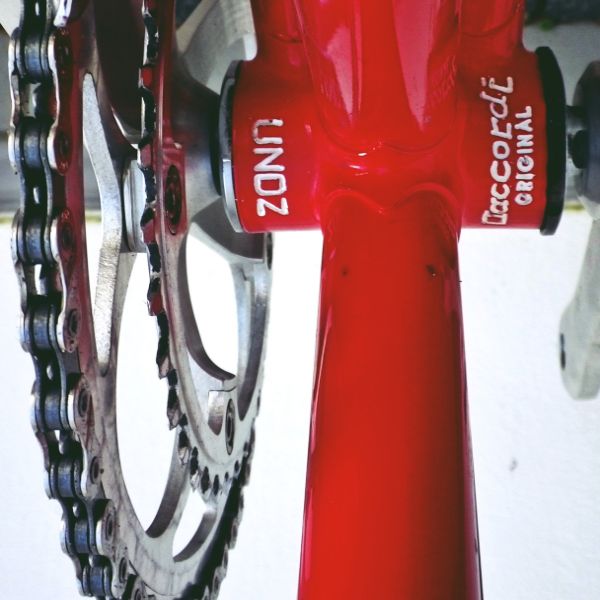
Zwischen Florenz und ....

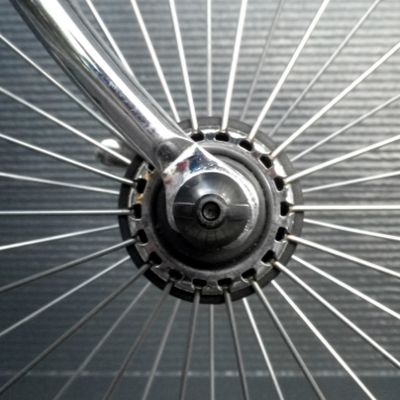
Dancelli O-nabe

Prinzessinnentraum
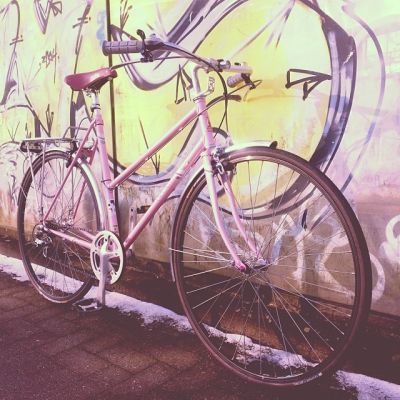
Aus einer anderen Galaxie

Fixie Projekt
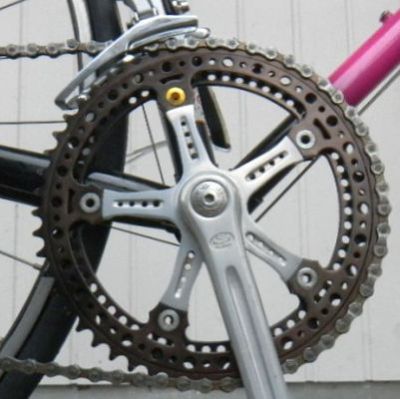
Concorde Twin

Lange Geschichte
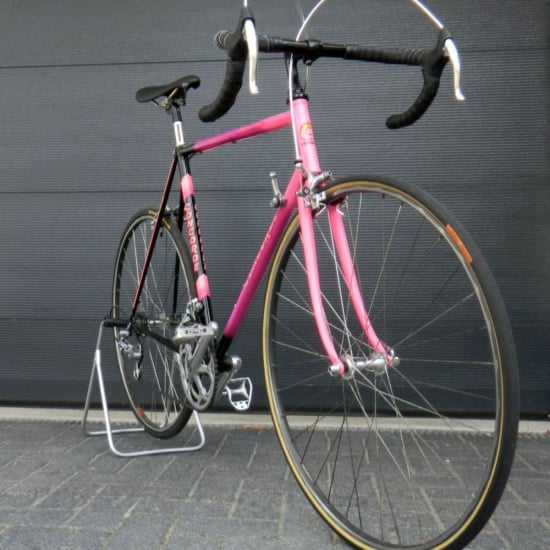
Classic Cyclone
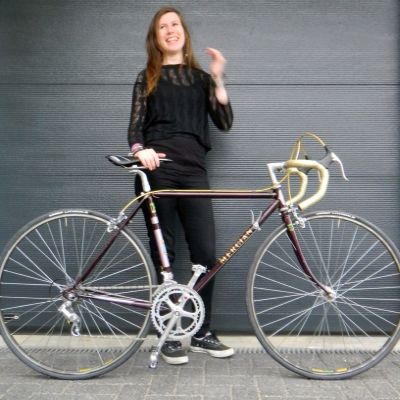
Für Manu
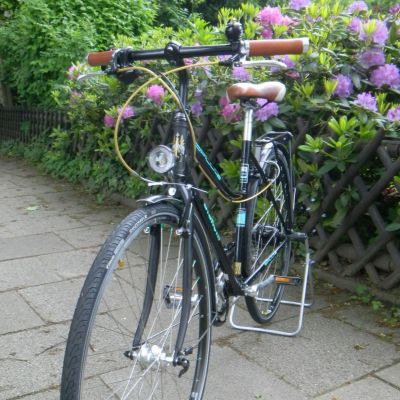
Für Midori
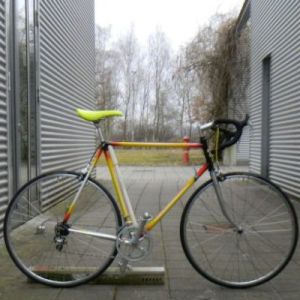
Deutschland !
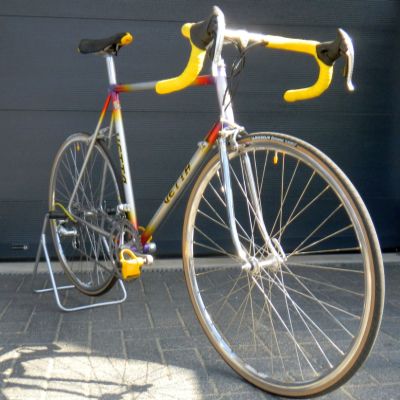
Grelle 80er Farben
Reus
Gold wert ?
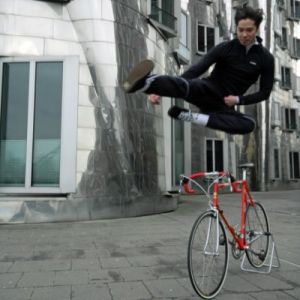
Für Shozo
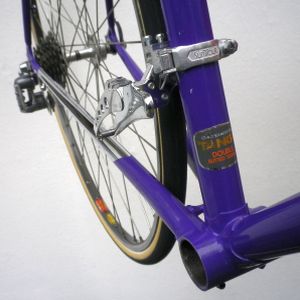
Neunziger eben
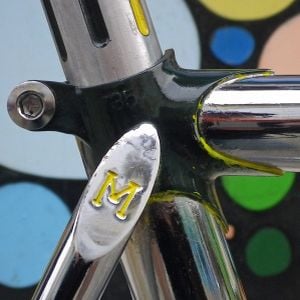
British Racing

Wait and See
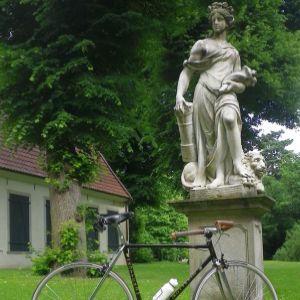
Kotter für Heike
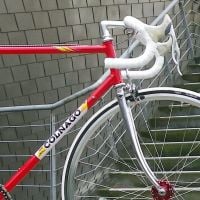
Colnago Super XL 1988









 bikesnob28hb
 fixiefanboyhb
 sudi1662
 there is no "I" in cyclyng