Dieses Rad könnte ich mir auch bauen, denn seit einigen Monaten habe ich eine Raleighrahmen in der Garage der sehr ähnlich funktionisert. Das verdanke ich Georg. Ist ein schönes Projekt für den Winter.


via Pashley Cycles
Dieses Rad könnte ich mir auch bauen, denn seit einigen Monaten habe ich eine Raleighrahmen in der Garage der sehr ähnlich funktionisert. Das verdanke ich Georg. Ist ein schönes Projekt für den Winter.
via Pashley Cycles
Eingeordnet unter 2013, Gierige Räder, Mob
Ohne rot zu werden, würde ich gerne hier behaupten, dass ich seit zehn Jahren davon überzeugt bin, dass die 3D Drucktechnik unser Leben nachhaltig beeinflussen wird.
Vor 50 Jahren hatte man eine Schreibmaschine und Kohlepapier mit Durchschlägen, vor 40 Jahren dann sogenannte „Matrizen“ um Referate in der Schule zu kopieren, vor 30 Jahren dann endlich Schwarz-weiß Kopierer (zunächst mit flüssigen und dann mit fester „Tinte“), dann kamen die ersten Farbkopierer und Farbdrucker in Mode und jetzt 3D Drucker. Die Entwicklung ist dabei immer ähnlich, was zunächst eine teure. spezialisierte Anwednung für die INdustrie ist wird nach und nach billiger, komfortabeler und für Konsumenten kaufbar. Jedes Mal gibt es auch Bedenken und zehn Jahre später fragt man sich „Ehrlich – wegen der Sache sollte das nichts geben?“ Bei den 3-D Druckern ist es das Drucken von Waffen, was diese Geräte so brisant macht, oder machen soll. Sicher. Auf dem Internet gibt es uach prima Bastelanleitungen für Bomben – Stecker raus aus dem Internet.
3D Drucker werden nun zunehmend nicht nur im Prototyping sondern auch in der Serienfertigung von Produkten eingesetzt. Ich denke, wir machen uns noch falsche Vorstellungen davon, wie 3D Printer Besitz von unserem Leben ergreifen werden. Im Gegensatz zu, sagen wir einmal LED Lampen, gibt es nichts (Glühbirnen), was sie eins zu eins ersetzen werden. Ich könnte mir aber vorstellen, dass eine Menge Dinge in 3D Druckzentren in Städten dezentral angefertigt werden; damit werden Transportkosten gespart. Aber ich denke nicht. das dies der grösste Vorteil von 3D Druckern ist. Der größte Vorteil ist m.E. die Individualisierung von Gütern. Ich kaufe nicht mehr etwas aus dem Regal, das am Ende eines Fließbandes als Standard aus einer Fabrik kommt; ich drücke ein paar Tasten auf dem PC und wähle unter hunderten von Komibinationen die, die ich mir dann selbst vor Ort produziere. Sagen wir mal: Ein paar Turnschuhe.
Hier ein Beispiel von Giant.

PDDnet.com is reporting that Giant Bicycles has started using 3D printing for bicycle saddles, and it’s not just for prototyping – the process is becoming part of their production process, too!Using two different processes, they’re able to quickly create rideable prototypes to test many variations and then take the exact shapes into production. First, they’re using SLS (Selective Laser Sintering) to turn nylon powder into the saddle shells. The result is virtually identical to the shells of production saddles, so Giant knows essentially what the final product will feel like throughout testing.Then, they use SLA (another process that UV laserifies a resin into a solid) to create molds for the shells and padding that would be used in production. Compared to traditional tooling and molds, this process is far cheaper and faster. Check the full article with comments from Giant’s lead industrial designer Daniel Lentz here. We’re thinking it can’t be long before someone uses 3D metal printing similar to Charge Bikes’ dropouts to test rail shapes.
Und noch ein Artikel dazu:
3D Printing is a manufacturing process taking some precedence in the news, both in hype and circumstance. Giant has utilized the technology in the latest iteration of their saddles
If you don’t live in a parallel universe, then you’ve probably heard about 3D Printing. Lately, the technology has filled the news with toys, trinkets, and failures. But the technology does a lot more than print Yoda’s sexy giant ears.
Giant has been using 3D printing technologies to prototype, but also to mold functioning saddles, and what they’re doing has implications for all venues of manufacturing, whether you’re a hobbyist or a huge company. For its latest iteration of seats, Giant used Selective Laser Sintering (SLS) and Stereolithography (SLA) from online 3D Printing service provider ZoomRP.com during early design iterations and actual functioning prototypes.
Prototyping began with Selective Laser Sintering (SLS) utilizing ZoomRP’s SLS White material. SLS creates parts in a deep bed of powdered Nylon. A CO2 laser sinters (or melts) the design and the powder bed drops down in minute increments until, layer by layer, the design manifests itself in the powder. The part is then removed from the powder in much the same way archeologists brush away dirt from a hidden fossil. “We’ve found that the Nylon powder used with Selective Laser Sintering (SLS) mimics the base of the bike saddle,” explained Daniel Lentz Lead Industrial Designer: Components at Giant. “That’s the beauty of ordering SLS parts; they simulate the final product. We modify the model, print, and take the SLS prototypes out for a ride, allowiing us to feel and test the final product before actually having the final product.”
Lentz and his team take the 3D Printed SLS bases out for a ride to test the positioning of their latest models. Knowing SLS will feel like the final production saddle base gives them confidence in making final descisions before moving into production. And let’s face it, the saddle is one of the most personalized parts of your bike; it’s got to be just right, or, as my cycling friends like to say, it can feel like you’re wearing the wrong size of pants (a rather apt description).
The technology available to Lentz’s team continues to push the manufacturing and even designing of saddles, and the way it feels to ride.“With every new iteration of saddle prototype that we create, we include shape adjustments to both the base and foam that we test extensively. These adjustments can be as subtle as intricate form adjustments and slight foam thickness variations and we may go through a number of different prototypes with any new design,” explained Lentz. “3D Printing allows us to hone in the precise shape and performance in the final product that will offer our customers a more comfortable and confident ride.”
The saddle is narrow enough so chaffing is less of an issue for the off road cyclist, but also incorporates slight curvature with enough padding to make it fairly comfortable for the road biker as well. After finalizing the design in SLS, Lentz’s team moved to another 3D printing process—the oldest one in the books—Stereolithography (SLA).
SLA works with a huge vat of liquid resin and a UV laser. The laser maps out the shape of the product upon the liquid, curing the resin layer by layer. “SLA is used to print the mold for the seat. Within the SLA mold, we pour polyurethane and actually mold the board here in our office,” explained Lentz. “Form and comfort for new saddles is important. We see real benefits in the precise and custom forms achievable through 3D Printing processes, and in future possible shapes.”
Using a 3D Printed part for a mold is both cost and time effective; traditional methods of tooling and machining are time consuming and often far more costly. These processes allowed Lentz’s team to ride, test, and manufacture functioning prototypes with exact design features manifested in just days. Lentz’s team was able to personalize the saddles with the design throughout the prototyping process. That personalization informed them of the comfort and fit of the saddle on a level that directly translates to what you might be taking out for your next ride.
via bike rumour
„One is tempted to believe that a stupid man will only do harm to himself but this is confusing stupidity with helplessness. On occasion one is tempted to associate oneself with a stupid individual in order to use him for one’s own schemes. Such a manoeuvre cannot but have disastrous effects because a) it is based on a complete misunderstanding of the essential nature of stupidity and b) it gives the stupid person added scope for the exercise of his gifts.“

Stupid people are everywhere. And, as we all know, no class, race, sex, occupation, political affiliation, country of origin, or degree of wealth has a monopoly on stupidity. Stupid people cause profound damage to individuals and to society at large. But, for the most part, stupid people operate in a kind of anonymity. Consequently, we are frequently ambushed by them and pay the often hefty price.
I say stupid people operate in anonymity not because we all don’t know stupid people, but because stupid people don’t have a huge literature identifying them. There are countless books written on how to be smarter, how to improve critical thinking skills, how to learn faster and how to develop acumen in all sorts of fields of endeavor.
There are books on the traits of highly successful people and on the classification of various intellectual skills. But where is the Field Guide to Stupid People, the reference source we need to identify and avoid – as much as is possible – the often irreparable harm such people can inflict? Such a book doesn’t exist. Or at least I thought it didn’t.
All that changed a few months ago when I was in Paris, roaming through the English language section of my favorite Parisian bookstore, Galignani.
 Buried on the table of new releases was a small volume with the seductive title: The Basic Laws of Human Stupidity. I picked it up, flipped through its 70 or so pages, and almost put it down. But something told me to go ahead and purchase it despite its hefty 12.25 Euro (~$17) price for such a little book.
Now knowing what’s in this little book, I would have paid multiples of that price.
The author of the book, one Carlo M. Cipolla (1922-2000), a professor of economics at UC Berkeley and at Scuola Normale Superiore in Pisa, wrote it while at Berkeley in 1976, privately published it and handed it out to about a hundred friends. Professor Cipolla, believing his little book could be only enjoyed in the language in which it was written, refused multiple requests for translations. Finally, he relented in 1988 and translated The Basic Laws of Human Stupidity into Italian, and it became an immediate bestseller. Since then it has been translated into multiple languages, but had never appeared in English other than in the impossible-to-find first self published edition.
Finally, the Italian publisher has come out with a paperback version in English, the language in which the book was originally written. Unfortunately, this English language edition is available only in Europe. Don’t despair. A Kindle version is available through Amazon for a mere $7.90. It will be the best $7.90 you ever spent.
If you read anything about this book, you will see if referred to as a “humorous” little toss off or a “Swiftian” take on stupidity by a well-regarded, prolific economic historian. But I don’t believe that is the case. The book is way too sensible, and I’ve had way too many interactions with stupid people to believe for a minute this isn’t a serious book.
Stupid people are legion and powerful. As Professor Cipolla explains:
After Darwin we know that we share our origin with the lower members of the animal kingdom, and worms as well as elephants have to bear their daily share of trials, predicaments, and ordeals. Human beings, however, are privileged in so far as they have to bear an extra load — an extra dose of tribulations originated daily by a group of people within the human race itself. This group is much more powerful than the Mafia, or the Military Industrial Complex, or International Communism — it is an unorganized unchartered group which has no chief, no president, no by-laws and yet manages to operate in perfect unison, as if guided by an invisible hand, in such a way that the activity of each member powerfully contributes to strengthen and amplify the effectiveness of the activity of all other members. The nature, character and behaviour of the members of this group are the subject of the following pages.
Let me point out at this juncture that most emphatically this little book is neither a product of cynicism nor an exercise in defeatism — no more than a book on microbiology. The following pages are in fact the result of a constructive effort to detect, know and thus possibly neutralize one of the most powerful, dark forces which hinder the growth of human welfare and happiness.
Sadly, it doesn’t matter whether you are talking about the Mafia, the Military Industrial Complex, International Communism, your college classmates or the Democratic or Republican parties, there are always more stupid people than you think. In fact, that is Professor Cipolla’s first basic law:
Always and inevitably everyone underestimates the number of stupid individuals in circulation.
Professor Cipolla goes on to define that number as σ (sigma) and explains:
No matter how high are one’s estimates of human stupidity, one is repeatedly and recurrently startled by the fact that:
a) People whom one had once judged rational and intelligent turn out to be unashamedly stupid.
b) Day after day, with unceasing monotony, one is harassed in one’s activities by stupid individuals who appear suddenly and unexpectedly in the most inconvenient places and at the most improbable moments.
All of which is true, of course, and has been borne out of countless unfortunate experiences we have all had.
So beware whenever you are exposed to a group of well meaning, seemingly normal people. Bankers, lawyers, accountants, doctors, artists, politicians (especially politicians), teachers, aviators – it doesn’t matter. In accordance with this first law, there will be σ of them who are stupid, and that number will always be greater than estimated.
This wonderful little book, which can be read in one short sitting (I’ve read it, myself, at least ten times), describes how to identify truly stupid people and provides charts to do so. You can actually graph where those you know or know of fit into the stupidity quadrants; are they intelligent, are they helpless, are they bandits (not as bad as you might imagine), or are they stupid? As with all of life, there are overlaps, but for the most part, people fit pretty neatly into one of these quadrants.
I’ve dealt with some spectacularly stupid people in my time, and I’ve always attributed malignancy or hatefulness to them, but the reality is they’re stupid. And now, thanks to this book, I know why and can now identify them. Had I had it earlier, I could have saved myself a lot of trouble and a lot of money. The book describes almost exactly what has happened to me on a number of occasions.
One is tempted to believe that a stupid man will only do harm to himself but this is confusing stupidity with helplessness. On occasion one is tempted to associate oneself with a stupid individual in order to use him for one’s own schemes. Such a manoeuvre cannot but have disastrous effects because a) it is based on a complete misunderstanding of the essential nature of stupidity and b) it gives the stupid person added scope for the exercise of his gifts.
Sadly, I have had my share of stupid people exercise their gifts to my loss.
Those interactions were personal to me. Stupid people can harm you as well. But the real consequences come when they harm society or an entire country.
The damaging potential of the stupid person depends on two major factors. First of all, it depends on the genetic factor. Some individuals inherit exceptional doses of the gene of stupidity and by virtue of inheritance they belong from birth to the élite of their group. The second factor which determines the potential of a stupid person is related to the position of power and consequence which he occupies in society. Among bureaucrats, generals, politicians and heads of state one has little difficulty in finding clear examples of basically stupid individuals whose damaging capacity was (or is) alarmingly enhanced by the position of power which they occupied (or occupy). Religious dignitaries should not be overlooked.
The question that reasonable people often raise is how and why stupid people can reach positions of power and consequence.
Class and caste were the social arrangements which favoured the steady supply of stupid people to positions of power in most societies of the pre-industrial world. Religion was another contributing factor. In the modern industrial world class and caste are banished both as words and as concepts and religion is fading away. But in lieu of class and caste we have political parties and bureaucracy and in lieu of religion we have democracy. Within a democratic system, general elections are a most effective instrument to insure the steady maintenance of fraction σ among the powerful. One has to keep in mind that according to the Second Basic Law [explained in the book], the fraction σ of the voting population are stupid people [and by the first law, that population is larger than estimated] and elections offer to all of them at once a magnificent opportunity to harm everybody else without gaining anything from their action. They do so by contributing to the maintenance of the σ level among those in power.
I can’t recommend The Basic Laws of Human Stupidity heartily enough. I hope everyone gets it and reads it multiple times because it is a treasure trove of reason that will go a long way toward protecting you from unnecessary harm, financial and otherwise.
Vielleicht ist es nur mein Vorurteil, aber ich glaube die meisten Menschen hier denken, wenn sie das Wort „Afghanistan“ hören an Krieg, Taliban, radikale Islamisten, Terror, Unterdrückung, Korruption und vielleicht noch an „Kunduz“. Ich nicht.
Na ja, vieleicht doch, ab und an habe ich auch Visionen von einer singenden Helene Fischer auf Sandsäcken vor einem Schützengraben. Aber eigentlich denke ich an etwas ganz anderes. In der Straße in der ich aufgewachsen bin, lebte ein paar Häuser weiter mein guter Freund Stefan, der allerdings nicht immer auf dieser Straße lebte. Sein Vater war bei der Deutschen Post zu der Zeit als die Post auch den Telephonbetrieb am Laufen hielt. Da dies schon soo lange her ist, erlaube ich mich hier Telefon mit „ph“ zu schreiben. Stefans Vater war irgendwie Spezialist und deswegen wurde er von der Post in ferne Länder entsandt um dort mehrere Jahre zu arbeiten. Stefan selber war deshalb im Jemen geboren und kam dann nach einem kurzen Aufenthalt in Deutschland in seiner Grundschulzeit nach Afghanistan. All dies war vor der Revolution 1978 und dem sowjetischen Einmarsch 1979. Er schickte mir ab und an Postkarten aus Kabul, Herat oder vom Khyber Pass und von seinen Erzählungen war ich immer schwer beeindruckt. Von ihm lernte ich über die afphanische Version von Polo, Buzkashi. Das Wohnzimmer seiner Eltern war voll mit Teppichen, Wasserpfeifen, alten Gewehren und Musketen und anderem Krimskrams den meine Eltern nicht im Wohnzimmer hatten. Wir tendierten eher zu Porzellan aus Holland, Kristallgläser aus Tschechien und diversen Beiträgen zur Verschönerung aus Kinderhand. Jahrelange hatten wir eine Kim Zigarettendose dort stehen – so etwas hatte trotz gleicher Größe nicht annähernd den Charme einer selbstgebastelteten Handgranate aus dem Afghanisch-pakistanischen Grenzgebiet.
Stefan machte später dies und das unter anderem einen erfolgreichen Abschluß in Psychologie und in Medizin und lebt heute als Arzt und Surfer in England. Das war auch einer meiner ersten Radfreunde, denn mit ihm bin ich so etwas ähnliches wie BMX gefahren.
Und trotz all den unerfreulichen Dingen, die ich nach 1978 über das Land gehört habe, ist doch auch mehr als dreissig Jahre später immer noch der erste Eindruck der weitaus stärkere als alles was später kam: Spaß, Abenteuer, Berge, komisch bemalte Laster, Schauspieler an der Grenze, Buzkahsi, und all diese Dinge. Wow. Da würde ich doch gerne einmal hin. Mit einem Rad.
 On Vimeo:
Nach dem ganzen Hype um diesen Sattel, Stress bei der ARbeit und Langeweile vor dem PC habe ich mich heute doch dazu hinreissen lassen dieses Teil zu bestellen.
For whatever the reason, this saddle has generated more hype than any I can recall. Perhaps it’s because Brooks isn’t exactly associated typically with vegan saddles? Or maybe it’s the unique nature of the material application? Rubber, really?! I’ve heard a lot of positive and negative feedback but that didn’t stop me from picking up a Cambium C17 from my local shop to try out (I still hadn’t received mine from Brooks to review, so I figured what the hell)…

Let me preface this by saying, I’ve put on more ‘lycra’ than ‘around town’ miles when riding this saddle, but I’ve still ridden it enough to make a fair assessment.

The Cambium is the best saddle on the market right now as far as out of the box comfort is concerned. That doesn’t mean it’s comfy like the seat your granny rides with 3″ padding. It’s actually more akin to the Selle Anatomica, Berthoud saddles, or a modern day, supple Unicanitor in terms of flexiness. At first, I thought it was just the fatbike adding the ‘squish’, but I put it on my track, road and cross bike yesterday, all of which offered the same feeling.

Some complain it’s too bouncy and I could see that on a track bike if you can’t control high cadence, but the thought has yet to cross my mine.
What I like the most about the C17 and the C17s are the two top material color offerings. I went with the slate grey (pictured – actually much darker than it looks), over the natural tan (way too light colored IMO) and let me explain why: darker saddles don’t show jean dye. The one complaint I’ve heard over and over again is that the C17 turns blue when you ride in denim. No shit… You’re riding in jeans, you sweat, the dye rubs off. It’s not rocket science! Go with the grey and you’ll never notice a thing.

Another complaint I’ve heard is that the material is like sandpaper, literally eating through denim in a matter of days. Personally, I can’t see how that is true. I’ve ridden in old bibs, that are prone to wearing, brand new jeans so I could note any wearing and my favorite ripstop shorts and saw absolutely zero wear. To the contrary, the saddle top actually got smoother!

Now the dreaded question: is it worth it? Well… I believe yes! I really love the feel of the saddle. I’ve had my Swift for over three years and it’s still not as comfortable as the C17. I only have one complaint: it doesn’t come in all black!
Head into your shop and check out one. A simple squeeze will sell you on it.
Expect an update on durability after a few months and as always, share your thoughts in the comments (politely)!

Mark Cavendish (Omega Pharma-Quick Step) wanted to race in the Six Days of Ghent track cycling race this week, but his team manager told him he could not.
“We pay him to perform on the road, and he must fully concentrate on that,” Patrick Lefevere told Sporza. “On the first day of the Ghent Six-Day, two riders crashed. What if one of them had been Mark? Furthermore, track racing does not fit into his preparations for next season.”
Cavendish wants to represent Great Britain in track cycling at the 2016 Olympics.
Lefevere said that Cavendish racing on the boards would cause a sponsorship problem in the short term. Right now, he’s paid by Specialized to use its bikes. The British track cyclists, however, ride Pinarello track bikes and wear different kits.
“As long as we pay him, I do not want to see him on the track,” Lefevere said.
via velonews
Ein weiterer Beitrag aus der Kategorie „Jede Menge“. Alles was sich in der Ablage in den letzten Tagen angehäuft hat.


via Fyxo: malattia (ital) = Krankheit, Leiden

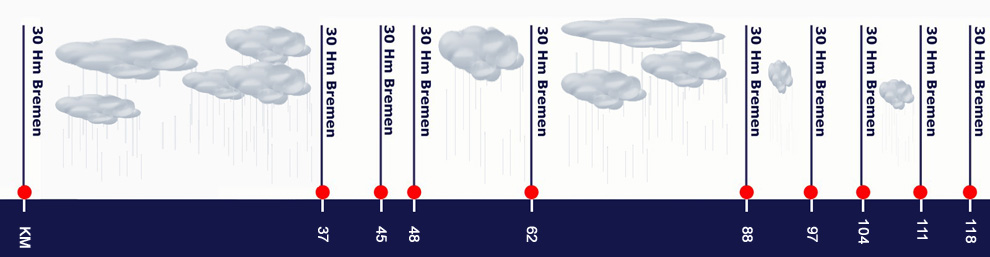
Wo ist hier der Bezug zu Mädels? Nun, Naomi von Tokyo Cycling Club ist dieses Bergrennen in Taiwan mitgefahren und hat dabei eine Top Ten Platzierung erreicht. via cycling Tips.
Make no bones about it, the Taiwan KOM Challenge is one of the toughest climbs on the planet. The setting for this event could not be any more dramatic — the cliff-hugging road is chiselled out of Taroko Gorge and regularly makes it on to ‘top ten most dangerous roads in the world’ lists.
The 3,500m of vertical gain in less than 80km is not what intimidates riders – it’s the final, pitching, brutal 8km to the summit, after 2,500m of climbing, that causes the most anxiety.
Having never ridden it previously, Orica-GreenEDGE climber Simon Clarke could only compare the profile to the Stelvio, and rated the Wuling Mountain climb to be “truly epic, and a much harder climb”. The 2012 Taiwan KOM Challenge winner John Ebsen of Denmark provided this perspective: “It’s a long race. You need to take it easy. This ride is all about the last 8km”. (watch a short video interview with Ebsen here about what he thinks of the legitimacy of this year’s winner)
Simply completing this climb provided incentive enough for Tiffany Cromwell: “I’m always up for a challenge and doing something crazy – and this climb is crazy”.
First run in 2010, the race is starting to generate a growing interest among both elite riders and fondo and club riders from around the world. Fresh from a podium in the Crocodile Trophy MTB race in Australia, Canadian rider Cory Wallace joined former Drapac rider Adam Semple (see video below) and South African Craig Symons for their first attempts at the mountain.
Of the 500 starters, more than 140 entrants traveled internationally for the event, coming from 28 different countries. The appeal of one of the most epic climbs on the globe is far-reaching.
The attrition rate of the KOM challenge provides part of the magnetism for many. In 2012 only 220 of the 350 starters finished the race, and in this running only 330 (of 500 starters) would make the tight time cut of 6 hours and 30 minutes.
In the days leading up to the event riders poured into the small city of Hualien. Casting a dark shadow over the town was the imposing Wuling Mountain, a constant reminder of why we were here. Training rides around the town centred on light recons of the lower reaches of the climb, exploring the network of crisscrossing plantation roads, and getting free motopacing from any of the thousands of commuting scooters around town.
Where Taipei had been a flurry of noise and pollution, the seaside city of Hualien was running at a slower pace, and the air was clean and fresh.
Rested, legs stretched, and, in John Ebsen’s case eight slices of bread later, the convoy of riders were clipped in and rolling through the darkness to the start line. The hour of waiting though the official proceedings and welcomes, as well as a constant barrage of fighter jets taking off from the airbase opposite were fraying nerves.
Despite the warm start to the day, a menacing stormfront rolled across and peppered us with rain. Finally, after a series of 10-minute speeches refined to two sentences in English the countdown commenced and the downpour began.
The neutral section of the ride took us 18km out of town in the direction of the yawning Toroko Gorge. Accompanied by the rainfall and roadspray were the constant panicked calls as 500 riders avoided each other and the group concertina-ed down the road.
The front was the only place to avoid the squeal of carbon rims and sudden and unexpected stops for natural breaks. We soon climbed over the Tàil ge Bridge and took the tight left-hander that signaled the start of the race.

No sooner had we rounded the corner than the group was strung out as the pace picked up and the race commenced. Riders quickly jockeyed for position and a few early rises helped quickly establish a core group. The valley we had entered slowly enclosed us as the walls pitched upward and the river slowly dropped below the road.
After nearly losing half the field down a split in the road things started to settle down. The main contenders were now all at the front of the field, and grinding out a fast pace on the gentle 3-4% gradient that would mark the next 25km.
The nerves seemed to have settled for most, although a touch of wheels put one rider into a barrier, perched precariously high above the river deep below. As we climbed higher and higher up the Taroko Gorge the lush dense jungle that we had passed through was quickly replaced by a world hewn from rock and stone.
Long tunnels were chiseled through the mountains connecting roads chipped into the sides of the cliffs. Often all that was separating us from a hundred-metre drop into the gorge was a series of low concrete blocks. Thankfully the pace was high enough to distract us from any worry about this.
The tunnels provided a welcome break as the power of drafting in a group protected from the wind became apparent. Entering each tunnel became a lesson in trust – there was simply no way to see the rider in front of you, let alone the road. Relying on a feint outline of a jersey, or a light ahead became the only way to negotiate these frequent passageways.
At the front of the main group a move involving a handful of riders looked like it was finally going to stick. The pace picked up for a couple of kilometres, and then when it looked like the group was going to stay away the riding neutralised for a while.
Either side of us the walls had steepened to the point where the cliffs were now rising 1,000m above our heads. High above the river the road continually jumped from one side of the gorge to the other across precarious bridges. During one of these frequent crossings the road ramped up and the real damage started to happen.

The group of 100 riders was quickly whittled to 50, and within the space of a kilometre there was daylight between strung out riders. Some 50km into the ride we were presented with the first opportunity to take stock and assess the situation. A quick glance revealed an ant trail of riders on the twisting blacktop hundreds of metres below.
The temperature dropped as the road plunged into perpetual shadow. Moss clung to the roadside barriers in big dripping clumps, and waterfalls rained over and around us. This was the beauty in suffering we’re always talking about as cyclists. As last year’s podium finisher David McCann explained “The scenery through the gorge is comparable to anything you have seen in Asia, or around the world”.
We were halfway through the ride, and inexplicably still had another 2,500m of climbing to go.
Small groups started to form, latching on and encouraging each other to join up. There was little aero advantage to be gained, but the psychological advantage was undeniable. With so far to go this was not the time in the race to be sitting by yourself — there’d be plenty of time for that later. The driving focus during those desperate kilometres was to ensure we made the two compulsory time cuts. Make the cuts, and let the final section take care of itself.

The first feedstop was manned by an army of willing volunteers, only too happy to refill bidons on the run, and stuff our pockets with bananas. We greedily consumed cans of iced coffee and we were soon refreshed and ready to start the mental arithmetic.
At the 70km mark we had climbed 1,700m at pace, and still had more than that again to reach the summit. As we climbed higher through the dense jungle, under tons of overhanging rock, and overlooking an unbroken carpet of lesser peaks, the timecuts became less of a concern.
After 87km of climbing we finally hit the only descent for the day, a welcome 3km relief in the form of a technical, sometimes tunnelled, switchbacked descent. Given the sheer drops into the void either side of the twisting wet road it was understandable to see caution being observed. But this simply provided an opportunity to pick up a handful of valuable positions.
After an all too brief respite the road walled up in a series of ramps, kicking off at the mild end of the spectrum with a 12% pitch. My screaming legs were not about to get any respite, as the following 5km presented a set of stacked switchbacks with apexes over 20%, each producing new expletives. The nagging thought was that we still hadn’t even hit the difficult section of the ride.

It was on one particularly long and brutal section that we passed the first riders walking. Bear in mind that at this point we are not talking about recreational riders. These are sharpened hillclimbers who are 90km into a race and 2,500m deep, positioned in the top 80 riders and they are walking their bikes, head hung, breathing deeply. It was a battlezone. Cyclists were zig-zagging left and right, trying desperately to get purchase.
Flattening out, the final pit stop was the last chance to fill up before the hardest section of the climb (can it possibly get harder?). The weighty decision as to whether to take on extra water or not is an important one. Most riders will be crawling up this section at speeds well under 10km/h, which means over an hour in the saddle. The dropping temperature is still sitting around 20 degrees. Do you save precious grams, or ensure hydration is maintained?
The 10km to go sign seemed to never arrive, and the sporadic walls thrown our way caused havoc in our minds. Calculations based on Garmin stats were impossible at this stage. Reaching for comparable examples from back home proves difficult.
A volunteer on the side of the road tells us there are 8km to go. It’s difficult to decide whether this is good or bad news. After a lifetime the 5km marker comes into view. At the same time high, high up on the ridgeline the feint outline of a road can be seen clinging to the side of the hillside. Surely this can’t be where we are headed, it’s over our right shoulder, so the only conclusion that can be reached is that it is another summit.
Impossibly the road flips around, and it soon becomes all too apparent that this is indeed our final destination.
By now the screaming in the legs has been such a longterm companion that it has faded to a dull roar in the background — there are simply too many other things vying for attention. The shortened breath at altitude and a concerning tingling settling in the arms is a distraction from the dark thoughts. The ride to this point has been incredibly tough and high paced. Mentally and physically the body is smashed, and there, dangling juicily within view is the finish line.
As we round the 2km mark we can hear the noise from the crowd and the announcers calling in the riders. Adrenaline kicks in with the briefest of respites from the constant walls, but unfortunately the legs just can’t reply.
With 1km to go, and almost within sight of the finish line the road throws down one last challenge, pitching again to over 16%. Finally the last 500m signs signal the end of the torment. That old friend pain is left at the gate for one last push, the hardest of the entire ride. Accompanied by a guttural sound and a final sprint the job is done.
Crossing the finish line riders are grabbed while still on the bike and steadied, many doubled over with their heads bowed deeply, unable to move, and gasping for oxygen in the thin air. Warm drinks are pressed into our hands and a cold medal slung over our head. As it turns out it had been raining constantly for the last ten minutes of the ride.
The Taiwan KOM Challenge is one of the most unforgiving and brutal hill climb events in the world, situated in the most impossibly beautiful and stunning picture-postcard location imaginable. Sharpen up those hill climbing legs — this needs to be on your bucket list.


Naomi bei Taiwan KOM:


Und, eines der besten Outdoor Blogs überhaupt von Jill „up in Alaska“:


Cannondale mit Spinergy Vorderrad. Via Neeby


Fuji Track, auch via Neeby


No.22 bicycles; No. 22 Little Wing. Via FGGT.


CIOCC, via Eroica Cycles (for sale)

Flohmarkt via Milano Fixed


Derosa Track aus den Siebzigern. Verkauft auf Ebay für 1.990 US$. Ehrlich: Empfinde ich als nicht zu teuer.

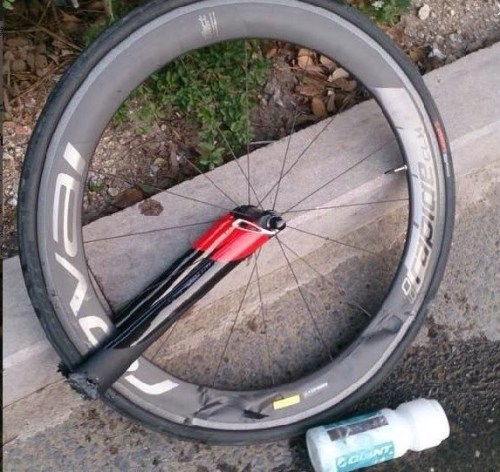
Stahlkontrast.
Und mal was anderes:


Via Bikeexif. Normalerweise poste ich keine Bilder von Motorädern. Aber hier mache ich einmal eine Ausnahme, weil BMW einfach nicht mehr diese Art von Kisten baut – schade.


Land Shark – via Fyxo. Warum sind Haie wieder gerade so in Mode? Sharknado! Sharktopus! Land Shark!

Karen Walker Bike via FGGT
Eingeordnet unter 2013, Gierige Räder, Mob, Uncategorized
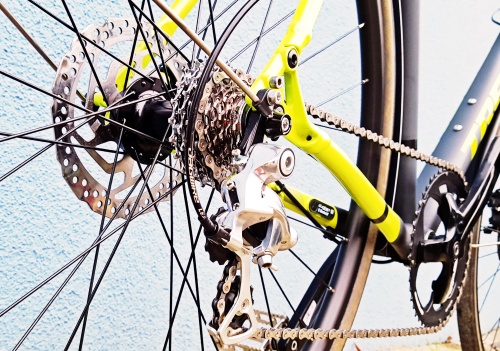
11-23

Rot Weiß Silber Schwarz
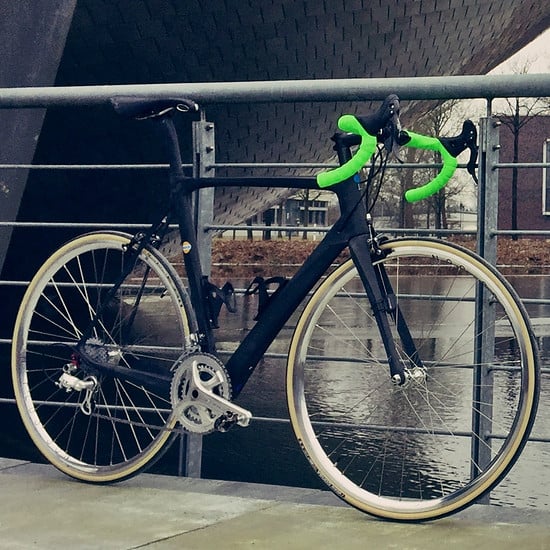
what ?

[not for real]

Geldgrab mit 61 Zähnen.

Fuchsien Schönheit

Japan Braut
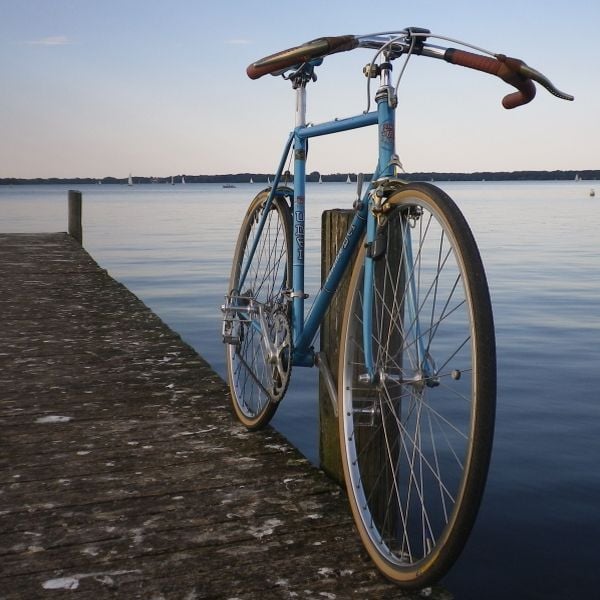
Blau Gold Weiss
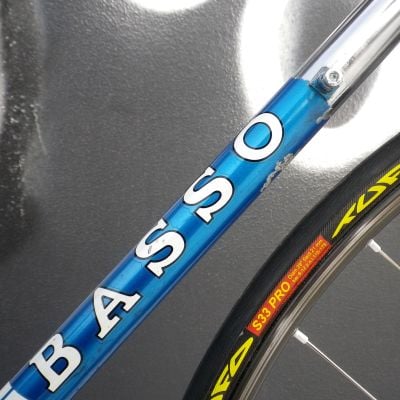
Track Version
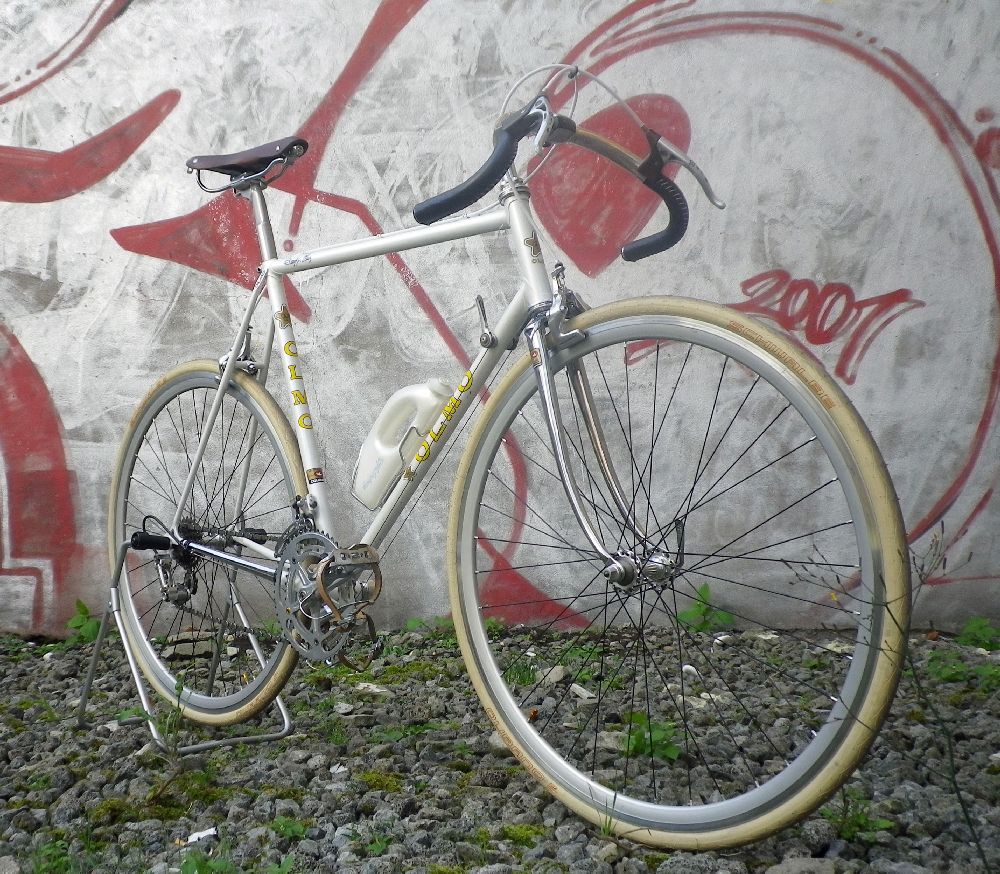
Zu schön zum fahren

7 kg Plastik und Blech

Motobecane, Raleigh oder Peugeot?
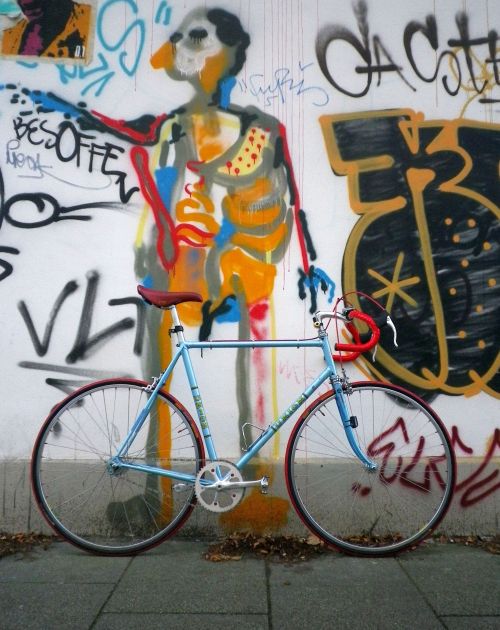
Beginn der der Fixie Liebe

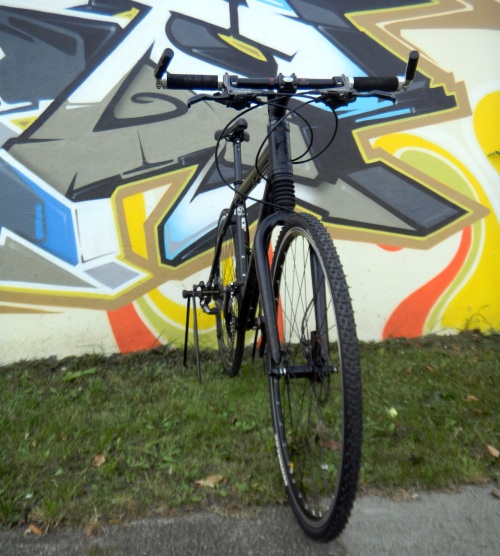
... what you gonna do ...
Nun komplett in blau

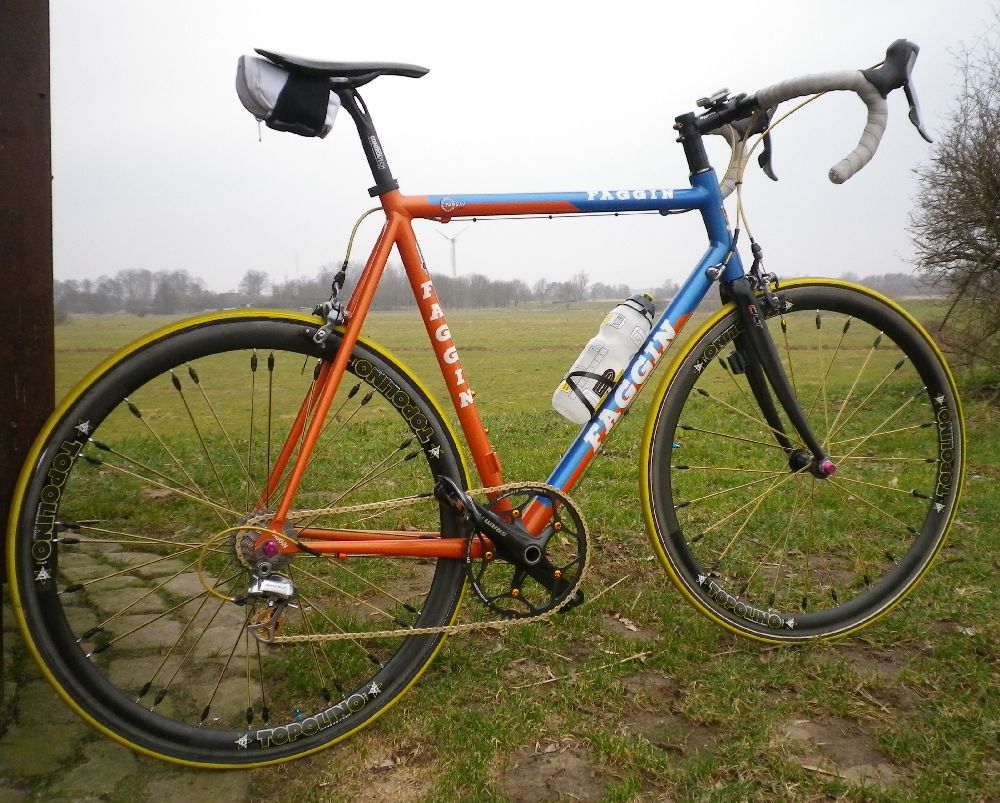

Leider nicht in Gunmetal Grey
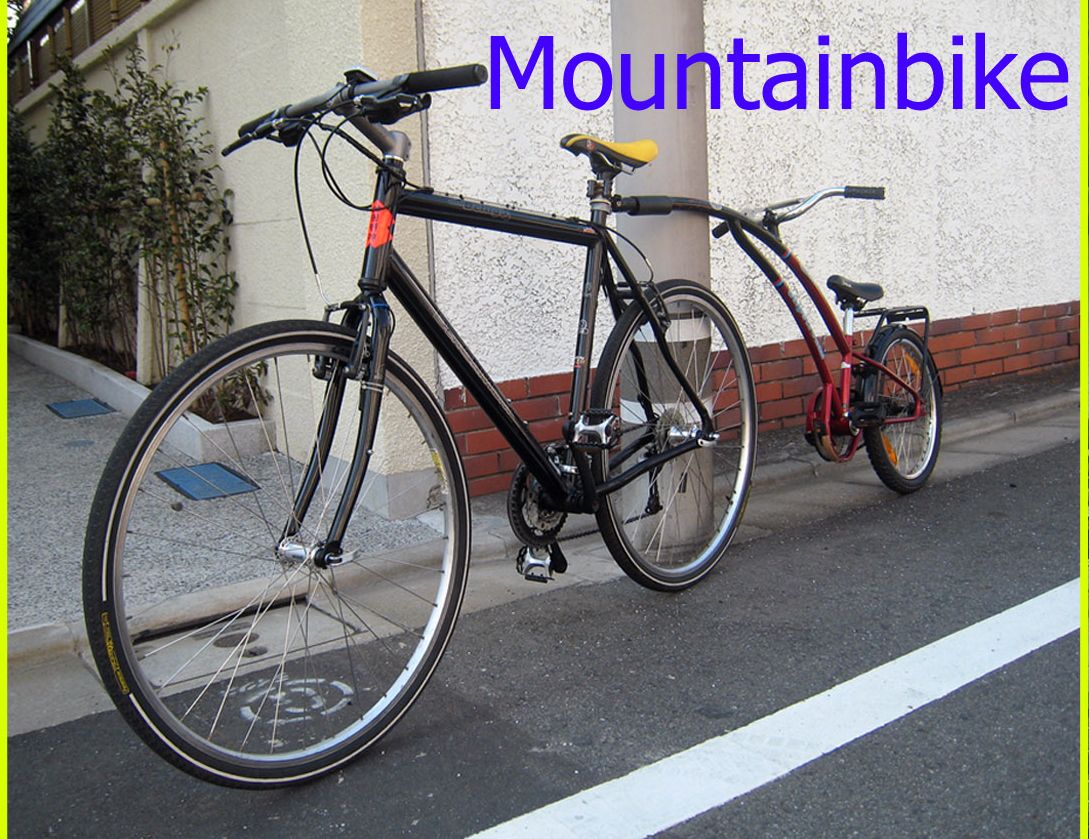
Da einzige RH 60+ Rad in Tokyo


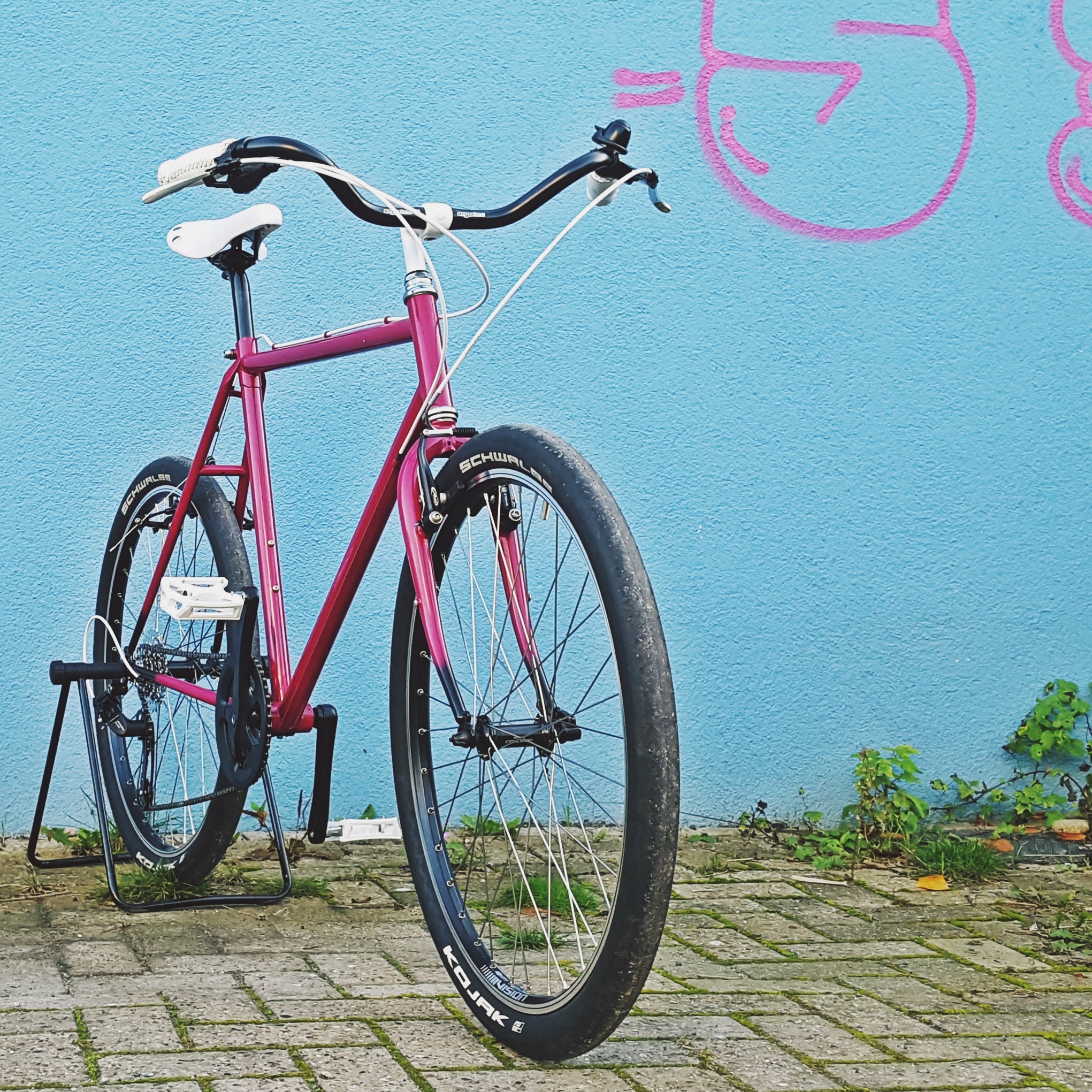
Keep on cruising in the free world
Der Todesstern
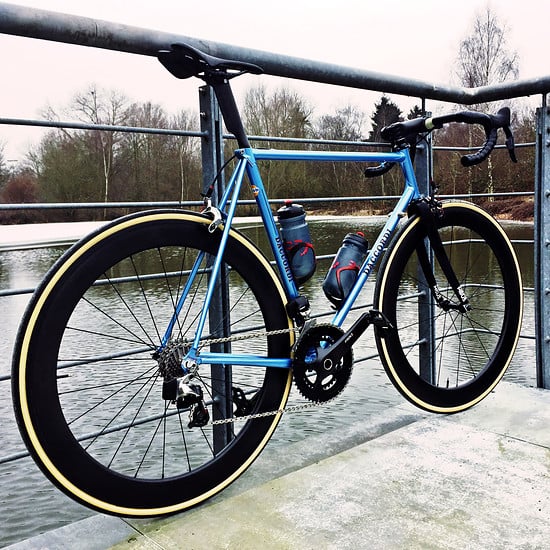
Daccordi Universum

Design follows function
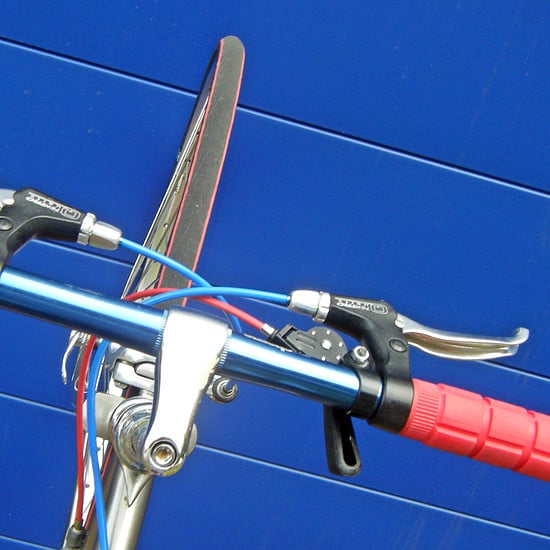
Blau Rot Silber

Arktis Blau
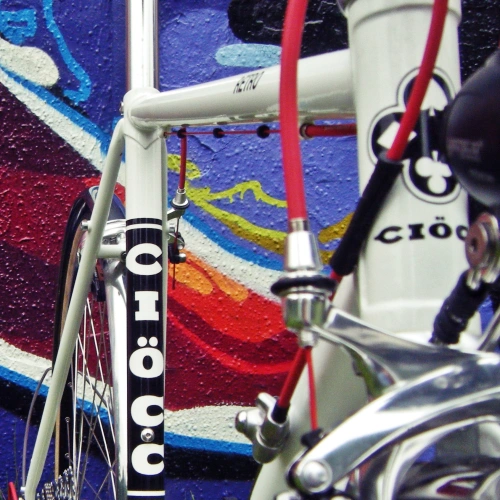
CIÖCC. Hannes.
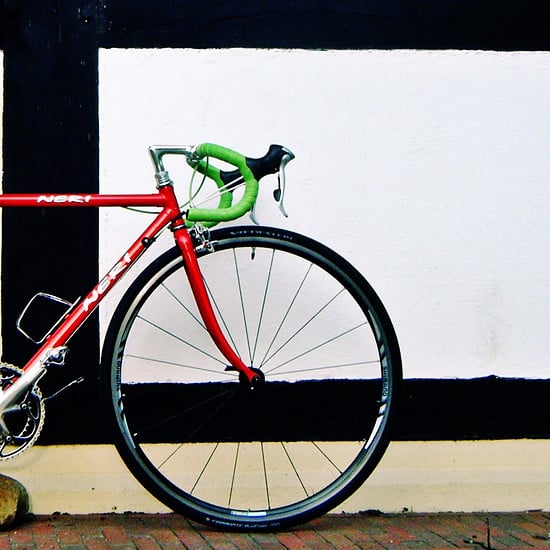
Drei Farben. Schwarz.

Beim Shopping.
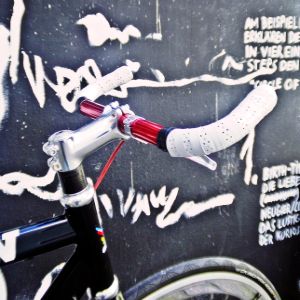
Schwarz Rot Weiß
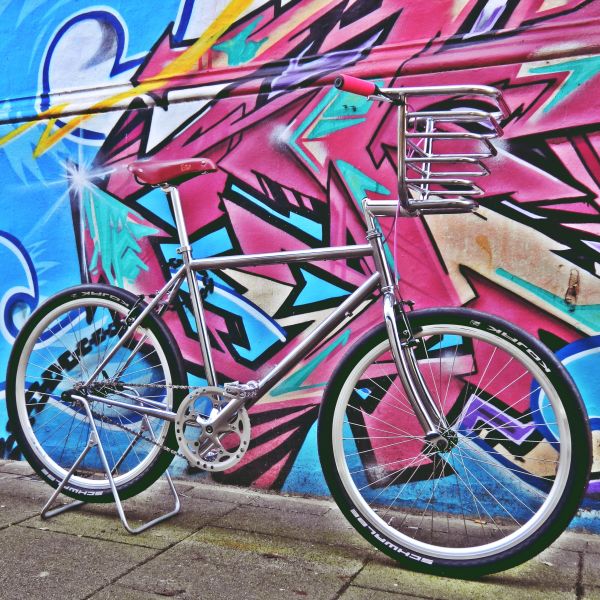
Shopping Blockade Runner
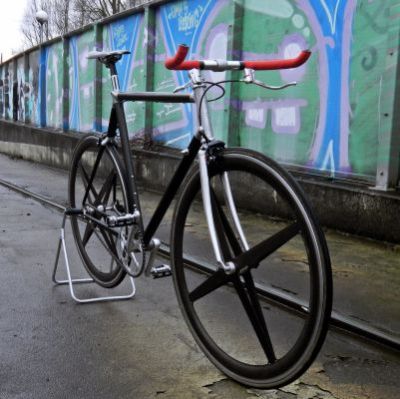
Entlackt
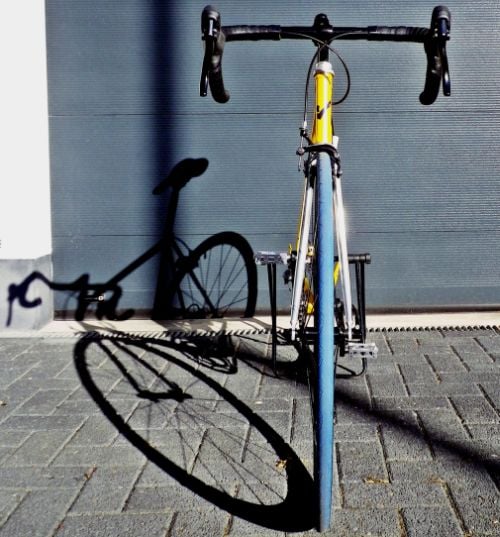
Viner Black Viper
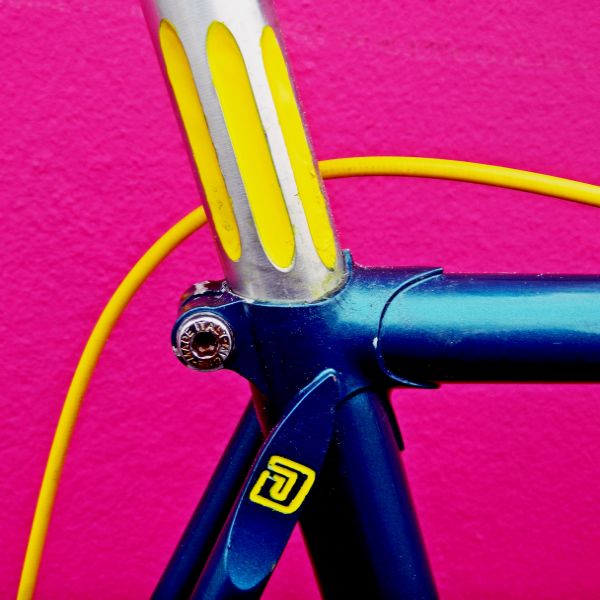
Gross und Gelb
Oops.
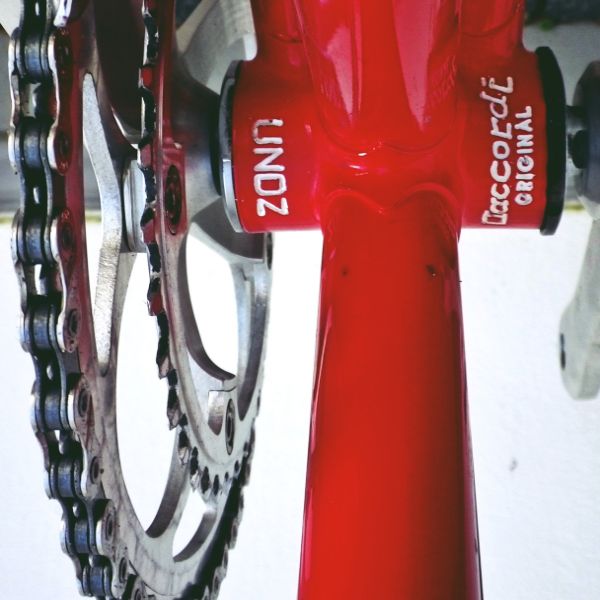
Zwischen Florenz und ....

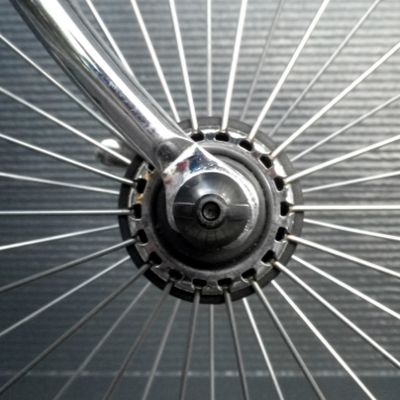
Dancelli O-nabe

Prinzessinnentraum
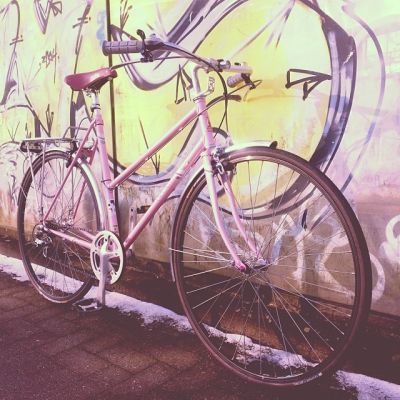
Aus einer anderen Galaxie

Fixie Projekt
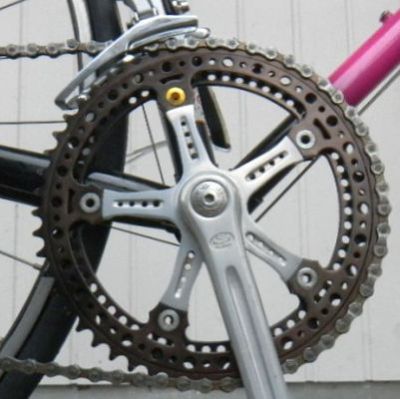
Concorde Twin

Lange Geschichte
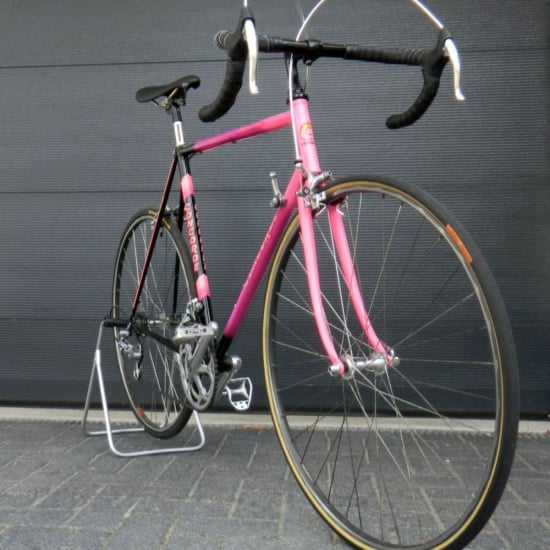
Classic Cyclone
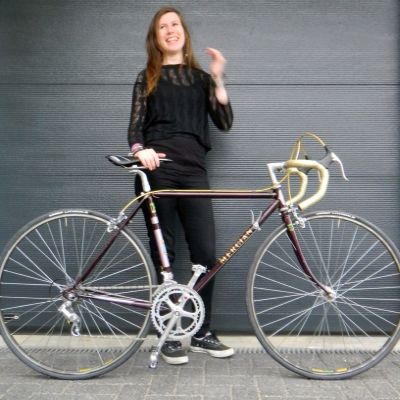
Für Manu
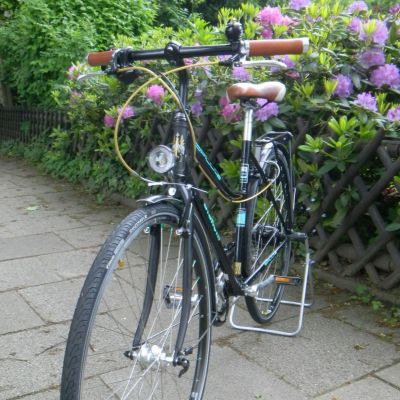
Für Midori
Deutschland !
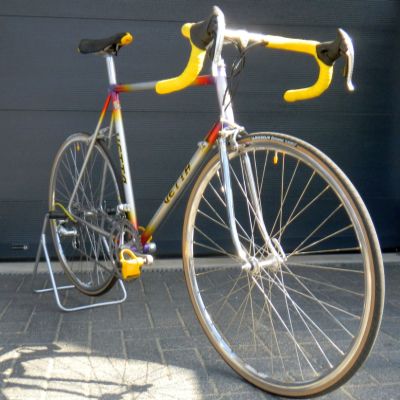
Grelle 80er Farben
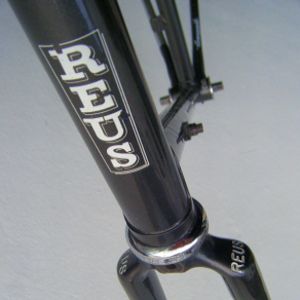
Reus
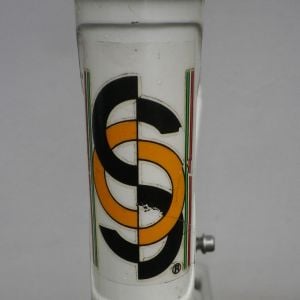
Gold wert ?
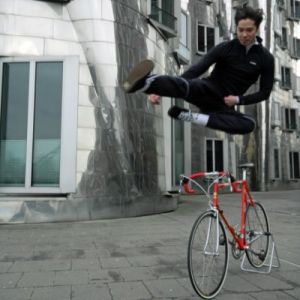
Für Shozo
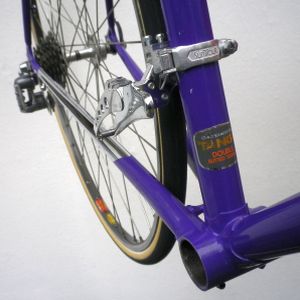
Neunziger eben
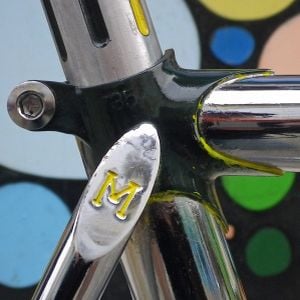
British Racing

Wait and See
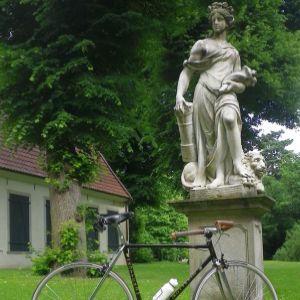
Kotter für Heike
Colnago Super XL 1988
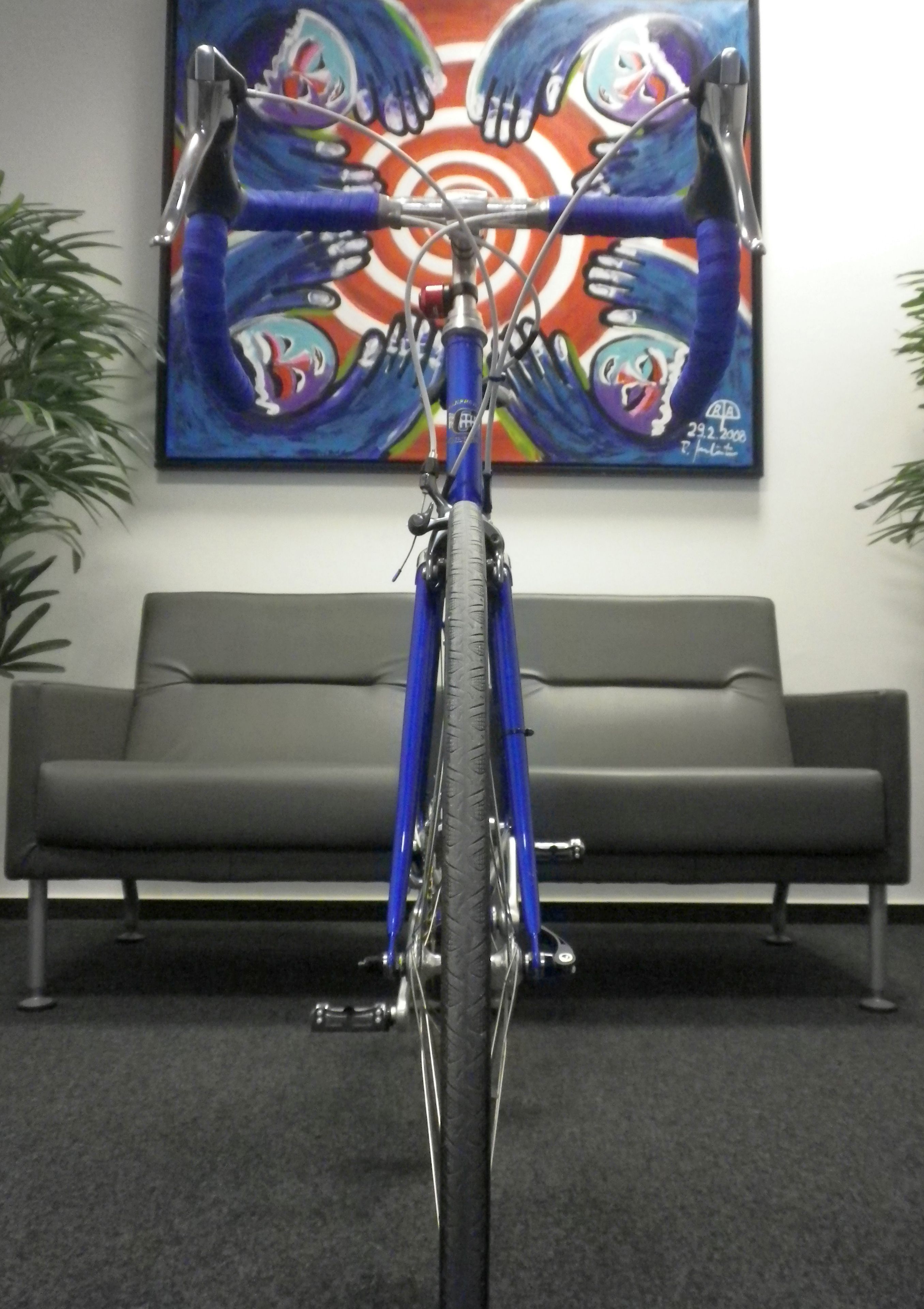








 bikesnob28hb
 fixiefanboyhb
 sudi1662
 there is no "I" in cyclyng