Archiv des Autors: bikesnob28hb

Avatar von bikesnob28hb

Über bikesnob28hb

Größtenteils harmlos.

First the frau then the Förstemann

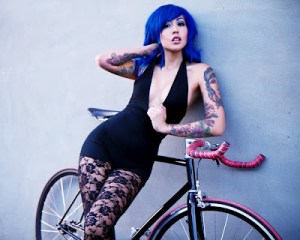
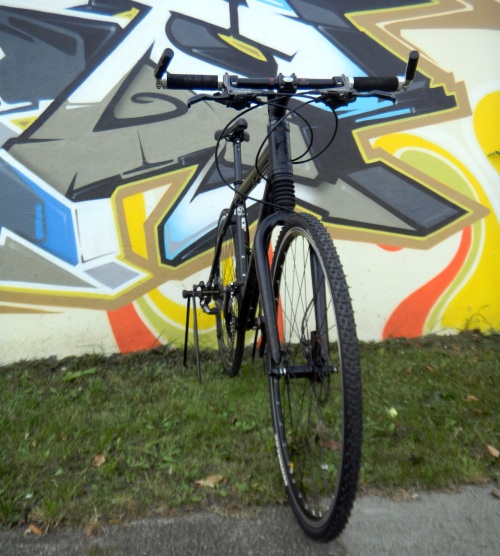
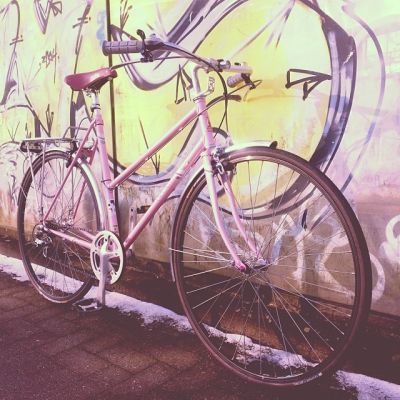
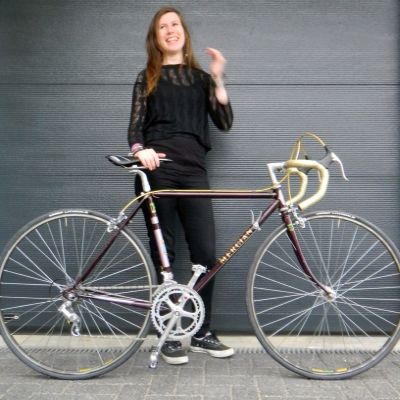
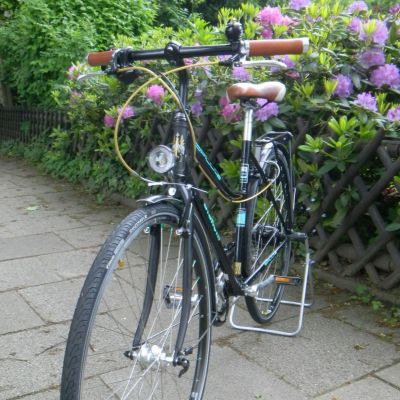
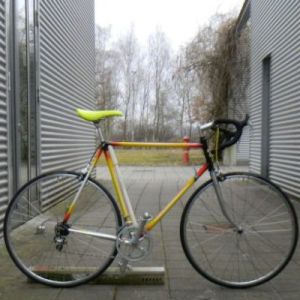
Hier sehen wir jemanden, der ein Rad hat.

Schon nicht schlecht, auch die Kombination der Farben von Rahmen, Sattel, Griffen, Kleidung und Lippenstift. Ein weiteres gutes Beispiel, auch wenn hier in der Wahl der Farben einige Abstriche gemacht werden müssen. Schwarz passt immer, das ist einfach zu einfach.

Hier sehen wir jemanden der Rad fährt:

Nein, nicht die blonde Tussi da links, sondern die Hälfte von dem Typen rechts.

rb legs2


Genau, Robert Förstemann, das ist keine Überraschung. Farblich ist das leider aber alles Mist. Die Bbshort sieht wegen dem weißen Absatz so aus wie eine altmodische Schwimmhose. Und diese neon-gelben Radschuhe mögen auch zu gar nichts passen.

Das macht aber nichts wegen der Beine. Die Beine von Robert.

Hinterlasse einen Kommentar

Eingeordnet unter 2013, Design&Fashion, Mob, Racing

Die Räder der Pro-Teams 2013

Ein kurzer, informative Artikel welche Räder und Komponenten von welchen Proteams 2013 verwendet werden und warum. In Englisch von Inner Ring.

2013 Pro Team Bikes

Movistar Pinarello bike

The new season is just weeks away and riders have been training hard on their bikes. With this in mind, here is the list of pro team bikes for 2013.


Team Frame Components Wheels
Ag2r-La Mondiale Focus Campagnolo Fulcrum
Argos-Shimano Felt Shimano Shimano
Astana Specialized Campagnolo Corima
Blanco Pro Cycling Giant Shimano Shimano
BMC Racing BMC Shimano Shimano
Euskaltel Orbea Shimano Shimano
FDJ Lapierre Shimano Shimano
Garmin-Sharp Cervélo Shimano Mavic
Orica-Greenedge Scott Shimano Shimano
Lampre-Merida Merida Shimano Fulcrum
Cannondale Cannondale SRAM Vision
Lotto-Belisol Ridley Campagnolo Campagnolo
Movistar Pinarello Campagnolo Campagnolo
Omega Pharma-Quick Step Specialized SRAM Zipp
Radioshack Trek Shimano Bontrager
Saxo-Tinkoff Specialized SRAM Zipp
Sky Pinarello Shimano Shimano
Vacansoleil-DCM Bianchi (mixed) FFWD

As ever note these are commercial decisions. Those adverts saying “the choice of” such and such rider? More like the sponsor offered the largest sum of money to the team and so got accepted although it’s not always cash and some teams do put an emphasis on performance.

The newcomer for 2013 is Merida. The Taiwanese company displaces Italian firm Willier-Triestina in sponsoring the Lampre team, a tale of globalisation in a single deal. Note Merida has a large shareholding in Specialized which itself sponsors three teams meaning four teams are closely linked by these close brands. It’s the same with Garmin-Sharp and Ag2r-La Mondiale who ride Cervélo and Focus bikes respectively and both brands are owned by Dutch company Pon Holdings.

Note the other corporate relationships. Fulcrum is brand belonging to Campagnolo. SRAM has bought the likes Zipp and Quarq so a team sponsored by SRAM will normally use their sister components too. Similarly those with full Shimano sponsorship have to take the full package of Pro components and Shimano wheelsets.

Another change for 2013 big change is SRAM shrinking back. Back in 2011 they sponsored eight teams, it was down to five in 2012 and now it’s three. The company had been planning to sell shares on the New York Stock Exchange but the IPO plans are on hold. But growing sales suggest the pro sponsorship has worked. Two years ago I noted the declining presence of Campagnolo with only four teams in the top level which fell to just three in 2012 but now there are four teams for 2013 with Ag2r switching. I know there are devoted owners out there with tremendous brand loyalty but all top groupsets are excellent these days.

Even at the top level some teams are not sponsored by component manufacturers. Some teams are sponsored directly by the parent company but others rely on deals with their national distributor and a few squads even buy their components, albeit at very preferential rates. For example note Garmin-Sharp is not sponsored by Shimano but uses their parts, albeit with a mix n’match to incorporate components from the likes of Rotor. The chieftains of choice are Vacansoleil-DCM with an FSA crank, Look pedals and a gold KMC chain and more.

Only the 18 World Tour teams are listed. I’ll add a list of UCI Pro Continental teams here too but for now several teams do not have functional websites and so the choice of sponsors, partners and suppliers cannot be verified.

Ein Kommentar

Eingeordnet unter 2013, Mob, Racing

No Future Tokyo: Goro-Kun und sein Rad

13-01-05 012のコピー

13-01-05 008のコピー

13-01-03 038のコピー

12-12-27 071のコピー

Mehr Photos aus meinem Lieblingsblog für Tokioter Visualabstrusitäten in Radform.

Hinterlasse einen Kommentar

Eingeordnet unter 2013, Mob, Obskura

Die 50 besten deutschen Radblogs

Nach Meinung von Fahrradjournal, der Artikel dazu hier.

EISENSCHWEINKADER | 1. Lauf Störtebeker Cup 2012/2013 IMG 9929 1. Lauf Störtebeker Cup 2012/2013

via Eisenschweinkader

Ich stellte bei der Lektüre voller Schrecken fest, dass ich kein einziges davon kenne. Doch eins.Also alle angesehen und nach meiner Meinung gibt es die folgenden, die mir gefallen:

Einige Dinge die mir nicht so gut gefallen haben: Es gibt eine ganze Reihe von „Motzblogs“, manche Menschen lesen so etwas vielleicht gerne, aber ich gehöre einfach nicht dazu. Und bei den meisten Blogs wird einfach zuwenig gepostet. So ein bis zwei Posts pro Monat sind nicht dazu angetan dort einmal öfters reinzuschauen, es sei denn über einen Reader Feed. Ach ja, und Berliner posten mehr anscheinend – das ist gut.

Alles in allem hat sich da jemand sehr viel Mühe gemacht sehr viele Blogs zu lesen und wir profitieren davon.


Ein Kommentar

Eingeordnet unter 2013, Mob

AG2R La Mondiale

.. ist eigentlich nicht mein favorisiertes Team im Profizirkus. Jimmy Casper fährt nicht mehr. Und sonst? Sebastien Hinault? Nicolas Roche? ach ja, ach ja.

Deren Stärken liegen eben abseits der Straße, wie man hier schön sehen kann.

Ein Kommentar

Eingeordnet unter 2013, Mob, Racing

Na ja.

Das sehe ich ja eigentlich nicht so, aber die Idee ist zugegebenermaßen recht lustig.

via Blacknosugar.

Hinterlasse einen Kommentar

Eingeordnet unter 2013, Mob, Obskura

So war 2012 (für dieses Blog).

WordPress, mit deren Software ich bei diesem Blog arbeite, war so freundlich einen Jahresbericht über dieses Blog zu produzieren, hier einige Highlights daraus, sonst bitte selber schauen.

Insgesamt gab es 49.000 Besuche auf dem Blog in diesem Jahr, davon 553 am Tag mit dem höchsten Besuch. Und der beliebteste Post auf  dem Blog an diesem Tag war.

Die Beine von Robert

Da kommt wohl daher, dass bei den Olympischen Spielen in London Andre Greipel und Robert F. ihre Oberschenkel miteinander verglichen haben und das gab dann eine Menge Hits bei den Google Searchs.

Insgesamt haben Querpeser und ich 777 Posts auf dem Blog veröffentlicht, also mehr als zwei pro Tag im Durchschnitt. Es gibt relativ wenige Tage an denen nichts gepostet wurde.

Und das sind die Posts mit den meisten Besuchen 2012:

Insgesamt hatte das Blog Besucher aud 83 Ländern, wobei Deutschland, Österreich und die Schweiz am häufigsten vertreten waren.

Und noch was: Topkommentatoren 2012 waren Olli, Philipp, Björn, Harald und der Schattenmann. Danke und weiter so.

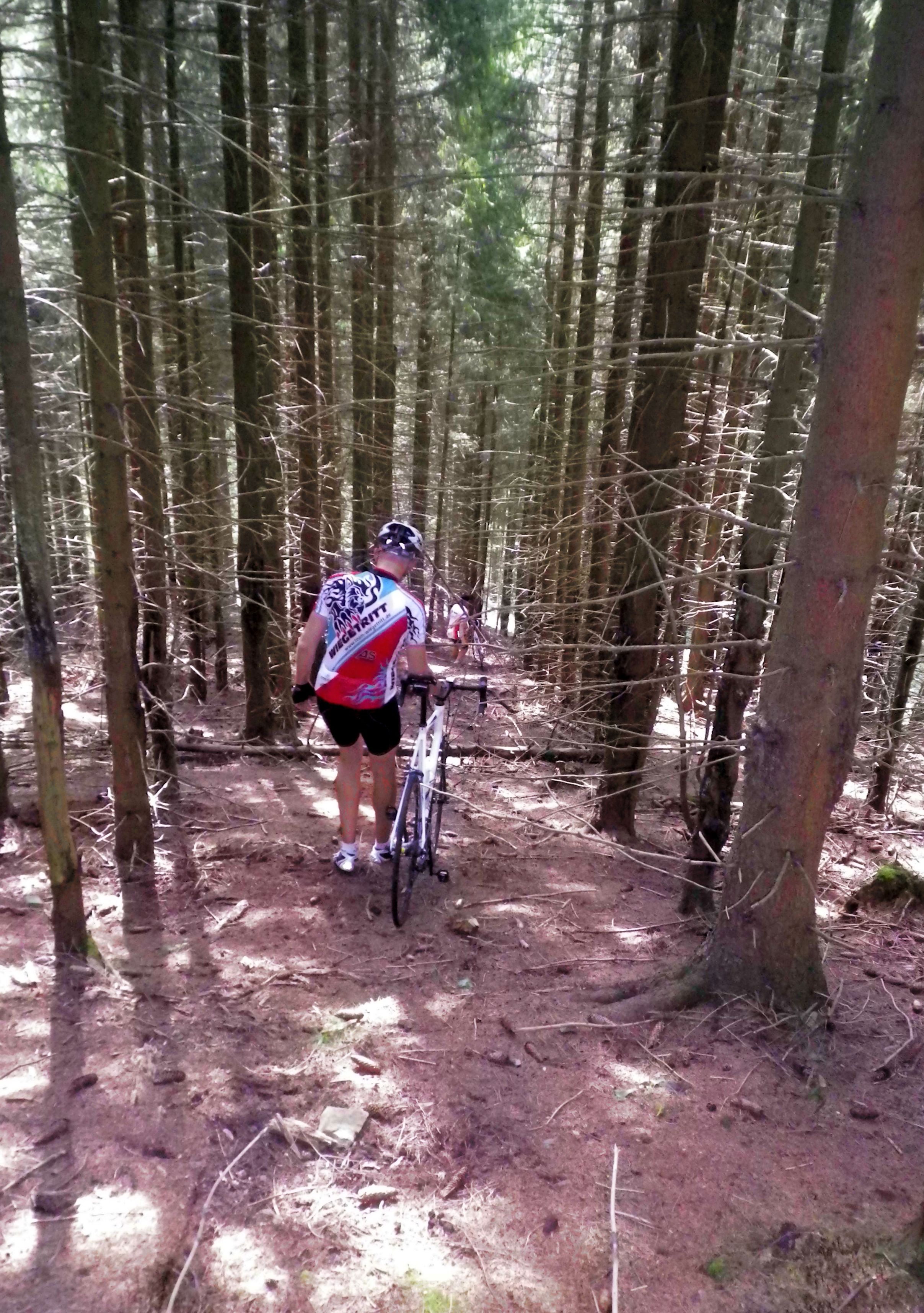
Und hier noch mein Lieblingsbild von 2012:

1209 Harz richtig im Wald


Ein Kommentar

Eingeordnet unter 2012, Mob

Laufräder

Über die Feiertage gab es noch einmal Zeit an den verschiedenen Laufrädern zu schrauben.

DRC Aerofelgen mit Erdmann RD1 Nabe

  •  Naben Erdmann RD+1, blau eloxiert, 32L mit Shimano 8/9/10 Freilauf
  • DT Swiss Revolution 2,o/1,5/2,0 Speichen dreifach gekreuzt mit Unterlegscheiben
  • Pillar Hexagonal Nippel 14 mm Messing, blau eloxiert
  • DRC ST22 Aerofelgen, 32L, Clincher

1212 DRC Erdmann blau VR 2 1212 DRC Erdmann blau VR 3 1212 DRC Erdmann blau VR 1

Ich weiß noch nicht, wie ich diesen LRS einsetzen werde. Auf jeden Fall brauche ich einen Ersatz für meinen DTSwiss LRS am Canyon.

Campagnolo Mexico 68

1212 Campa Mexico 68 VR 1 1212 Campa Mexico 68 VR 4 1212 Campa Mexico 68 VR 3 1212 Campa Mexico 68 VR 2

Tobias war so nett mir die Felgen auf Hochglanz zu polieren. Kommen mit Campagnolo 8-fach Cassette. Zusammen mit dem anderen Campazeuch, das ich noch im Keller habe, wäre das dann endlich die Gelegenheit einmal eine 8-fach Ergopower Maschine aufzubauen.

Electra Ticino Lux Five Star Naben mit Mavic SSC Paris Roubaix Felgen

  •  Naben Electra Ticini Lux Five Star, 32L 100mm vorne, 120mm hinten flip/flop fixed/free
  • DT Swiss Revolution 2,o/1,5/2,0 Speichen dreifach gekreuzt mit Unterlegscheiben
  • Pillar Hexagonal Nippel 14 mm Messing, weiß gepulvert
  • Mavic SSC Paris-Roubaix Schlauchreifenfelgen 32L

1212 Sheriff Mavic SSC VR 3 1212 Sheriff Mavic SSC VR 4 1212 Sheriff Mavic SSC VR 5 1212 Sheriff Mavic SSC VR 6 1212 Sheriff Mavic SSC VR 1 1212 Sheriff Mavic SSC VR 2

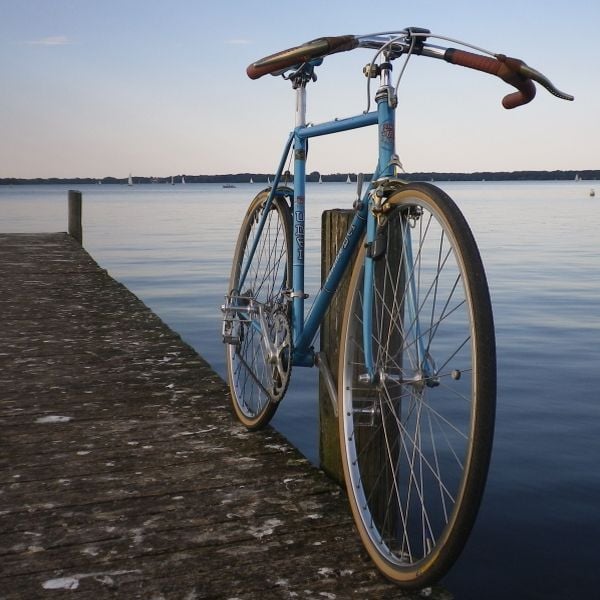
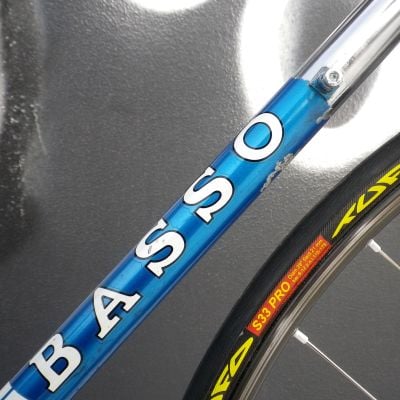
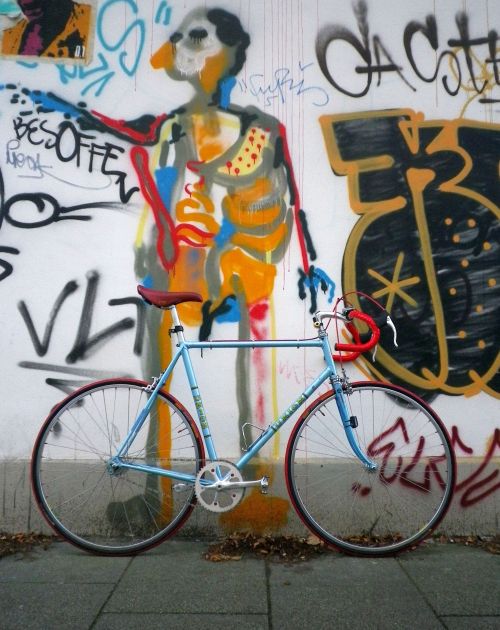
Für mein nächstes Fixie. Sollte der blaue Basso-Rahmen ein Fixie werden, so wäre das der Laufradsatz der Wahl.

Das war es dann wohl für 2012.

Hinterlasse einen Kommentar

Eingeordnet unter 2012, Bits&Pieces, Mob, Uncategorized

Photos 2012

Typisch für das Jahresende sind die Reflektionen über das abgelaufene Jahr. 

Ich glaube, ich mache das auch mal morgen für 2012. Hier aber erst einmal die Hochglanzversion aus Cycling Tips, dem wohl glänzestem Photoblog auf dem Web.

ct-26

Stitched Panorama

The third leg of our winter shoot with Castelli took us to the Ardennes with the Raymond and Michel Kreder and Thomas Dekker. It was already a great day when we arrived to what would be our final location - the Cote de Wanne. At that point, the late afternoon light burst through the clouds, the sun beams shone, and we laughed at how ridiculously beautiful it all was. It's a shame my pictures can't do that scene justice. Maybe someday, I'll be able to better capture a scene like that.

ct-06d


Hinterlasse einen Kommentar

Eingeordnet unter 2012, Design&Fashion, Mob

Die richtige Sitzhöhe

Ein interessanter Artikel aus Bike Radar über die verschiedenen Methoden die für einen passende Sitzhöhe zu bestimmen.

How to get your seat height right

By Nick Morgan | Tuesday, Dec 25, 2012 9.00am

Setting the correct seat height would seem to be such a fundamental part of cycling that you would have thought the boffins had agreed long ago on the best method. But you’d be wrong.

One thing all the experts agree on however is that if you get the height wrong, the effects can be catastrophic. A study suggests that setting the height too low can decrease time to exhaustion by as much as 12 per cent.

Consequently cyclists with limited time on their hands might actually get more out of a shorter session by lowering their seats to a sub-optimal level so as to make it harder.

It’s an interesting theory, but even knowing how to get it wrong presupposes that you know how to get it right, and many don’t.  Read on to find out exactly how to do it.

1 The Heel method

The heel method: the heel method

This is the one every bike shop owner or gym assistant will tell you whenever you clamber onto the saddle. You place the heel of your shoe on the pedal and set the saddle height so your leg is straight at the bottom of the pedal cycle with the pelvis remaining in a horizontal position.

Despite this commonly heard method, there is virtually no scientific evidence to support it and it often leads to the saddle height being adjusted too low.

Professor Will Pelever of Mississippi University for Women has written several papers comparing methods for finding the best seat height and says, “The main problem is that this method does not take into account individual variations in femur, tibia and foot length.”

2 The 109% method

A more robust method was developed by Hamley & Thomas in a 1967 paper. They experimented with different saddle heights and found that the ideal was achieved when the saddle was positioned at 109% of your inseam length when measuring from the pedal axle to the top of the seat height.

Your inseam measurement is basically the length from your crotch to the floor. To calculate this, face a wall and put a thick-ish book between your legs as if it were a saddle. Ensuring that you are standing straight with your heels on the floor, mark a line along the top of the book edge touching the wall.

The distance from the floor to the height of the mark is your inseam measurement. It’s best to measure it several times and take an average.

This has proved an extremely popular method and is recommended by many top-level coaches. Yet a recent study by Professor Pelever found that it was inferior to the Holmes method (see below) both in terms of power output and economy.

3 The LeMond method

This is a popular variation on the 109% method and pioneered by the three time Tour de France winner Greg LeMond.

Also using inseam length as a guide, this formula calculates 88.3% of your inseam length and uses it to measure the distance from the centre of the bottom bracket to the top of the seat height.

Interestingly, Pelever has shown that this often produces a different seat height from the 109% method and although it seems to work for many people, it may not be ideal for someone with particularly long femur bones.

4. The Holmes method

This was originally developed to reduce over-use injuries in cycling and takes a different approach entirely from the other three.

It uses a device called a goniometer for measuring the angle of the knee joint at the bottom of the pedal stroke. Holmes recommends an angle of between 25 and 35 degrees and closer to 25 for those with a history of patella tendonitis.

This may all sound a bit technical and if so it’s probably best to go with one of the two inseam methods, but you can pick up a goniometer for around £20 from medical suppliers.

Pelever’s research has shown that setting your seat height based on a knee angle of 25 degrees outperforms all other methods (including an angle of 35 degrees). “Using a goniometer and a 25 degree angle is definitely the method I’d recommend,” he says.

Don’t rely on simply feeling comfortable either. “If you’ve been pedalling at a much lower saddle height than is optimal, it may feel awkward in the beginning,” says Pelever.

“However, as your body adapts (usually in two to three weeks) the new position will not only feel comfortable, but will improve performance in the long run.”

Of course, if you still feel uncomfortable after a few weeks then you will need to make changes. It’s best to use the 25 degree knee angle as a starting place. Have someone watch from behind to ensure that your hips do not rock back and forth across the saddle due to over extension at the bottom of the stroke. If that is the case then the angle may need to be adjusted upwards slightly for comfort.

“When I finish fitting someone on their bike, their knee angle is usually somewhere between 25 and 30 degrees, but much closer to 25 on most all occasions,” says Pelever.
 

Hinterlasse einen Kommentar

Eingeordnet unter 2012, Ingenieur, Mob