Fat Cyclist machte heute darauf aufmerksam, dass es für den kultivierten Radtouristen der schon alles erlebt hat und überall war nun doch noch eine Chance besteht ein ganz ungewöhnliches Abenteuer zu erleben: Radtourismus in Nordkorea.
Mehr Informationen zu der Tour und den aufregenden Fahrrädern auf denen man die einsamen Strassen Nordkoreas erleben kann hier.
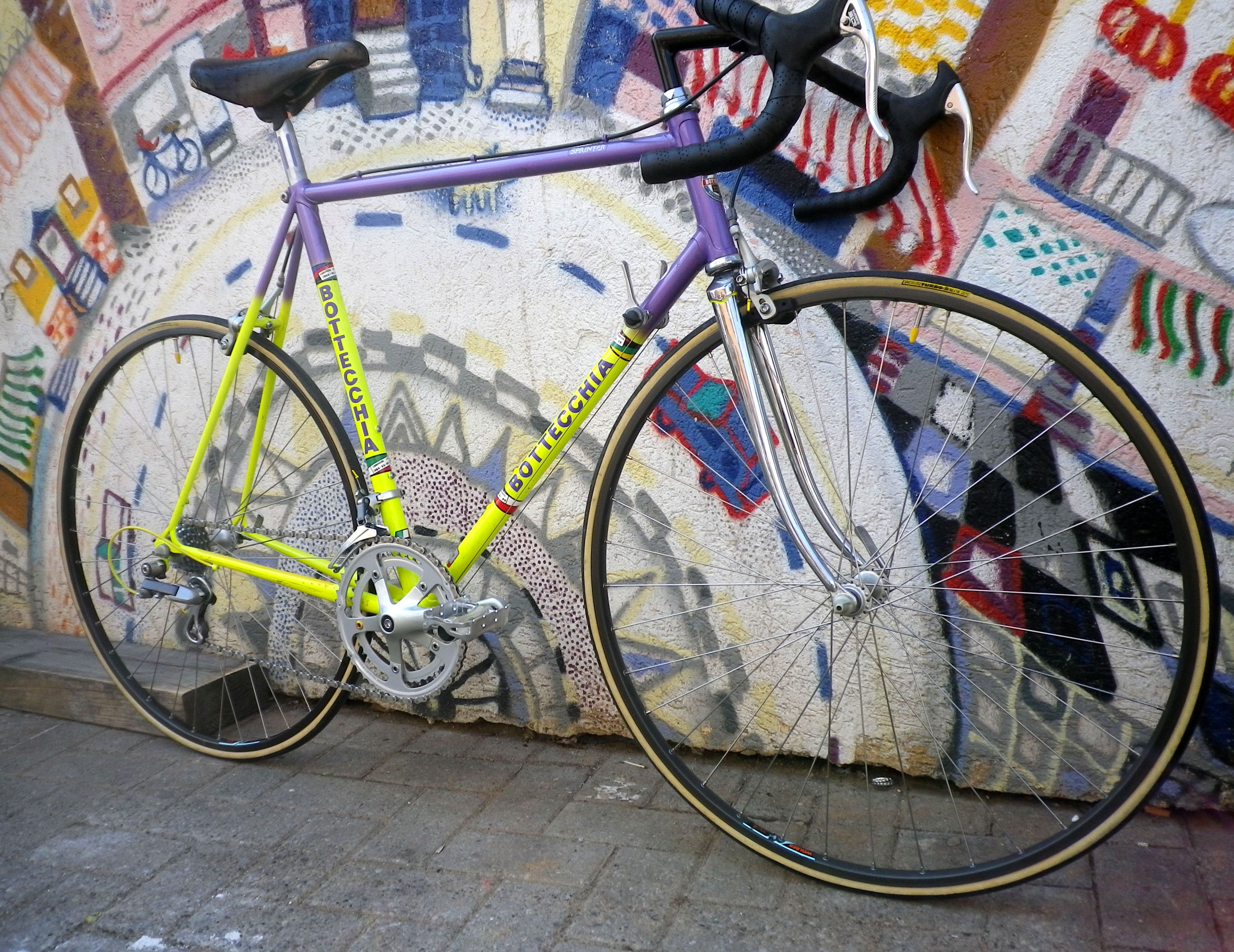
Vetta ist einer dieser kleinen italienischen Hersteller von denen man so gut wie nichts weiß, die keine glamorösenRäder wie Pegoretti, Pinarello oder Colnago bauen aber dennoch interessante Rahmen hergestellt haben.
Vetta war oder ist vielleicht auch noch ein Hersteller aus Padua der auch für andere Marken produziert hat. Muffen, Gabeln etc. hat er nichts selber produziert, sondern von Cinelli, Gipiemme, Campagnolo etc. verwendet. Soweit liess sich das aus dem Web herausfinden, wer mehr weiß möge mir Bescheid sagen und mich schlauer machen. Ich werde das gerne. Die VettaRahmen werden von der Familie Taverna zusammengebaut. Auf meinem rahmen ist überallein Aufkleber mit T. Taverna, heute machen das wohl Antonio und Ferruccio Taverna die auch nicht mehr ganz taufrisch aussehen.
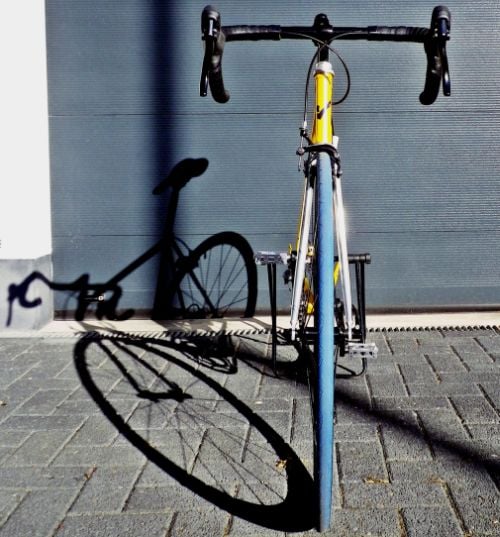
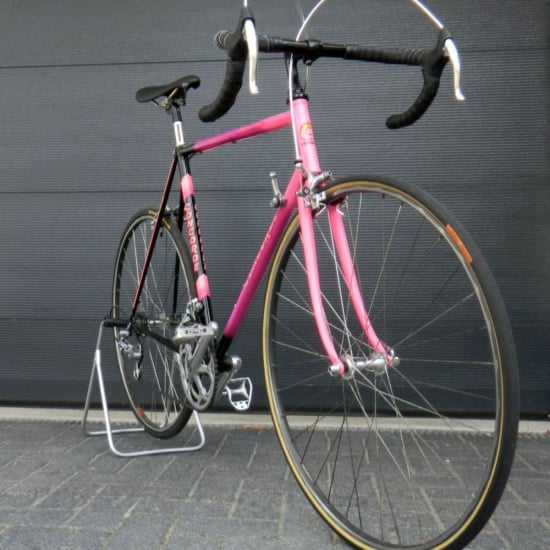
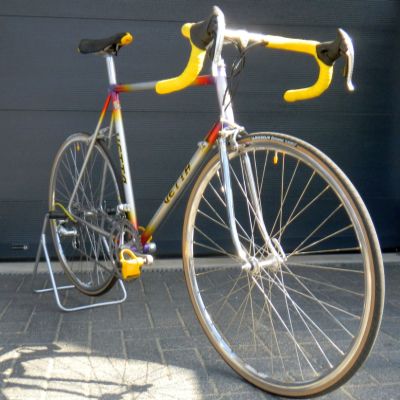
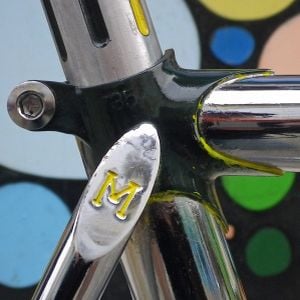
Meinen Vetta Rahmen in RH58 cc hatte ich vor ein paar Monaten auf Ebay ersteigert zu einem vernünftigen Preis. Der Rahmen hat diese typische, schräge Achtziger/Neunziger „Ich will mit grellen Farben auffallen“ Lackierung und erinnerte mich stilistisch an Armoury Show bei „Castles in Spain“.
Na gut, also eigentlich erinnert er mich nur an die späten Achtziger und frühen Neunziger und ich suchte einen Vorwand um einmal Armoury Show in dieses Blog zu bekommen. Der Vetta Rahmen stand dann erst einmal ein paar Wochen bei mir rum, da ich noch mit einigen Auftragsprojekten beschäftigt war.
Simonato Björn, check. Basso Selber check. Der Rest steht noch rum.
Ja, so einen Haufen Rahmen auf dem Tisch rumstehen zu haben ist schon ziemlich cool. Natürlich geht das nur, wenn de weibliche Teil der Familie ausgeflogen zum Eiskunstlaufen ist und die Männer das sagen haben. Also, vierter Rahmen von vorne ist ein Vetta.
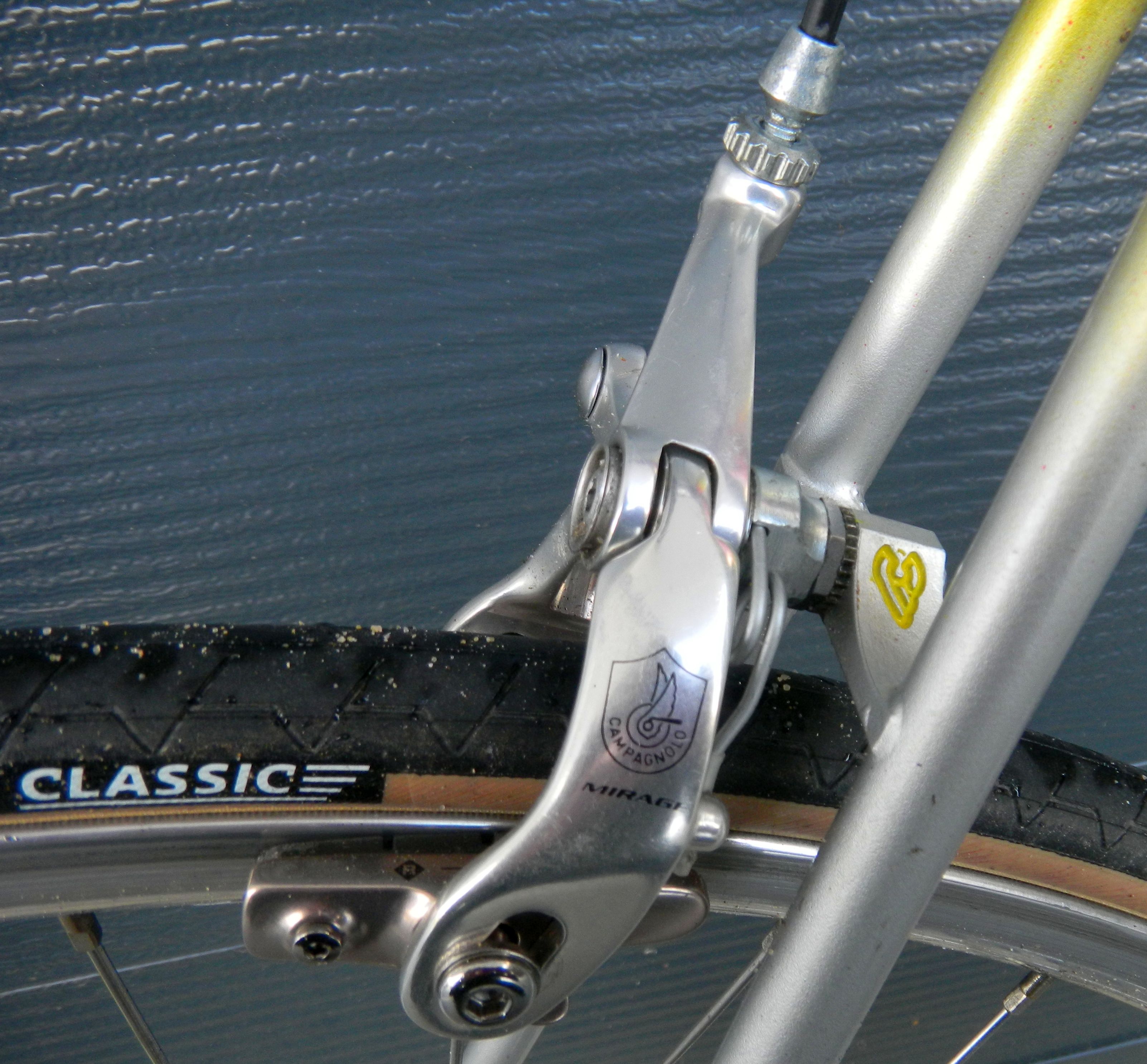
Durch einen Zufall kam ich günstig an alte 8-fach Campagnolo Mirage Ergopower Hebel zusammen mit den dazugehörigen Bremsen. Ok, dachte ich mir, das ist ein guter Startpunkt um einen italienischen Rahmen mit Campagnolo und Cinelli Komponenten aufzubauen. Warum Cinelli? Weil sowohl die Gabel des Vettas als auch der Bremsteg Cinelli Pantographien hat.
Cinelli Panto Gabel, neu in gelber Farbe ausgelegt.
Ebenso das Panto auf dem Bremsteg.
Und durch einen weitere Zufall kam ich an einen wunderschönen günstigen alten Campagnolo Mexico 1968 Laufradsatz 32L mit Aufnahme für eine Campa 8-fach Kassette. Zunächst mit einem Radiergummi von Swiss Stop und später mit Hilfe von Tobias wurde der LRS aufpoliert bis er wieder funkelte.
Hier musste ich Tobias stoppen, denn er wollte sich dann an den Naben vergreifen, um diese auch noch um funkeln zu bringen.
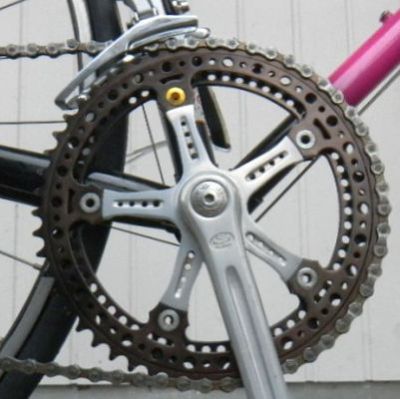
Einen passenden Campa Anlöt-Umwerfer hatte ich noch in der Kiste auf der „Umwerfer“ steht und von meinem Union Fixie hatte ich noch eine schöne Campa Centaur 10-fach! Kurbel. Zu meiner Überraschung bekam ich dann auch noch ein 8-fach Rekord CShaltwerk mit Macken günstig ab. Damit war der Grundstein gelegt, die restlichen Einkäufe gingen dann sehr schnell.
Damit begannen dann aber auch die typischen, kleinern Probleme die man so beim Zusammenbauen hat. Der Cinelli Lenker passte zwar an den Cinelli Vorbau, aber es war unmöglich die Schellen der Ergopower Bremshebel an dem Cinelli Lenker zu befestigen da der Durchmesser des Lankers zu groß war. Ich wusste ja, dass Cinelli Lenker eine 26 mm Lenkerklemmung haben, aber dass der Durchmesser im Griffbereich auch größer ist war wir neu. Zum Glück hatte ich noch einen schönen NOS Nitto Mod. 55 Lenker übrig, der dann (neben den ironisch besetzten Shimanoschalt- und bremshüllen) für den japanischen Touch sorgt.
Die Pedalen sind vorläufig Gipiemme Sprint, der Sattel ist ebenfalls vorläufig ein Charge Spoon, aber mir schwebt da an sich etwas gelbes vor.
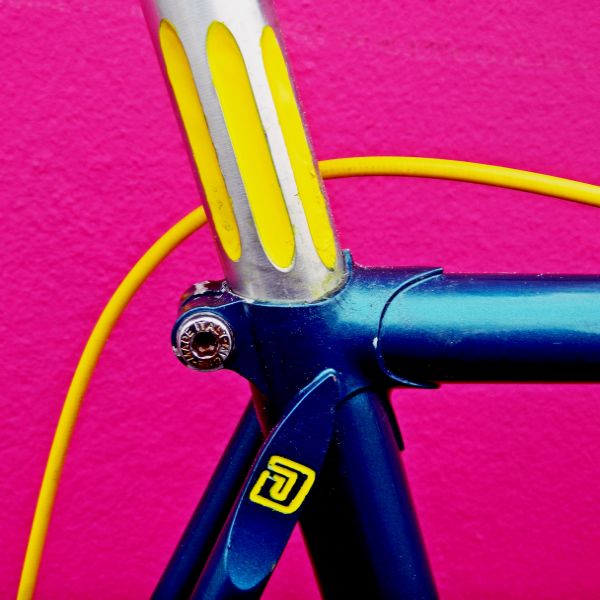
Es gibt nun sehr viel Chrom und Glitzer an dem Rad, etwas schwarz und dann diese grellen Punkte an Steuerkopf; Tretlager und am oberen Sitzrohr. Natürlich wäre es jetzt angesichts dieser Farben recht einfach gewesen alles andere (Sattel, Lenkerband, Züge, Reifen) schwarz zu halten, aber ich wollte mich trotzdem auf das Experiment Gelb einlassen.
Die Idee dazu kam wir in einem Rennrad News Forum Beitrag in dem jemand schrieb, dass es ein alter Trick sei, die Farbe des Lenkerband in der Farbe des Logos auf dem Unterrohr zu wählen. Das Vetta Logo ist hier schwarz/gelb, also wurde die Farbkombination am Lenker ebenso. Leider habe ich dafür das Fizik Mikrotex Lenkerband verwendet was beim wicklen zu schwersten Verwicklungen führt, immer Falten schlägt und einfach größter Mist ist. Das war das letzte Mal, ich habe noch zwei als Ersatz im Keller und dann ist Schluss mit diesem Teufelszeug.
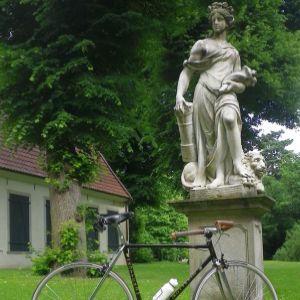
Vor ein paar Tagen waralles fertig, aber heute bin ich zum ersten mal dazugekommen das Vetta zumindestens ansatzweise zu bewegen. Erkältung, schlechtestes Wetter, Schnee, Kälte und quengelnde Familienmitglieder hielten mich bislang davon ab. Es fährt sich sehr schön und angenehm. ich mag auch die Campa Ergopower Hebel, auch wenn ich mich ganzes Leben lang Shimano gefahren bin. Jetzt habe ich auch endlich verstanden, was der fundamentale konzeptionelle Unterschied zwischen des Ergos und den STIs ist: Bei den STIs sitzt die Schaltung quasi auf der Bremse, also vor dem Hebel, bei den Ergopower Schrems sitzt die Schaltung hinter den Bremshebeln. Was natürlich eigentlich viel sinnvoller ist.
Wirklich ein schönes Rad, genauso wie ich Räder mag: nicht zuviel Bling und Glitzer dran, nicht zu teuer, als dass man es nicht mehr fahren mag. Abertrotzdem auffällig und irgendwie einzigartig mit guten Ideen: Das ist mein Vetta.
Danke noch einmal an Tobias für das Aufarbeiten der Laufräder.
Sicherlich nicht so intendiert und von anderen Zielen motiviert; dennoch finde ich das Mario Cippolini in etwa die heutige Radsport Punk Approximation eines Sid Vicious ist.
Wow – dieses Fixie kann man mit Worten unmöglich beschreiben. Für 209 Euro bekommt man bei einem bekannten Fahrradfachhandel (Lidl) ca 12,0 kg Spass (Eigenangabe). Schicke rote Kette.
Via LIDL Ich habe ihnen unrecht getan. KS Cycling … wow. die haben ja noch eine ganze Menge anderer schnittiger Möhren.
„Das Dorf wo ich wohne, da gibt es gar kein Ghetto / da gibt es einen Rewe, und ’nen Lidl und ‚ nen Netto.“
Hier noch ein interessanter Artikel von The Inner Ring der über den Zusammenhang der Pro Teams 2013 und Hello Kitty aufklärt.
There are 18 World Tour teams and 21 Pro Continental teams. One difference from other sports is that cycling teams come with naming rights and usually they are named after the sponsor. But who are these sponsors and what do they do? You might know about Garmin or Cannondale but do you know what Qhubeka, Orica or Vacansoleil are about? What’s the link between Frano Pellizotti and Hello Kitty? Why do Ag2r ride in brown shorts? All this and more…
Ag2r La Mondiale: an insurance and savings company. Note the team name is not two sponsors but Ag2r La Mondiale is the name of one company. The firm offers retirement savings, healthcare insurance and other forms of social insurance. And why are the shorts brown? Well the corporate logo is blue and brown but note the company’s Parisian headquarters are located at 35 boulevard Brune. Brown Boulevard.
Astana: not a company but a city, a nation. Astana is the capital city of Kazakhstan and the team is funded by the state to promote the country, a bid to counter the “Borat” image if you like. The jersey features the names of various state-owned companies. Note team manager Vinokourov was on a winning list in the last parliamentary elections, showing the close links between the team and the state.
FDJ: is short for La Française des Jeux or “French Games” and is the French state lottery with regular draws, scratchcards and more. The sponsor has backed a team since 1997 but almost quit in the wake of doping scandals but courageously decided to stay in the sport on the condition the team rode clean. This meant lean years in terms of results although we now know why. The Fondation FDJ also supports other supports like other nations the lottery funding helps cover Olympic sports
BMC Racing: a brand of Swiss bicycles. The team is registered in the US but funded by the Swiss francs of Andy Rihs, a billionaire cycling enthusiast who owns BMC and other bike brands. Registering the team in the US helps the team to tap this giant, lucrative market whilst trading on the image of Swiss quality.
Euskaltel – Euskadi : Euskaltel is a regional telephone operator in the Basque region, known as Euskadi in the Basque language. Euskaltel has had a tough time of late with the Spanish courts imposing a €222 million fine last year but this is being appealed. The region is semi-autonomous and retains a strong separatist movement. The team is one way to affirm the region’s identity.
Garmin – Sharp: Garmin is the US satellite navigation company, well it is from Kansas but registered in Switzerland. It was founded by Gary Burrell and Min Kao which explains the Gar-Min name. Some have questioned the company’s future in a world where smartphones replace many GPS devices but the cycling and sports equipment is proving to be a big new area. Sharp are a Japanese electronics company but the sponsorship is with the European subsidiary as the firm wants to promote its brand in Europe. The team cleverly has a large screen TV incorporated in the side of the team bus.
Orica – Greenedge: Orica is an Australian company that makes explosives and other speciality chemicals for the mining industry. It bought Nobel, the Norweigan dynamite firm several years ago. Australia has been a big part of the global mining boom and the company does not have a great reputation with explosive disasters as well as several fines for environmental damage but sponsoring a cycling team is seen as a way to put something back. Greenedge meanwhile is a holding name as the team searches for a co-sponsor, green as in the Australia but also the environment and edge as cutting edge.
Lampre – Merida: Lampre make rolled, laminated steel. If this sounds unfamiliar take a look at your washing machine or fridge and the white steel around it. The Italian firm supplies the “white good” industry with the white steel and has operations around the world. It’s been in the sport since 1991 with Colnago Lampre and then in 1992 the Lampre team was born with the blue and fuchsia jersey that we still see today.
Cannondale: the bike brand has had its ups and downs. In the 1990s it supplied bikes to the Saeco team in Italy and was famous for its oversized alu tubing. The company moved into motorcycles, offering innovative lightweight offroad bikes but this was a commercial disaster and the brand was bought by Dorel, a Canadian conglomerate that also owns Sugoi, Schwinn and GT as well as a range of brands supplying infant products like Bébéconfort.
Full gas
Argos – Shimano: Argos is a Dutch oil company but don’t think of oil rigs, think gas stations and tanker trucks as the firm sells and distributes diesel, heating oil, petrol and lubricants in the Netherlands, Belgium, France and Germany. It was recently bought by a Russian firm but I’m told the takeover changes nothing and the sponsorship continues. Shimano is obvious but note their European base in the Netherlands which explains this Dutch connection.
Lotto Belisol Team : Lotto is the Belgian state lottery and like FDJ in France, has the monopoly in Belgium. Founded in 1934 to raise funds for the sick in the Belgian Congo, the company has continously sponsored a pro team since 1985 although at times it has been the number two name, for example Omega Pharm – Lotto a couple of years ago. It also sponsors the Stanard Liège football team. Belisol make alu and wooden windows and doors and has branched out into domestic renewable energy products like solar energy panels.
Movistar Team: Movistar is a mobile telecoms operator owned by Spanish national telecoms firm Telefonica with operations in Spain and Latin America and also in several European countries under the 02 brand. It’s a giant company but the pro team is one of the smallest budget teams in the World Tour. Be sure to pronounce the team name right, it is not “movie star”
Omega Pharma – Quickstep: contrary to the name Omega Pharma is not a pharmaceuticals company. Instead it sells para-pharmaceutical products like wound dressings, vitamin supplements and other products find in pharmacies. Quickstep is a brand of laminated flooring that might seem indissociable from Belgian cycling but in fact it’s owned by US company Mohawk Industries.
Blanco Pro Cycling: “your name here” as the team formerly known as Rabobank is hunting for a sponsor. Rabobank quit the mens’ pro cycling at the end of 2012 but fulfilled its contract by leaving enough money to fund the team. It says something that the sponsor prefers to pay for the team but not have its name linked.
Radioshack – Leopard: Radioshack is a US electronics retailer that came into the sport to support Lance Armstrong’s comeback. Surprisingly they’ve lasted longer than the Texan although the company frequently attracts headlines about being bought out. Leopard is another holding name, supplied by Luxembourg real estate millionaire Flavio Becca. I gather a new sponsor will be announced later this spring.
Team Sky: Sky is a satellite television channel with operations in Britain, Germany and Italy. The brand is ultimately controlled by Newscorp and the cosmopolitan Murdoch family. The team is partly owned by British and Italian Sky which helps to explain the presence of several Italian riders and is surely an additional incentive as Wiggins targets the Giro.
Team Saxo – Tinkoff: Saxo is a currency brokerage from Denmark that offers software platforms to the banking industry. Tinkoff is a Russian bank and credit card issuer that operates online only, copying the model of Capital One in the US.
Vacansoleil – DCM: Vacansoleil is a Dutch operator of holiday camps across Europe and the name is play onvacances and soleil, French for holidays and sunshine. They have camping sites in France and beyond. DCM is a company selling garden products, notably soil and plant food. Note this is big business in the Netherlands where the flower industry is huge and supplies much of Europe.
Pro Continental teams Accent Jobs – Wanty: Accent is an employment agency in Belgium whilst Wanty is a construction company.
Androni Giocattoli – Venezuela: giocattoli is Italian for toys and Androni makes a range of plastic toys under licence including a Hello Kitty lawnmower. Venezuela is of course the South American nation and the team has recruited several riders from here.
Bardiani Valvolve – CSF Inox: two names but the same company, Bardiani makes steel valves for the food industry. The next time you see TV footage of a food factory with liquids being pumped and poured as products move along conveyor belts it might feature Bardiani’s valves or CSF’s steel piping.
Bretagne – Séché Environnement: Bretagne is the cycling-mad region of north-west France that juts out into the Atlantic whilst Séché is a recycling company that manages waste and other products.
Caja Rural: a Spanish banking brand, it covers over 70 different small banks run on a cooperative basis.
CCC Polsat: CCC is a chain of shoe shops in Poland whilst Polsat is satellite TV channel.
Champion System Pro Cycling: makes custom cycle clothing for clubs and teams.
Cofidis: is a French consumer credit company offering loans in France, Belgium and Spain. It concentrates on the sub-prime segment and has drawn criticism for aggressive tactics.
Colombia: is a quasi-national Colombian team but the funding is diverse with the national government making a contribution via the Coldesportes (Columbia Sports) agency and then a range of co-sponsors chipping in funding and equipment.
Europcar: is a privately-owned vehicle rental company with operations around the world. The green brand is a common sight at airports and beyond and in France you can spot the likes of Thomas Voeckler painted on the side of rental vans.
IAM Cycling: Independent Asset Management is a Swiss fund management company that has focussed on private funds but is moving to sell its funds to the general public.
Crelan – Euphony: Crelan is the new name for Landbouwcrediet (“land-build-credit”) a bank offering savings and mortgages. Euphony is a telecoms reseller offering mobile phones and broadband in Belgium and the Netherlands.
Meets the UCI’s 6.8kg minimum weight rule
NetApp – Endura: NetApp is a Californian company offering data storage and other IT services. Endura is a Scottish cycle clothing manufacturer.
Team MTN Qhubeka: MTN is a mobile phone operator from South Africa with operations across Africa and beyond. The continent often lacks the infrastructure of traditional telecoms and MTN has grabbed a big share of the mobile market. Qhubeka is a charity project in South Africa to get people cycling. It helps rural communities by giving bicycles to children in return for work done to improve their environment and their community, this way the kids can get to school or provide improved access to healthcare.
Bon appetit!
Sojasun: is a French brand of soya-based food products from drinks to snacks to other healthfoods.
Team Novonordisk – Type 1: Novo Nordisk is a Danish pharmaceutical company with a range of insulin products and it is funding a pro team comprised only of diabetic athletes as a way to show the condition need not prevent an active life.
Topsport Vlaanderen – Baloise: Topsport is a Flemish sports foundation funded by the regional government and is helping younger riders in the pro careers. Baloise is a Swiss insurance and savings company.
United Healthcare: a US healthcare insurance provider.
Vini Fantini: a brand of wines from Italy. The same company as Vini Farnese last year, now the team promotes Fantini wines.
Rusvelo: is essentially the Russian track cycling program with a road team to allow the endurance athletes to race on the road and is funded by the Russian government.
Katusha: is the abbreviated version of Ekaterina, the Russian version of Katherine and the name of a famous Soviet wartime folk song in Russia which still gets patriotic hearts stirring today. In English you’d call them Team Kathy but there’s nothing diminutive about the sponsors: Gazprom and Itera are energy giants and Ростехнологии / Rostechnologii is a Russian state agency designed to fund and control various technology and defence companies making this a team funded from the heart of the Kremlin.
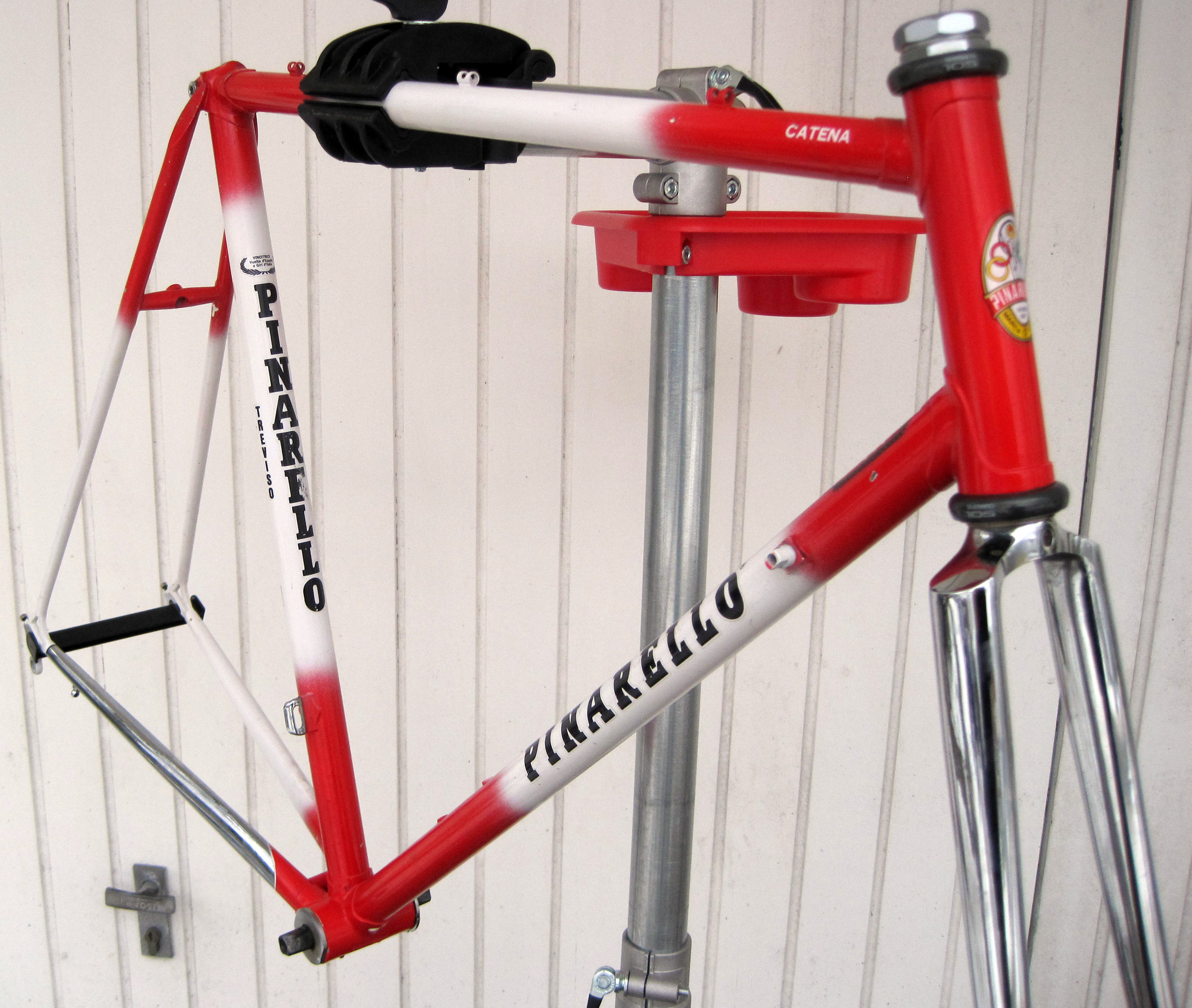
Letztens habe ich ja ein paar nicht so nette Dinge über die aktuellen Stahlräder von Pinarello geschrieben. Im Prinzip ist das eigentlich nur ein Mangel an Vorstellungskraft den ich an mir selber kritisiere, denn ich kann mir einfach nicht vorstellen, wer solche Räder kaufen sollte. Pinarello hat aber auch eine Menge sehr gut aussehender Räder gebaut, bevor sie sich darauf spezialisierten Carbonrahmen zu basteln, die aussehen die komplizierte, halb geschmolzene farbige Weihnachtskerzen genannt Dogma. Salvador Dali hätte es vermutlich gut gefunden.
ORIGINAL
UND FÄLSCHUNG
UND CHINESISCHE KOPIE
Oh Gott schon wieder etwas ironisches. Das kann nuhr von Dieter stammen, einen großen, deutschen Literaten (Quellenangabe fehlt).
Also jetzt aber Schluss mit der Ironie, ein paar wirklich schöne Räder aus der Geschichte von Pinarello via Velonews.
The start of it all: the 1951 black jersey. In the 34th edition of the Giro d’Italia and riding this Bottechia, Pinarello Cicli S.p.A. founder Giovanni “Nani” Pinarello finished in last place, a distinction that at the time was honored with the black jersey. Since the age of 15, Pinarello had worked as a framebuilder at Paglianti, and the year after his Giro “success,” his team paid him 100,000 Lire not to ride, instead substituting Pasquale Fornara on its Giro squad. Giovanni took the money and founded Pinarello Cicli S.p.A. in 1952.
Bjarne Riis’ Parigina TT bike, part of his arsenal for his 1996 Tour victory. The plaque says it’s carbon, but it sure looks like aluminum to me.
In 1993, Miguel Indurain’s time trial stage wins on this Chrono Indu carbon time trial machine were keys to his overall victories in both the Giro d’Italia and the Tour de France. His road bike for these events, however, was still a lugged steel Pinarello.
Conforming with UCI rules for more conventional time trial bike designs than those of Indurain, Ullrich, and Riis, Bradley Wiggins nevertheless showed that he was the boss of the time trials riding this carbon Pinarello Graal on his way to winning the 2012 Tour.














 bikesnob28hb
 fixiefanboyhb
 sudi1662













 there is no "I" in cyclyng