Archiv der Kategorie: 2016

Gierige Räder März 2016

Cueva Track Bikes

cueva-bikes-introduces-new-cueva-giro1cueva-bikes-introduces-new-cueva-giro2cueva-bikes-introduces-new-cueva-giro3

Mir gefallen auch die anderen Designs von Cueva, ganz besonders das gelbe Cueva Tour. Was allerdings der Unterschied zwischen den einzelnen Modellen ist wird nicht klar- ach ja, das Material und das Omnium ist aus Carbon. Ich weiß, das ist sehr uncool, aber mal ehrlich, mit einer oder zwei Bohrungen für Bremsen würden sich die Dinger noch besser verkaufen. So heißt es leider: Batsu!

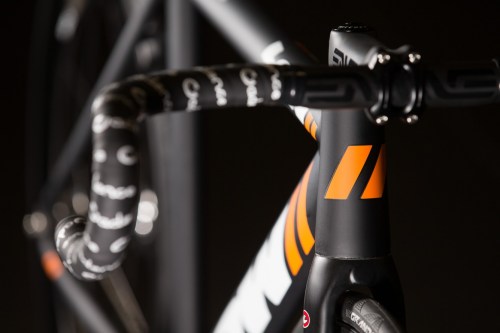
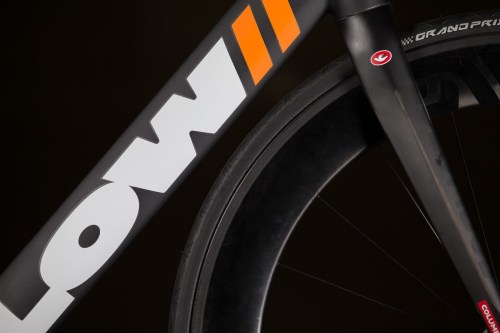
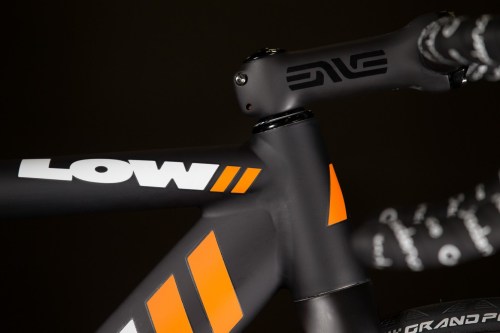
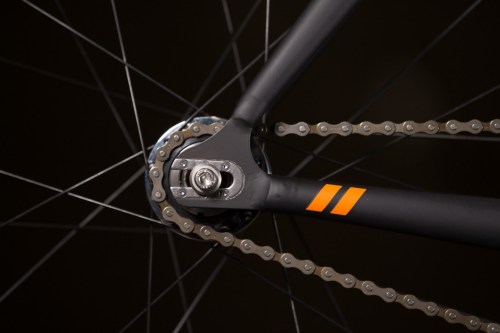
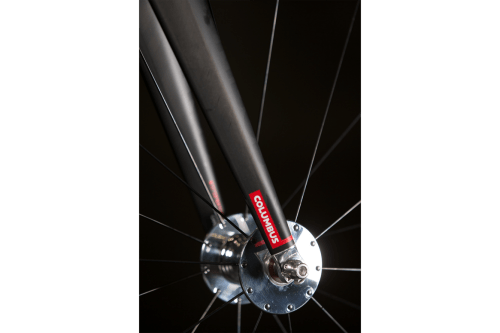
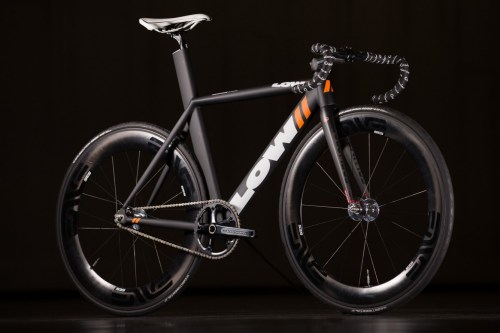
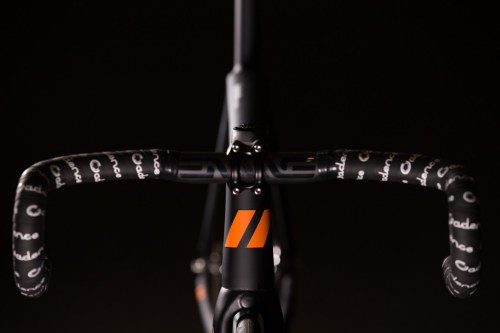
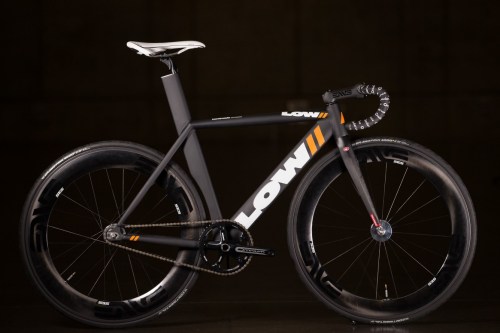
LOW MK II Aero Track Bike
2016-NAHBS-LOW-Mkii-Aero-Track-Bike-1-1335x890 - Kopie2016-NAHBS-LOW-Mkii-Aero-Track-Bike-2-1335x890 - Kopie2016-NAHBS-LOW-Mkii-Aero-Track-Bike-3-1335x890 - Kopie2016-NAHBS-LOW-Mkii-Aero-Track-Bike-4-1335x890 - Kopie2016-NAHBS-LOW-Mkii-Aero-Track-Bike-5-1335x890 - Kopie2016-NAHBS-LOW-Mkii-Aero-Track-Bike-8-1335x890 - Kopie2016-NAHBS-LOW-Mkii-Aero-Track-Bike-10-1335x890 - Kopie2016-NAHBS-LOW-Mkii-Aero-Track-Bike-11-1335x890 - Kopie2016-NAHBS-LOW-Mkii-Aero-Track-Bike-14-1335x890 - Kopie

Es gilt für LOW das gleiche wie für Cueva; ich würde mir vielleicht eins kaufen, wenn es doch nur möglich wäre damit auf der Straße zu fahren, oder noch besser: auf der Strasse zu bremsen. Das Design ist gelungen, der Rahmen vermutlich so steif, dass er auf dem Kopfsteinpflaster des Bremer Viertels nicht gefahren werden kann.

Di Nucci
DSCN3173-731x411

via Red Kite Prayer

Over the last year I’ve had a considerable amount of communication with Mark DiNucci. It began with the reboot of the Allez and continued well beyond that and into what I’d call a graduate correspondence seminar for the armchair frame builder. This coincided with an order for a frame, which became an education in frame prep and care unlike anything I’ve ever received. Rather than try to interpret his views, I gathered some of his communication and am presenting it here. His clarity of thought and mission, in unromantic and objective terms, is rare even for this crowd—Padraig.

“All truth passes through three stages. First, it is ridiculed. Second, it is violently opposed. Third, it is accepted as being self-evident.”

—Arthur Schopenhauer

The best material for bike frames is also the best material for springs. These include titanium (Ti), steel, carbon fiber (CF). The reasons for using an efficient spring in a frame is to offer a form of suspension over surface irregularities, an efficient return on energy used to accelerate the frame, and to offer the best fatigue life.

Steel and Ti are used for industrial springs in military and domestic aircraft, high level motor sports, marine environs and other places where the need for reliable fatigue life is important when human life may be at stake. You will find CF being used, for example, as a suspension leaf spring in some Chevrolet Corvettes because the spring can be made without overcoming its layup restrictions.

Why I Choose Steel
I have developed a set of proprietary new designs for the all of the tubes used in my frames. One of the objectives these new tubes were designed to offer is the best combination of the lively and comfortable suspension qualities that may be obtained from the use of high strength steel’s unique properties.

The “stiffness” of steel is basically the same for low strength and high strength steel. A frame constructed with low strength steel, with the same chassis’s structural strength as a frame made with high strength steel, will weigh more. It will also feel lifeless when compared to the lighter frame because it will not flex as readily over surface irregularities. Because the tube can be designed to flex the properly designed high strength steel tube set will absorb road shock, before it springs back, which takes some of the load off of the tires giving a more efficient ability for the bicycle to roll. The tire itself is a fairly efficient, slightly damped, spring. If the frame allows some of the force that impacts the tire to be displaced through the frame it allows the tires suspension abilities to be momentarily increased which adds to the desired ‘effortless’ rolling effect.

In order to achieve this desired, lively and comfortable, suspension effect my new tube set is designed using the most thin walled tubes that are practicable for real world use. The design allows the tubes to be more thin walled at the joint than a tube designed to be welded. The lug adds, on average, roughly as much weight as is saved when using the lugged design compared to the most simple welded design. For example when comparing my lugged frames of average to larger sizes, with those using one of the welded methods, the lugged top tube / head tube / down tube assembly will not weigh more because of the design of my thin-walled tubes. My lugs offer the distinct advantage of being able to add controlled strength to the areas that benefit from it while decreasing, or more efficiently using the mass near the highly loaded areas that are inherent in the welded joint design. My lugs are effectively another butt.

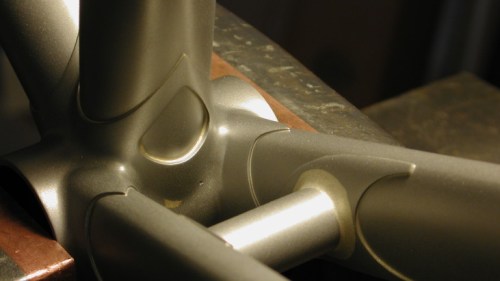
For example, look at my head tube to down tube joint. This is the most highly stressed joint on the main frame. Among other salient features, my lug design exhibits a very long tapered point under the down tube in order to add the desired strength to portions of this area, and to move the loads further away from the head tube / top tube joint in a carefully engineered manner. It should be readily apparent to those who are familiar with fabrication why these long points are very expensive to correctly manufacture. The lug angle must be manipulated to match the design angle while retaining a perfect fit. This is an additional time consuming manufacturing step. You may notice that most lugs have much shorter points. The short lugs are relatively easy to match the frame design angles to and are more easy to braze. This is probably the reason you will rarely see long point lugs. My new lugs also employ an engineered, tapered portion that embraces the head tube with progressive strength. This allows the head tube to have a greater diameter to wall thickness ratio than other designs currently available, which saves approximately 20 to 30% more weight when compared to the other available head tubes, while retaining enough strength to accommodate the increased loads presented by the modern one and one eighth inch (28.6mm) fork steerer tube. Compare the perimeter of this lugged joint to the perimeter offered by a welded joint and you may begin to understand how much stronger my lugged joint is than a joint using one of the welding methods. My lugs are, in essence, another butt and have been engineered to use this very beneficial attribute. The loads are spread over a much greater area, in a completely controlled manner, thereby decreasing the stress risers the tube will see which results in the best fatigue performance, the best creation of a spring, and the most beneficial use of mass (weight). Knowing the tubes can be parametrically modified during the design of the lugs allowed a synergistic ethic to be employed. The tubes and lugs have been designed with the advantages and disadvantages of each component taken into account, simultaneously, and then this information was used to create this new design.

I usually use low fuming bronze (brass) brazing on the main triangle joints (and frame/fork ends) in order to best use the advantageous properties of the air hardening steel. When heated to an adequate temperature and allow to cool at the proper rate the strength of the material increases while retaining stated elongation. This in effect, gives an additional, invisible after painting, butt that is located at a very advantageous location around the perimeter of, and under the lug. This effect was considered when designing the lugs. This bronze brazing process is more time consuming, for many reasons, then when using silver braze. This localized heat treating process offers additional strength and fatigue life to the joint. This feature is not visible except after shot peening, when the surface shows it’s increased hardness. I am often reminded by people who are involved in marketing that, “A feature which is not visible is not a feature with a benefit to the customer.” I disagree with that statement.

I have tried to be as responsible as possible to all of the aspects of ownership when making the myriad of design decisions that were made during this process of bringing this new frame to life. These tools do not fit the rider to the frame or create the frame geometry that satisfies the riders desired goals. They are probably the most advanced tools to be used in the construction of lugged bicycle frames but they are only pieces of steel until they are combined with the skills needed to bring a riding experience to life.
giphy


Hinterlasse einen Kommentar

Eingeordnet unter 2016, Gierige Räder, Mob

Strava.

Cyclist checking phone while on a bike ride

Großartiger Bericht auf biycling.com der uns erahnen lässt, wie viele unsinnige Dinge wir tun um auf Strava gut auszusehen.

Einige, allerdings nicht sehr viele, von diesen Ideen hatte ich noch nicht. Ich hab aber noch ein paar andere nette:

  • Mit dem GPS Gerät/Smartphone/Garmin  (Kurz: „das Gerät“) im Auto relativ langsam auf der KOM Strecke fahren, die man nie geknackt bekommen hat.
  • Das Gerät den Berg hochwerfen (am Hünenhügel in Achim)
  • Einen zweiten Strava Account anlegen. Oder noch besser, fünf weitere. Man weiß ja nie, wozu man mal jede Menge öffentliche Unterstützung braucht.


9 Things All Strava Users Do—But Would Never Admit to Doing

Because it’s hard to ride like no one’s watching when all your friends are watching

BY SELENE YEAGER MARCH 18, 2016

Strava is more than a training and tracking app. It’s a social network where you and your fellow riders can see and be seen, amassing kudos, crowns, badges, and the like. And let’s face it: We all want our feeds to impress our friends, which leads us to some, let’s say „quirky“ behaviors we’d likely never do if someone was watching us ride… and would never admit to, if they were. You don’t have to be a Strava doper to be „guilty“ of a few of these.
1. Circling (and circling) the neighborhood. Because 49.2 miles is just not 50.

2. Stalking. You’d never pick up and leaf through a buddy’s training log, even if it was sitting open on his dining room table. But scrolling his Strava feed? All’s fair in the race for the most miles ridden.

3. Leaving the Garmin home because you know, no big deal. But then surreptitiously pushing record on your smartphone Strava app before slipping the device into your jersey pocket. It’s cool to look like you don’t care… but hey, you care!

4. Dying a little when your GPS conks out before the ride ends. Don’t worry, we understand.

5. “Strava-ing” that trip to the post office. Sure it’s only 2.45 miles there and back. But that’s 5 more miles you’ll get to tally up this week… if you circle around the house once or twice.

6. Taking the long way to and from the ride. Because bonus miles count double when everyone can see them.

7. Starting at the back. You don’t want to be “that guy” or “that gal” who charges off the front each and every hill. But maybe you can go just as fast (and perhaps nab a trophy) if you start in the back of the bunch and “casually” work your way up to the front as the climb goes on.

8. Going crown hunting. You intentionally plan a short ride on a day you’ll be fresh; slug down a bottle of beet juice; pop a few SportLegs; head straight to a segment you’ve had your sights on; and drill it.

9. Using the force(s). Riding in windy conditions is challenging… until you’re getting 20mph gales at your back up the most hotly contended segment in town. Score!


4 Kommentare

Eingeordnet unter 2016, Mob

Great Sunday Riders.

Eddy Merckx

n1

The quintessential car of Eddy Merckx

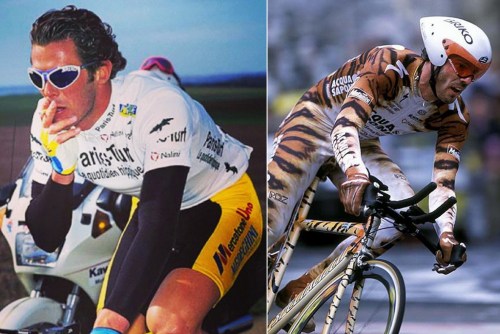
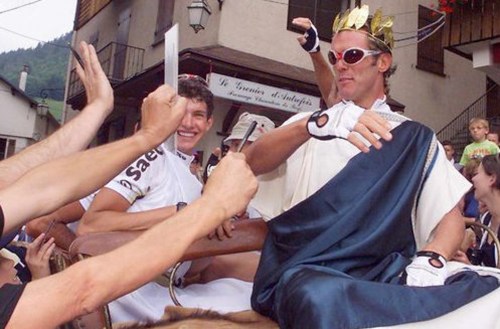
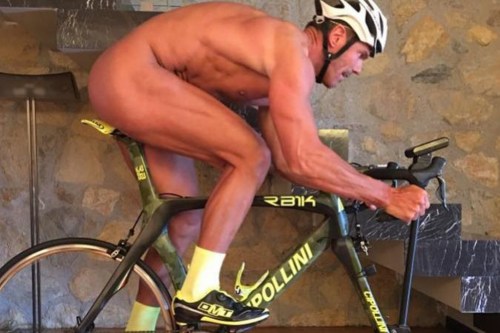
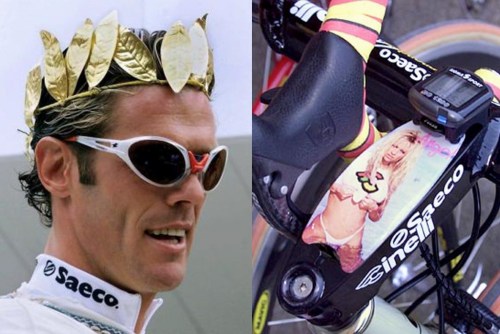
Mario Cipollini

cig

Cor Vos ArchivesCor Vos Archives

display_Cipollini_Dressed_as_Caesarmario-cipollini-riding-naked-his-indoor-bike

Archief

shoe-1024x685skinstem-1024x685

via cycling tips

Fabian Cancellara

Video und Bericht dazu auf Podium Cafe –Love knows no boundaries.

Cancellara und Sagan im Sprint von Milan- San Remo 2016 [ganz rechts]

http://gifs.com/embed/jRLDB5

Slow Motion

http://gifs.com/embed/wpZWlm

via Velo News


Hinterlasse einen Kommentar

Eingeordnet unter 2016, Mob

New from Japan.

Skateboard Ästhetik

slideshow_3

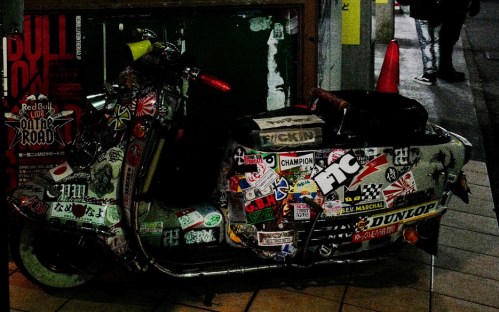
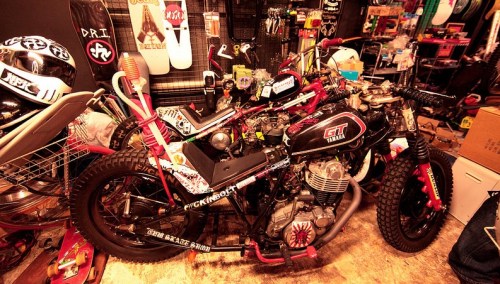
Als Ingenieur mag ich es ordentlich, strukturiert, klar und möglichst wenig komplex. Am Ende bekommt einen Murphy nämlich immer: „Whatever can go wrong, will go wrong.“ Daher mag ich klare Linie, wenige Farben, wenig Brimbamborium auch an Rädern, ganz egal, ob es ein Renn- ein Tourenrad oder ein Fixie ist. In der Fixie Szene existieren auf der anderen Seite eine Menge Räder, die über und über mit Aufklebern beklebt sind. Henning hat auch so ein Teil. Zuerst dachte ich, dass dies so ein Fixiekultur typisches Ding ist; ist es aber nicht, die Idee Dinge übermäßig mit Aufklebern zu bedecken kommt aus der Skateboard Szene.

Eine gute japanische Referenz für die Skateboardszene ist No Future Tokyo. Zuerst glaubt man beim Öffnen der Seite,man wäre auf einer Rocker Heavy Metal Seite gelandet. Tatsächlich ist man aber bei Skateboard Kids angekommen, die nun deutlich älter geworden, auch Fixies und andere Räder fahren und Motorräder umbauen. Egal was sie anpacken, am Ende hat alles wieder die Ästhetik eines Skateboards.

rolle

cats

Sogar die Gitarren.

guitar

Im Laden von No Future Tokyo, ganz in der Nähe von David in Kaminoge.
cats3


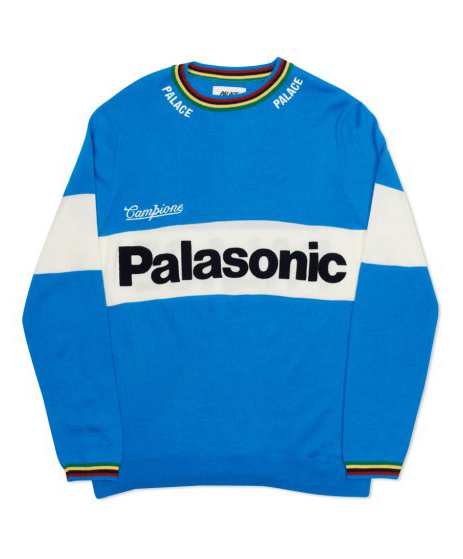
Palasonic

palasonic

via Palace Skateboards

Cherubim

Kirin Mets Stunt Team

Rapha Travel Japan Randonnee


Hinterlasse einen Kommentar

Eingeordnet unter 2016, Japan, Mob, Uncategorized

Ugly.

409_10153377593907124_1422026058077819019_n

Ein Kommentar

von | 18. März 2016 · 20:38

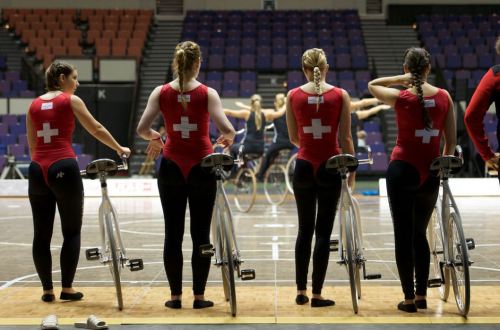
Die Schweiz. Von hinten.

Unbenannt

Indoor Cyclyng WM2015

Hinterlasse einen Kommentar

Eingeordnet unter 2016, Mob, Uncategorized

Doch Gartenarbeit?

„….and if that eternal desire to want to  get better doesn’t spark you probably should take up gardening.“


Hinterlasse einen Kommentar

Eingeordnet unter 2016, Mob, Sex. Lies & Vids

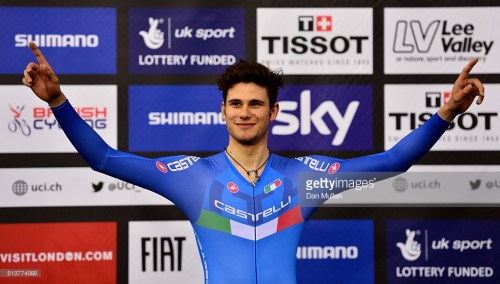
Ganna. World Track 2016. London.

513774566

Lee Valley Velopark Velodrome on March 4, 2016 in London, England.

Dieses Jahr habe ich, youtube, der UCI und Sportverletzungen etc. sein Dank, relativ viel Livestream über die Bahnweltmeisterschaft in London gesehen. Nichts hat mich dabei so beeindruckt wie Filippo Ganna.

Einerverfolgung, Finale in London im März 2016. Dominic Weinstein aus Deutschland, wie aus einem schwarz-weiß Film auf einem schwarzen FES gegen Filippo Ganna, in klassischem, italienischem blau auf einem sehr schick lackierten Pinarello.

Für mich ist das win-win – entweder das Heimatland meines Vaters oder meiner Mutter gewinnt. Wobei ich eher zu Deutschland tendiere, denn das Heimatland meiner Mutter war zunächst nicht ganz so nett in der Gegend wo sie aufwuchs: Südtirol. Es sieht zunächst so aus als wenn Weinstein das ganze im Griff hat, aber dann ändert sich die Situation innerhalb weniger Runden: Ganna zieht an und nimmt Weinstein Zehntel um Zehntel ab. Und zwar relativ flott. Am Ende ist Weinstein demoralisiert und lässt ausrollen.

Es ist beeindruckend diese Leistung zu sehen, und dahinter die Taktik sich zunächst gerade richtig zurückzuhalten, um dann am Ende genug Reserven zu haben und davon zu ziehen. Noch beindruckender ist das mit dem Kommentar des italienischen Staatsfernsehns RAI – auch wenn das italienisch nicht so gut verstanden wird.

Eccollo! Eccollo! Eccollo! Eccollo! Eccollo! VAI! VAI!


2 Kommentare

Eingeordnet unter 2016, Mob

Tokyo. 14%

Ein sehr guter Bericht über die Besonderheiten des Radelns in Tokyo. Nicht, dass ich irgendjemand der Protagonisten davon kennen würde – aber viele Strassen und Plätze.

Das interessante daran ist die Konsequenz: Der Großraum Tokyo hat 30 Millionen Einwohner, für die gibt es insgesamt 10 km (!) Radwege. Trotzdem werden 14% aller Wege in Tokyo mit dem Rad zurückgelegt – in europäischen Großstädten sind es weniger als 5%. Warum „funktioniert“ Tokyo, wenn all die Dinge, in die investiert wird um eine Stadt radfreundlicher zu machen, in Tokyo nicht vorhanden sind?

2 Kommentare

Eingeordnet unter 2016, Japan, Mob

Mavic. Enve. Bell. Giro. Blackburn. Time.

via bikerumor Feb 22nd, 2016

Enve carbon road hub super light-8

Amer Sports, which owns Mavic and other outdoors brands, has just announced their acquisition of ENVE Composites for $50 million in cash.

The official statement (copied after the break) says the deal expands Amer Sports’ operational scale, which seems interesting considering ENVE’s comparatively small manufacturing facility in Ogden, Utah. The statement also claims ENVE’s annual sales to be around $30 million, which is a rare peek into the size of the until-now privately held company.

Most recently, ENVE has unveiled ultralight full carbon hubs and tubular cyclocross rims, as well as recalling some road forks. We’ll see ENVE at NAHBS this weekend and get a little more on the story and, rumor has it, see a new product or two on various bikes…

Press Release from Amer Sports: To accelerate its Cycling business, Amer Sports Corporation has acquired ENVE Composites LLC, based in Utah, USA. ENVE is a fast-growing brand in high-end carbon wheels, components, and accessories for road and mountain biking with annual sales of approximately USD 30 million. The acquisition accelerates Amer Sports Cycling business especially in the United States and provides further expansion opportunities internationally. ENVE brings capabilities in carbon technology, and it offers operational scale and synergy benefits complementing Amer Sports’ cycling category.

The acquisition price is USD 50 million in an all-cash transaction. The acquisition will have no material impact on Amer Sports’ 2016 financial results, and it will be accretive to Amer Sports EBIT margin as of 2017. The closing of the acquisition is expected in the first quarter of 2016.

Amer Sports
Amer Sports is a sporting goods company with internationally recognized brands including Salomon, Wilson, Atomic, Arc’teryx, Mavic, Suunto and Precor. The company’s technically advanced sports equipment, footwear and apparel improve performance and increase the enjoyment of sports and outdoor activities. The Group’s business is balanced by its broad portfolio of sports and products and a presence in all major markets. Amer Sports shares are listed on the Nasdaq Helsinki stock exchange (AMEAS).

UPDATED:

Press Release from Enve:

ENVE Joins the Amer Sports Family
February 22, 2016 – Ogden, Utah, USA – ENVE is pleased to announce that ENVE is joining the Amer Sports family. Amer Sports is a sporting goods company with internationally recognized brands including Salomon, Wilson, Atomic, Arc’teryx, Mavic, Suunto and Precor. The company’s innovative and technically advanced sports equipment, footwear and apparel improve performance and increase the enjoyment of sports and outdoor activities. ENVE will remain in Ogden and continue with their plans to move into a new operations and manufacturing facility this fall. ENVE’s Senior Management Team, including CEO Sarah Lehman, will remain at ENVE. ENVE will complement the Mavic brand and enable ENVE to grow internationally, as part of the Amer Cycling portfolio.

ENVE CEO, Sarah Lehman:

“After owning the business for over ten years and growing the company to the strong brand that exists today, the ENVE owners felt that Amer Sports would be good stewards of the brand and a great home for our employees,” 

ENVE Composites
ENVE Composites is a manufacturer of handmade carbon fiber bicycle rims and components. Partnering with the prominent frame builders of our time and the world’s best athletes, ENVE combines the best composite technologies with real world athlete feedback to provide our customers with the ultimate in performance, durability, and quality. ENVE designs and manufactures 100% of their rims in their Ogden, Utah, USA facility.

ENVE.com

Mavic and Enve Composites under same ownership — what it means

by James Huang

via Cycling Tips, Feb 23rd, 2016

Mavic buys Enve

Amer Sports, the Finnish parent company of Mavic, Salomon, Suunto, Arc’teryx, and other outdoor brands, announced today that it has purchased US-based carbon fibre wheel and component specialist Enve Composites for US$50 million in an all-cash transaction.

While acquisitions and mergers are nothing new in the cycling industry, this one portends some particularly interesting possibilities in terms of product moving forward.

Despite softening numbers, Mavic is still a giant in bicycle wheels with over US$150 million in annual sales. However, its luster has tarnished a bit in recent years due to an aging product line marked by narrow rim profiles, a stubborn reluctance to offer tubeless compatibility, a dearth of carbon rims and disc-compatible models. To date, Mavic has yet to introduce carbon 27.5 or 29in mountain bike wheels.

In fairness, that tide has started to shift recently with Mavic’s latest offerings; still, the damage has been done. Few would characterize the 127-year-old French brand as progressive.

Enve is substantially smaller, with just US$30 million in stated annual global sales, but its brand perception could hardly be more different.

Whereas Mavic’s wheel catalog spans a broad range of price categories with a focus on aluminum rims, Enve has steadfastly concentrated at the premium end, using carbon fibre rims exclusively. An early partnership with aero guru Simon Smart also spawned the innovative ‘Smart SES’ range of road wheels, while off-road, Enve is still one of the only companies to successfully introduce composite rims to the downhill scene.

Despite the brand’s relatively short history, Enve has also managed to establish itself as one of the most sought-after brands for handlebars, stems, seatposts, and forks. Though it’s based in Ogden, Utah, Enve’s tagline, “Handmade in the USA” applies only to its rims; other components are produced overseas. Regardless, the Enve label is unquestionably viewed as one of the more desirable in the industry.

Mavic buys Enve

WHAT THE DEAL MEANS MOVING FORWARD

In terms of business, consumers will notice very little impact, at least in the short term. Enve will assume sales and distribution duties for Mavic in North America while gaining access to Mavic’s expansive global commercial resources — which, at the very least, could mean more Enve wheels and components as original spec on complete bikes, possibly by late-summer trade show season.

As for their respective products, both entities have naturally stated that they will continue to operate independently with consumers seeing little-to-no obvious changes.

“Of course there will be some collaboration and shared services, but we will remain two separate brands,” Mavic brand manager Chad Moore told CyclingTips. “So, for now, you’ll see no changes in the product lines.”

Enve’s marketing director, Jake Pantone, echoed Moore’s sentiments. “They [Amer Sports] don’t want to change who we are as a brand, and as such, it’s basically business as usual for us,” he said. “As for product, the two brands are going to act basically autonomous. We will share technologies where it makes sense, but each brand has some core competencies. The goal definitely isn’t to dilute either brand into something lukewarm.”

History has demonstrated time and again, however, that such arrangements don’t always end up as they’re initially projected. A few examples include Trek and Klein/LeMond/Gary Fisher, Serotta and Fat City Cycles, and Blue Competition Cycles and Mad Fiber.

There are, however, a few scenarios that are easy to imagine. Mavic could well look to leverage Enve’s considerable experience in composites engineering and aerodynamics to revamp its aero road wheel range. Mavic may finally incorporate carbon fibre into its languishing mountain bike collection. Mavic could launch a collection of branded aftermarket handlebars, stems, seatposts, and maybe even forks — all with the hope that some of Enve’s reputation will rub off.

What seems most logical in our view, however, is that Mavic will return to its roots and concentrate on aluminum rims and wheels, reestablishing itself as a juggernaut in the mid-range of the market. Despite perceptions, Mavic’s strengths have always revolved around aluminum rims and a remarkably in-depth understanding of what makes a good wheel. Combining those two with an updated view of what’s needed in the modern world would make for quite the compelling combination.

Meanwhile, Enve will (hopefully) retain its position as a premium brand exclusively, continuing to focus on composites. Major shakeups to its component range would be unlikely in this scenario, although changes in its wheel products would be almost inevitable. Mavic’s considerable knowledge base in terms of wheel stiffness, inertia, and durability would likely play into upcoming wheel designs. Being much larger, the French company might possibly inject some financial support for future Enve R&D projects, too.

One of the bigger questions in the near term is what hubs Enve will use since current suppliers DT Swiss and Chris King may not be eager to provide product to a direct competitor.

Only time will tell how this marriage will play out, but hopefully the cycling industry’s long and storied history of botched mergers and acquisitions won’t repeat itself yet again.

Bell, Giro, Blackburn purchased by Vista Outdoor; Rossignol acquires Time


Vista Outdoor acquires Bell, Giro, C-Preme, and Blackburn

It seems it’s the season for mergers and acquisitions. Vista Outdoor, which currently owns Camelbak and Bollé, has entered into an agreement to acquire Bell, Giro, C-Preme, and Blackburn from BRG Sports, operated by Bell Sports Corporation.

The Scotts Valley, California-based Vista will pay $400 million for the brands.

“Vista Outdoor is a perfect new home for the Action Sports division as they join an expanding outdoor sports and recreation company comprised of market-leading brands,” said BRG Sports executive chairman and chief executive officer Terry Lee. “Under Vista Outdoor ownership, we are confident Bell, Giro, C-Preme and Blackburn will continue to drive product innovation and lead the industry. We know they will continue to foster the strong people and product culture that makes these brands great.”

Rossignol acquires Time Sports

Rossignol ski, snowboard, and nordic sports company finalized its acquisition of French bike manufacturer, Time Sports, on Tuesday. Rossignol Group made the move after discovering logical similarities between the two companies’ markets: Skiers are often cyclists in the off-season and vice versa.

Both companies also work with composite materials and are involved in the manufacturing of high technology products like skis and bicycles.

Earlier this week, Amer Sports Group, owner of Mavic, announced it would purchase Enve Composites.
Read more at http://velonews.competitor.com/2016/02/news/bell-giro-blackburn-purchased-by-vista-outdoor_396543#yIJGWObyHktKkcmJ.99


Hinterlasse einen Kommentar

Eingeordnet unter 2016, Mob, Uncategorized